
10 Biggest Ship Propellers in the World
Ship propellers are engineering marvels. Hidden beneath massive hulls, they convert engine power into thrust that moves some of the largest vessels ever built.
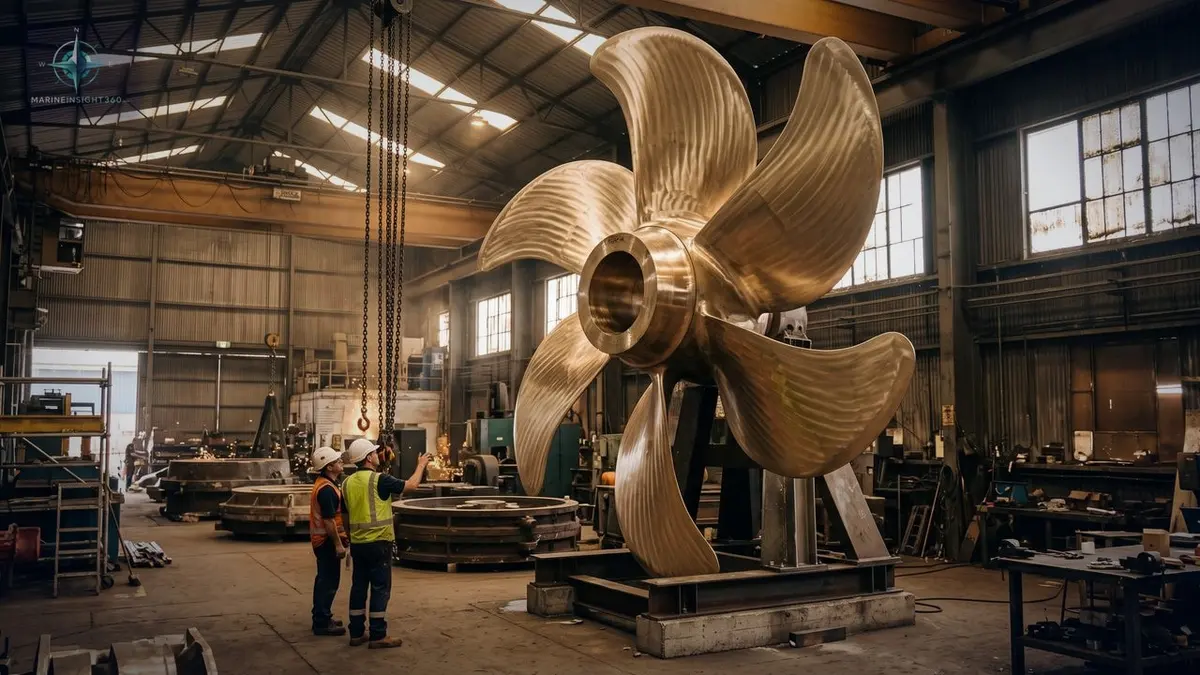
Ship propellers are engineering marvels. Hidden beneath massive hulls, they convert engine power into thrust that moves some of the largest vessels ever built. While often overlooked, these enormous rotating blades are among the most impressive components in modern shipbuilding.
In this blog, we explore 10 of the biggest ship propellers in the world , highlighting the vessels that carry them and the engineering behind their immense size.
1. Emma Maersk-Class Container Ships
One of the most famous examples belongs to the Maersk Line fleet (technically a company, but globally recognized brand). These vessels feature propellers weighing over 100 tons , with diameters reaching nearly 10 meters .
Designed for fuel efficiency and massive cargo capacity, these propellers help power ships carrying more than 15,000 TEUs.
2. Triple-E Class (Maersk)
The Triple-E class container ships are equipped with dual large propellers , each measuring approximately 9–10 meters in diameter . The twin-skeg design improves efficiency and reduces fuel consumption.
These vessels are among the largest commercial ships ever constructed.
3. HMM Algeciras
The HMM Algeciras , one of the world’s largest container ships, features enormous slow-speed propellers designed to move over 23,000 TEUs efficiently across long ocean routes.
Its propeller system is optimized for lower RPM and higher torque, ensuring smoother operation.
4. TI-Class Super Tankers
The TI-class ultra-large crude carriers (ULCCs) carry some of the largest single-piece propellers ever manufactured, often weighing over 110 tons .
These propellers are built to push vessels capable of transporting more than 3 million barrels of oil.
5. Vale Brasil (Very Large Ore Carrier)
The Vale Brasil is among the biggest bulk carriers ever built. Its massive propeller supports a fully loaded displacement exceeding 400,000 tonnes.
Large-diameter propellers help improve propulsion efficiency at slower speeds.
6. Queen Mary 2
The luxury liner Queen Mary 2 uses four large propeller pods (azipods). While not traditional fixed propellers, their size and advanced propulsion system make them among the largest passenger-ship propulsion units.
7. Ever Ace
The Ever Ace , one of the largest container ships afloat, is fitted with a giant propeller engineered for high cargo capacity and fuel efficiency.
8. Seawise Giant (Knock Nevis)
The legendary Seawise Giant , once the longest ship ever built, carried one of the largest propellers of its time, weighing more than 100 tons.
9. CMA CGM Jacques Saadé
The CMA CGM Jacques Saadé features a huge propeller optimized for LNG propulsion systems, combining environmental performance with high thrust efficiency.
10. USS Gerald R. Ford
Aircraft carriers like the USS Gerald R. Ford also operate massive propellers to move vessels weighing over 100,000 tons.
While naval propeller specifications are often classified, their scale is among the largest globally.
Why Are These Propellers So Big?
Large ships require:
- Greater thrust at low speeds
- High torque from slow-speed diesel engines
- Improved fuel efficiency
- Reduced vibration and cavitation
Bigger propellers allow ships to move massive loads efficiently while minimizing fuel consumption.
Engineering Behind Giant Propellers
These propellers are typically:
- Made of nickel-aluminum-bronze alloy
- Cast as a single piece
- Manufactured using precision machining
- Carefully balanced for hydrodynamic performance
Some weigh over 120 tons and take months to design and manufacture.
What actually goes wrong with a propeller this size
Cavitation erosion is the classic fault. Vapour cavities form on the low-pressure back of the blade and collapse against the surface, pitting the nickel-aluminium-bronze. It starts near the tips and the trailing edge, then accelerates, because the roughness it leaves disturbs the flow that caused it.
A singing propeller looks similar and is not. Vortices shedding off the trailing edge lock on to a blade resonance, and the propeller emits a tone that carries through the hull. The cure is mechanical: an anti-singing bevel ground into the trailing edge.
Rope and netting wrap the boss and work into the stern tube seal. The ship is rarely stopped by it. The expensive outcome is a damaged seal leaking oil over the side, which turns a nuisance into a MARPOL Annex I problem.
Roughness costs money quietly. A fouled or pitted blade needs more torque for the same thrust, so a fixed-pitch propeller loads the engine harder and the ship burns more fuel to hold the same speed. Blade polishing is among the cheapest measures in a ship energy efficiency plan under MARPOL Annex VI.
Contact damage from ice, debris or a grounding leaves the propeller out of balance. The vibration is felt in the after accommodation, but it is the tailshaft and its bearings that pay for it. That is why class societies such as DNV, Lloyd's Register, ClassNK and ABS set tailshaft survey intervals instead of leaving the inspection to the operator.
Final Thoughts
Ship propellers may remain underwater and out of sight, but they represent some of the most powerful and precisely engineered components in maritime history. From mega container ships to supertankers and aircraft carriers, these rotating giants keep global trade moving every day.
Recommended Reading
Seawise Giant: World’s Biggest Ship
Seawise Giant was the longest ship ever built at 458.45 m. Struck by missiles in 1988, salvaged, renamed four times, and scrapped in India in 2010.
Typhoon Class Submarine: The Biggest Boats Ever Sent Under the Sea
The Soviet Typhoon class submarine remains the largest ever built: twin pressure hulls, 20 missile silos, and why nothing since has matched its size.
5 Biggest Oil Rigs in the World
Oil rigs, or offshore drilling rigs, are built to extract, store, and also process crude oil and natural gas from the ocean floor. These platforms come in…