
Duties of 3rd Officer in Merchant Navy
A 3rd officer's duties are bridge watchkeeping, upkeep of life-saving and firefighting equipment, cargo and port watches, and administrative work.
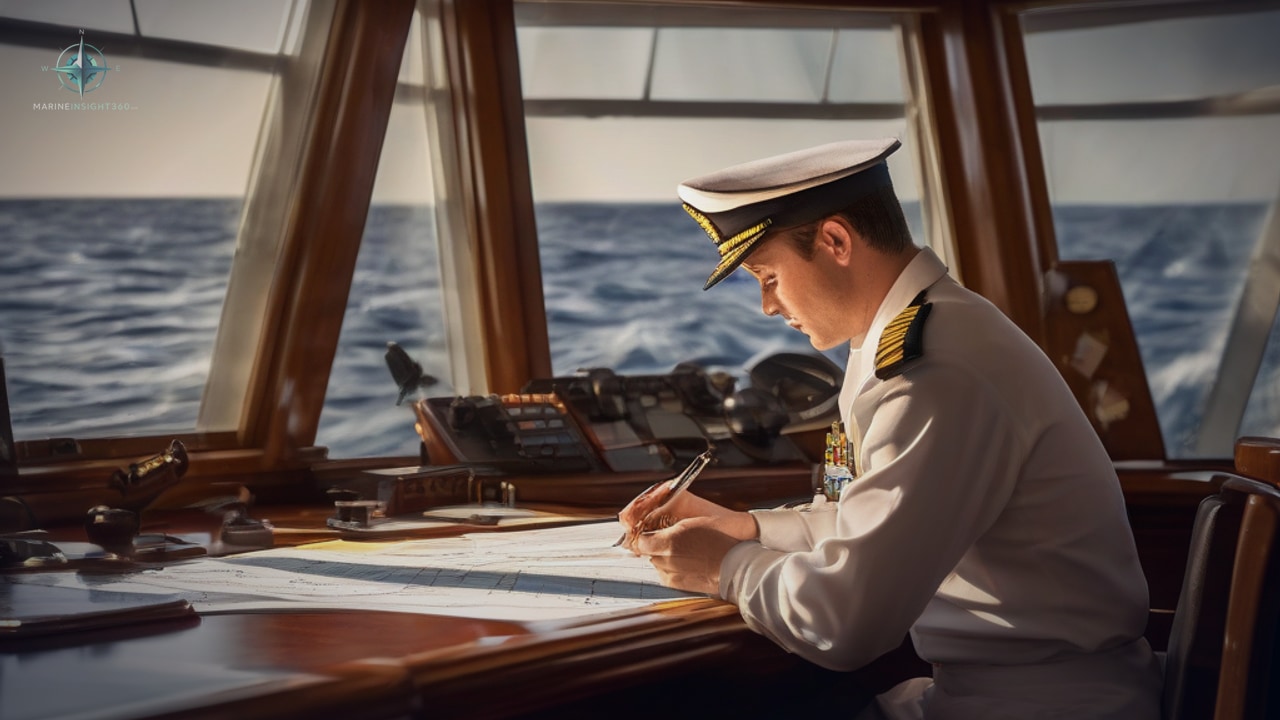
The duties of a 3rd officer in the merchant navy are bridge watchkeeping, usually the 0800 to 1200 and 2000 to 2400 watches, upkeep of life-saving and firefighting equipment, cargo and port watches, and administrative work.
3rd Officer or 3rd Mate is an aspirational rank within the merchant navy for numerous deck cadets who wish to join the merchant navy. It marks the first step for cadets to step into the shoes of officer duties after training and sailing as an officer. The duties of the Third Officer within the Merchant Navy can vary according to companies and types of ships. To better understand what the Third Officer does within the Merchant Navy, let's look at the ship's ranking system.
The top boss is the master, or captain, who is responsible for everything and is first in command of the vessel. Second in command is the Chief Officer or First Officer, who looks after the ship's upkeep, environment, and safety compliance. Then comes the second officer or second mate, who is responsible for passage planning, navigation, maintaining the medical locker, and the correction and maintenance of charts and publications. The duties of the 3rd officer can be divided into four main categories but are not limited to:
1. Navigational Watchkeeping Duties
2. Upkeep of Safety Equipment
3. Cargo/Port Watchkeeping Duties
4. Administrative Duties
Navigational Watchkeeping Duties
The 3rd Officer or 3rd Mate is responsible for carrying out independent navigational watches on the bridge to ensure the safe navigation of the vessel, usually from 0800–1200 and 2000–2400 hours, or as directed by the ship's master. The 3rd Officer is responsible for helping the 2nd Officer in correcting and maintaining nautical charts and publications, along with any other duties allotted by the 2nd Officer.
This may include tasks such as helping in passage planning, distance and noon calculations, or any other reports during his watch.
Help in maintaining navigational and meteorological equipment on board, keeping it up-to-date and in operational condition. Responsible for maintaining all national/signal flags (as per International Code of Signals), navigational shapes, and sound signalling equipment and ensuring all required flags are available before arriving in port and displayed correctly. Helped carry out pre-arrival and pre-departure tests as per company procedure and reported all deficiencies found to the second officer and master.
- Helped with recordkeeping of the ship's deck logbook, navigational checklists, official logbook, and all events that happened during the watch.
- Help the master in sending distress, urgency, and safety alerts via the Global Maritime Distress and Safety System (GMDSS).
- Help in training deck cadets or other trainees on board.
- Help in preparing the bridge for any navigational and third-party audits.
- Help in Port State Control (PSC) and Vetting Inspections.
- Help in any other navigational duties as directed by the ship's master.
Upkeep of Safety Equipment
The 3rd officer, under the supervision of the Chief Officer(Safety Officer), is responsible for inspecting and maintaining the life-saving appliances (LSA) and firefighting equipment (FFE) on board. Responsible for maintaining the life-saving appliances (LSA) and firefighting equipment (FFE) maintenance records. Must inform the Chief Officer (Safety Officer) or Master in case any shore inspection, such as yearly or 5-yearly shore services related to life-saving appliances (LSA) and firefighting equipment (FFE), is coming due.
Cargo/Port Watchkeeping Duties
During arrival or departure in port, if the third officer is on bridge duty, he helps the master and the bridge team in manoeuvring. Otherwise, when not on bridge duty, the third officer is in charge of the aft mooring station during the vessel's berthing and unberthing, with the forward mooring station of the ship led by the chief officer.
Hence, at any given time, either the second officer or the third officer will be on the bridge, and one of them will be at the aft mooring station. In port, the third officer keeps watchkeeping from 0600–1200 and 1800–2400 hours, or as directed by the Chief Officer or the ship's master.
The third officer is responsible for maintaining a safe cargo/port watch and ensuring compliance with all international and local regulations. During the watch, the 3rd officer supervises all cargo operations, including ballasting or deballasting, ensuring the ship remains upright, checking stress levels within limits, and adequately recording events. The third officer is additionally responsible for maintaining security measures at the ISPS security level during his watch.
Their duties include preventing pollution, reporting incidents, supporting environmental policies, ensuring regulatory compliance, and cultivating environmental awareness within the organization.
Administrative Duties
Administrative duties include helping the master during crew sign-on and sign-off, ensuring all formalities are completed, and checking crew documents/certificates during joining. This includes confirming the validity and availability of all crew records, such as identifications, CDCs, licenses, STCW certificates, medical records, contract papers, company courses, etc. Also, the third officer helps the master in article signing, stamping CDC, organizing travel permits, maintaining crew documentation, including updating ship certificates and scanning the same. Preparing the drill matrix and planning drills as per the matrix under the supervision of the chief Officer or master, ensuring all drills are conducted within the given intervals. Furthermore, ensures that all the company-specific trainings, such as CBTs, are conducted on time.
The third officer is responsible for keeping records of the drills and updating the drill records within the pertinent deck or official logbook. After the drill is completed, ensure that all safety equipment utilized in the drill, such as SCBA sets, firefighter outfits, hoses, etc., is put back in place and prepared to be utilized in case of an emergency.
Preparing port papers prior to arriving in port, including emergency contact sheets and updating crew records, stowage plans, MSDS in common places, and fire plans as assigned by the company or ship's master.
Duties
I hope you have caught up on the duties of the third officer within the merchant navy. We have covered the Third Officer's duties in detail, but it's challenging to incorporate everything in one article. In the event that we have missed anything, comment and let us know. While we have covered most aspects of this article, there are extra duties which will emerge.
For example, depending on the circumstance, sometimes the Third Officer may help the Chief Officer in tank cleaning operations, securing operations, accepting stores and spares in ports, or taking care of extra duties in dry dock.
Recommended Reading
Duties of Chief Officer in Merchant Navy
Do you know about the duties of chief officer? A massive cargo vessel navigates massive ocean swells while transporting thousands of tons of international goods.
Average Merchant Navy Salary in US & UK
The Merchant Navy offers a thrilling career, blending high seas adventure with competitive salaries and global travel. Whether you’re eyeing a role as a…
Average Merchant Navy Salary in the UK & USA
A UK Merchant Navy salary is determined based on rank position, experience level, ship type, and employment status between private shipping companies and…