
Understanding Key Role of Black Sea in Global Politics
Russia’s illegal annexation of Crimea in March 2014 has revived worldwide attention to the strategic importance of a region located on the fault line…
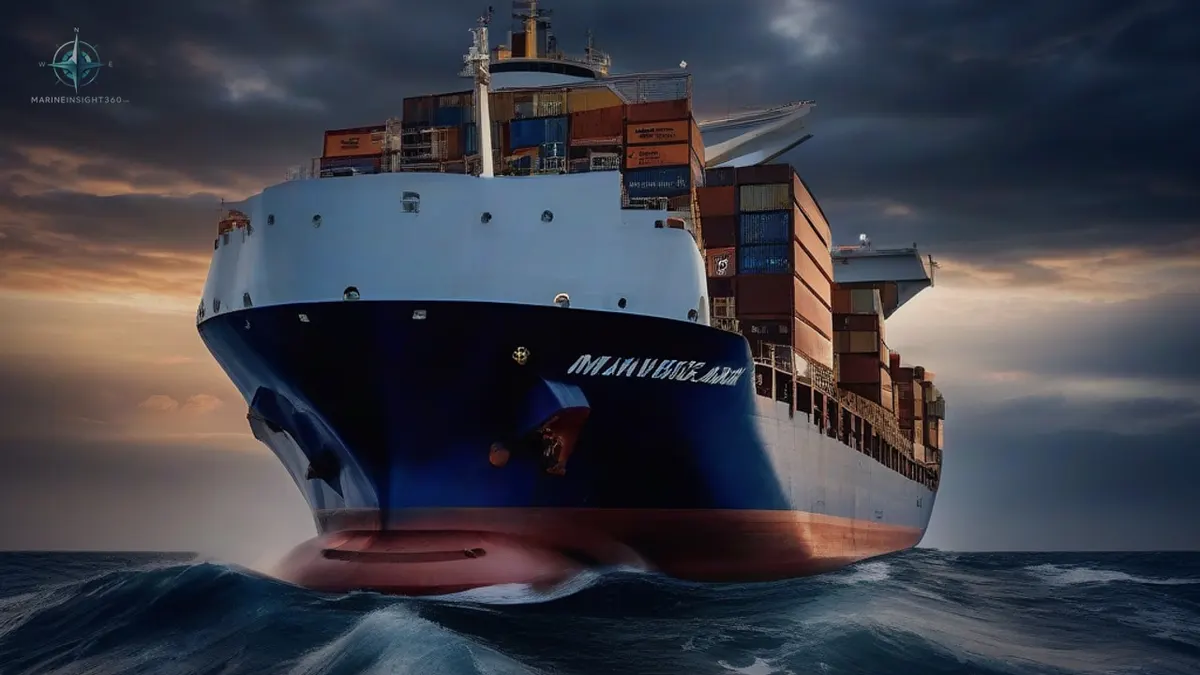
The Black Sea is central to global politics because its only outlet to the Mediterranean runs through the Turkish Straits, which the 1936 Montreux Convention placed under Turkish control while limiting warships from non-Black Sea states.
The geostrategic importance of the Black Sea region
Russia’s illegal annexation of Crimea in March 2014 has revived worldwide attention to the strategic importance of a region located on the fault line between two former empires, the Russian Empire and the Ottoman Empire, involving European powers such as Britain, France, and Germany. In this blog, we will analyzes the Black sea region’s profile and argues that the past is prologue to the region’s future as restless powers restart experimental political and military strategies in a modern context.
Conflict and Treaties
Six years of conflict between Russia and the Ottoman Empire between 1768 and 1774 culminated in the signing of the Treaty of Kuchuk-Kaynarca in 1774, which gave Russia direct access to the Black Searegion(via the ports of Kerch and Azov). Russia was also granted the right to protect Christian minorities within the Ottoman Empire, and the nominally independent Crimean Khanate was also affected.
Nine years after the treaty was signed, the reforms implemented by the ruling elite under Russian occupation were met with popular dissatisfaction. The influx of immigrants into Crimea led to increased unrest in the region, giving Catherine II's envoy, Grand Duke Gregory Potemkin, a long-awaited excuse to annex Crimea militarily with little armed resistance. In the same year, the city of Sevastopol in Crimea was founded.
From 1783, as the Ottoman Empire gradually declined, Russia emerged as a new power on the Black Sea coast.
The decline of the Ottoman Empire continued, and the power struggle in the region persisted, with neither side achieving a decisive victory. The bloody Crimean War between the Ottoman Empire and Russia from 1853 to 1856 killed hundreds of thousands of people. During the conflict, France and Britain sided with the Ottoman Empire, fearing that Russia's growing power would lead to Russian dominance in the region.
Although this never came to pass, a stronger and more isolated Russia repeatedly failed to wrest control of the strategic Bosporus and Dardanelles (Turkish Straits) from the Ottoman Empire. One of Russia’s main motivations for entering World War I was to seize control of the Turkish Straits. The Ottoman Empire and Germany blockaded the straits, strangling the Russian economy and causing Russia’s plans to backfire.
During and after World War I, as the Russian and Ottoman Empires collapsed, attempts were made to redraw the map of the region. They were unsuccessful. The first attempt was the Treaty of Sevres in 1920. The second, more successful attempt was the Treaty of Lausanne in 1923, which laid the foundation for the Turkish Republic.
Having achieved a more secure strategic position, Turkey was able to use the Treaty of Lausanne to manage the growing tensions between European powers in the region, culminating in the 1936 Montreux Convention, which established Turkish control of the straits and guaranteed free passage for warships of Black Sea countries that were not at war with Turkey.
Non-Black Sea states are restricted from sending warships to the Black Sea (each warship must weigh no less than 15,000 tons, the total weight must not be less than 45,000 tons, and the duration of stay must not exceed 21 days). The United States is not a party to the Montreux Convention.
World War II and the post-Cold War system
At the end of World War II, tensions between the Soviet Union and Turkey increased, and this fragile balance was in danger of collapse. The Soviet Union pressured Turkey to renegotiate the Montreux Convention so that the Soviet Union could share control of the Bosporus and Dardanelles with Turkey. In 1946, the Soviet Union strengthened its military presence in the Black Sea and pressured the Turkish government to accept its request to establish a military base on Turkish territory.
To protect itself from Soviet pressure, Turkey sought help from the United States, which in turn sent American warships to the region. Although the Soviet Union eventually backed down, the incident became one of the catalysts for the 1947 Truman Doctrine, which sought to contain the growing Soviet threat in the Mediterranean by making Turkey and Greece members of NATO by 1952. Throughout the Cold War, Turkey, NATO, the United States, and the Soviet Union maintained an uneasy balance in the Black Sea. Starting in 1976, Turkey allowed Soviet aircraft carriers built in Ukraine (Kiev class, later Kuznetsov class) to pass through the strait.
After the collapse of the Soviet Union in 1991, the Black Sea region’s geostrategic importance in the West gradually declined. Still, it remains an effective tool for shaping Russia’s conception of its “near abroad.” The most important strategic issue after the end of the Cold War was the withdrawal of nuclear weapons from Ukraine, as embodied in the 1994 Budapest Memorandum, in which Ukraine agreed to withdraw its nuclear weapons in exchange for security guarantees from Russia, the United States.
The United Kingdom (with the support of France and China) to protect its territorial integrity.
Despite the success of this policy, tensions between Ukraine and Russia over the strategic position of the Crimean Peninsula persist. Crimea, a gift from Soviet Premier Nikita Khrushchev in 1954 to celebrate the 300th anniversary of Ukraine’s union with Tsarist Russia, has become a constant bargaining chip between the two countries. Russia has retained its military infrastructure, especially the Sevastopol base, which is essential for the operation of the Black Sea Fleet.
At the time of the Soviet Union’s collapse, Russia had a total of 100,000 troops, 60,000 active military personnel. 835 ships, including 28 submarines, all of which effectively pressured Kyiv to determine the legal status of the city of Sevastopol and its vital infrastructure. Moscow, also driven by Crimean nationalist fervor, was able to leverage its long-standing political ties with Crimean officials (Crimea retained autonomy and its constitution until 1995) to exert further pressure on Kyiv.
In 1997, the Ukrainian-Russian Friendship Treaty divided the Soviet Black Sea Fleet between Russia (81%) and Ukraine (19%) and allowed Russia to lease the Sevastopol base for 20 years, extending the lease in 2010 to 2042 in exchange for the cancellation of most Ukrainian debts and lower energy prices.
The Rise of the New Russia
While Russia has always considered its former Soviet republics and the Black Sea region to be within its natural sphere of influence, it lacks the political, economic. Military power to fully enforce its will. This began to change as Russia adopted a more assertive regional policy in response to the so-called color revolutions. In Russia's neighbors Georgia (Rose Revolution of 2003-2004) and Ukraine (Orange Revolution of 2004-2005), leaders more susceptible to Russian influence and interests were replaced by pro-Western, pro-European.
Pro-Atlantic leaders.
At the same time, NATO membership expanded in 2004 to include Bulgaria and Romania, bringing three of the six Black Sea countries to NATO, with two more countries, Ukraine and Georgia, working closely with NATO and possibly aiming to join. NATO considers the Black Sea "vital for Euro-Atlantic security" (Bucharest Summit Declaration, 2008).
Russia viewed these events as NATO encroachments on its traditional sphere of influence and took steps to reassert its influence and strengthen its military presence in the Black Sea. Russia used energy as a tool to influence Ukraine in 2006 and 2009, when it suspended gas supplies to Europe through Ukraine and raised Russian energy prices.
In August 2008, Russian troops, which had been in South Ossetia since the outbreak of the Georgia-South Ossetia conflict in 1993, thwarted the Georgian president’s attempt to retake control of the breakaway region, then entered Georgia, routed the Georgian army. Virtually seized control of the capital, Tbilisi (about 350 military personnel and 400 civilians from both sides were killed in the conflict).
Russia ignored the ceasefire agreement and subsequently recognized the “independence” of South Ossetia and Abkhazia and tightened its control over Georgian territory, continuing to integrate the two regions administratively.
The second, more important event from a geostrategic and military perspective was Russia’s annexation of Crimea in March 2014, days after Ukrainian President Viktor Yanukovych was overthrown in a popular uprising in the spring of 2014.
Russia’s rearmament of the Crimean Peninsula and military intervention in eastern Ukraine, in violation of the Budapest Memorandum and the Treaty of Friendship, paved the way for a massive deployment of military forces in the region, with the deployment of S-300 and S-400 systems, Bastion-B coastal defense units. Other anti-aircraft and anti-surface missile systems. In 2015, former NATO Supreme Allied Commander Europe, Philip M. Breedlove, described Crimea as “a platform for Russia to demonstrate its power.”
Russia’s concentration of forces on the peninsula was accompanied by increasingly aggressive nuclear rhetoric, with the Kremlin hinting at the possibility of future deployment of nuclear weapons on the peninsula and stating that it would reserve the right to use nuclear means to defend Crimea if necessary.
The final step in rebuilding Russia’s military presence in the region was Russia’s military intervention in Syria in September 2015. For the first time since the end of the Cold War, Russia has demonstrated its ability to deploy parts of its Black Sea Fleet and to deploy defensive (S-300) and offensive (SS-26) systems in theater.
Russia currently has an air base in Latakia, Syria. It is renovating and expanding its naval facilities in Tartus to make it a large base that can accommodate up to 11 ships at a time. It also has an agreement with Cyprus to allow Russian ships to dock there and is negotiating to establish a military base in Egypt (Russian officials have denied rumors about Libya).
The return of the geostrategic importance of the Black Sea
Russia, the dominant power of the nineteenth century, the exhausted power of the Cold War. The exhausted power after 1991, is returning to the region at a time when the European and American presence in the Black Sea and the Eastern Mediterranean is waning. Will the Kremlin try to expand its influence in the Eastern Mediterranean, such as by expanding its presence in Tartus?
Will it continue to increase its military presence in Crimea and eastern Ukraine, putting more pressure on Bulgaria to reduce NATO presence while promoting Turkey's reconciliation with Russia to gain more influence in the Turkish Straits?
For Russia, the geostrategic factors in the Black Sea region have not changed since 1853, with NATO and the United States replacing individual European countries as Russia's main geopolitical opponents: Crimea is a military resource, Turkey is a fulcrum. The Turkish Straits are a strategic fulcrum.
Its ultimate goal is to gain access to a military presence in the Eastern Mediterranean to balance the eastward expansion of the United States and NATO and their presence in the Aegean and Central Mediterranean.
Recommended Reading
The World's Major Sea Routes: Where Global Trade Actually Sails
The sea routes that carry world trade: Asia-Europe, transpacific, transatlantic and the chokepoints they squeeze through, from Suez to Malacca to Panama.
Shipping Agent Role: Port Call Duties Explained
Learn how a shipping agent coordinates vessel clearance, port services, documents and communications before, during and after a port call.
What Is the Global Maritime Distress Safety System (GMDSS)?
What Is the Global Maritime Distress Safety System (GMDSS)?: safety, training and compliance context for US, UK, Canada, Australia, Singapore and...