
Cable Laying Ship: How Submarine Cable Is Installed
How a cable laying ship stores, pays out and buries submarine cable, why DP2 redundancy matters, and the signals other vessels must read at sea.
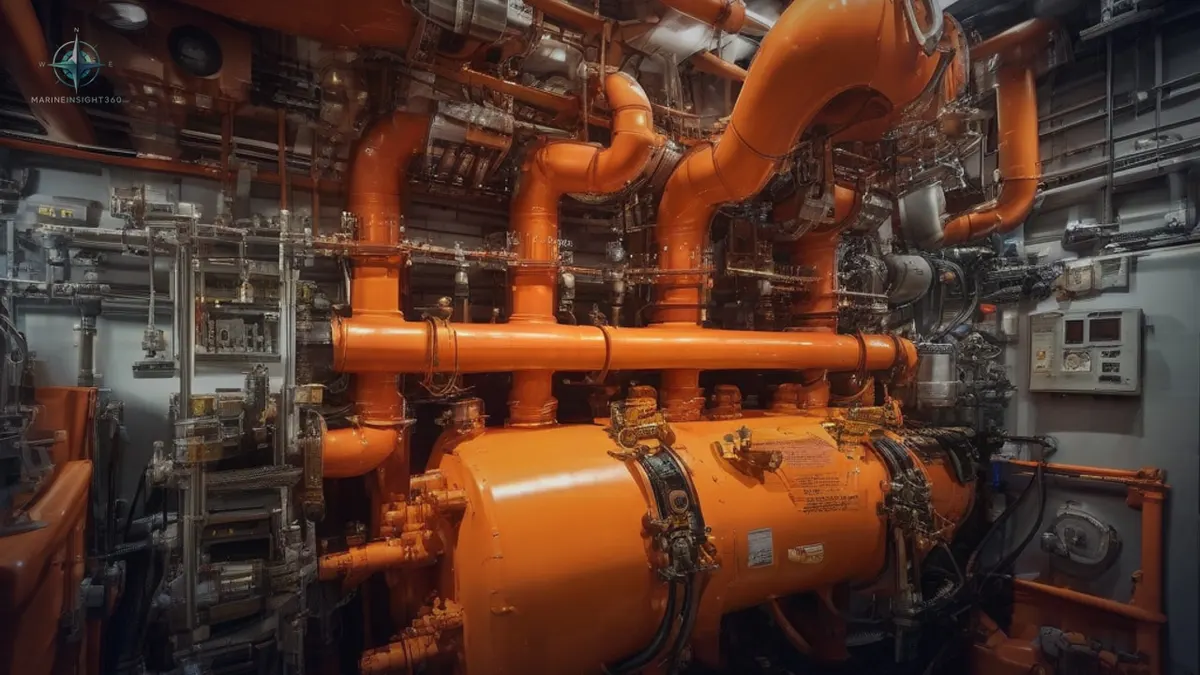
Cable Laying Ship is the focus of this article because it connects marine engineers, engine ratings and technical managers with the wider question behind Cable Laying Ship: How Submarine Cable Is Installed.
What a Cable‑Laying Ship Does
A cable‑laying ship is built to carry a single, continuous submarine cable from a storage tank or carousel to the seabed. The vessel pays out the cable over a bow or stern sheave at a controlled speed and tension so the line follows a pre‑surveyed route. Because a fault in the cable is permanent, the ship must lay it accurately or a repair vessel will have to fix it weeks later.
Key Design Features That Make Laying Possible
Installation vessels are usually about 140 m (459 ft) long, while repair ships are closer to 100 m (328 ft). Their design prioritises positioning accuracy over deadweight. The main deck holds a circular tank or a powered carousel that stores the cable in a coiled, kink‑free state. A linear cable engine or drum engine keeps tension while the cable passes over a sheave at the working end.
The lay speed is a controlled variable: too fast pulls the cable taut over high spots; too slow creates costly slack piles. Route engineers add a small percentage of extra cable to let the line follow the seabed contour rather than span peaks, preventing later abrasion and fatigue damage.
How the Cable Is Buried When Depth Allows
When the water is shallow enough for trawl gear and anchors, the cable is buried instead of laid on the surface. Two methods dominate:
- Towed sea plough – cuts a furrow and feeds the cable as the ship moves forward, ideal for long, sediment‑covered runs.
- Tracked or free‑swimming ROV – uses water jets to fluidise the seabed, better around crossings, rock outcrops and existing pipelines.
Both methods add heavy tow drag and reduce lay speed, so the burial technique largely determines the project schedule.
Dynamic Positioning: The Heart of Modern Cable Ships
Cable vessels use dynamic positioning (DP) to hold the hull on a line without anchors. DP systems combine satellite and acoustic references, gyros, thrusters and a control computer. DP class notation indicates redundancy, not accuracy. DP1 has no redundancy; DP2 tolerates a single failure in power, thrusters or control; DP3 adds physical separation so that fire or flooding in one compartment cannot disable the whole system.
Most cable ships are DP2, and some are DP3 when the risk of a drive‑off justifies it.
DP changes the engine room layout: generators are split across separated switchboards, bus ties are opened for critical operations, and machinery carries more spinning reserve than a conventional ship at the same speed. DP watch officers treat any alarm as a potential first failure in a chain, not a nuisance.
Deck‑Side Equipment That Sets a Cable Ship Apart
- Cable tanks or carousel – storage capacity determines how much cable can be installed in one load and how many port calls a route needs.
- Linear cable engine and drum engine – control tension during lay and recovery.
- Bow and stern sheaves – stern sheave for straight lay, bow sheave for repair and shore‑end operations.
- A‑frame and knuckle boom crane – launch and recover ploughs, ROVs and grapnels.
- Jointing shelter – a clean, temperature‑controlled compartment where fiber splices and repeater joints are made and tested before the section is re‑launched.
Repair Work Is a Different Job
Repair ships spend most of their time waiting on station. When a fault is reported, the ship first estimates the position electrically from the shore end, then grapples the cable, cuts it, recovers one end and buoys it, recovers the second end, makes the joint in the shelter and lays the repaired section back with a bight of extra cable. Each repair adds length, so heavily repaired routes show visible loops on the survey record.
What Other Deck Teams Should Know About Cable Operations
Under COLREG Rule 27, a vessel engaged in laying, servicing or picking up a submarine cable is restricted in its ability to manoeuvre. By day it shows a ball, a diamond and a ball in a vertical line; by night it shows all‑round red, white and red lights.
Where an obstruction exists it also shows two all‑round red lights or two balls on the side to be avoided, and two all‑round green lights or two diamonds on the side another vessel may pass. Treat the working ship as effectively unable to alter course. Passing distance should allow for the plough or ROV towed astern, the tow wire, and the cable being handled over the side.
Telecom vs. Power Cable Work
Telecom cable work supports international data traffic, while power cable work supports offshore wind export circuits and country‑to‑country interconnectors. Power cables are heavier and stiffer per meter, so power‑focused vessels need larger carousels, higher deck loading and greater tension capacity than a classic telecom cable ship. Owners rarely convert freely between the two roles.
Certificates and Training for Cable Ship Crew
Deck and engine certificates are the standard STCW tickets used across merchant shipping. Officers add a DP induction and simulator course plus logged DP sea time toward a full certificate, and that logged time carries real value ashore in offshore project roles. Cable jointers and ROV pilots come through specialist technician routes rather than the deck department.
Readers weighing an offshore move will find the Merchant Navy Careers section a useful next stop for how DP time is recorded and recognised.
Next Steps for Seafarers and Shipping Professionals
To learn more about the technical details of cable laying, check the Marine Insight 360 Knowledge Base sections on Marine Machinery and Shipboard Operations . For career guidance, visit the Merchant Navy Careers page.
For related equipment checks and troubleshooting guides, continue with the marine machinery knowledge base.
Recommended Reading
Typhoon Class Submarine: The Biggest Boats Ever Sent Under the Sea
The Soviet Typhoon class submarine remains the largest ever built: twin pressure hulls, 20 missile silos, and why nothing since has matched its size.
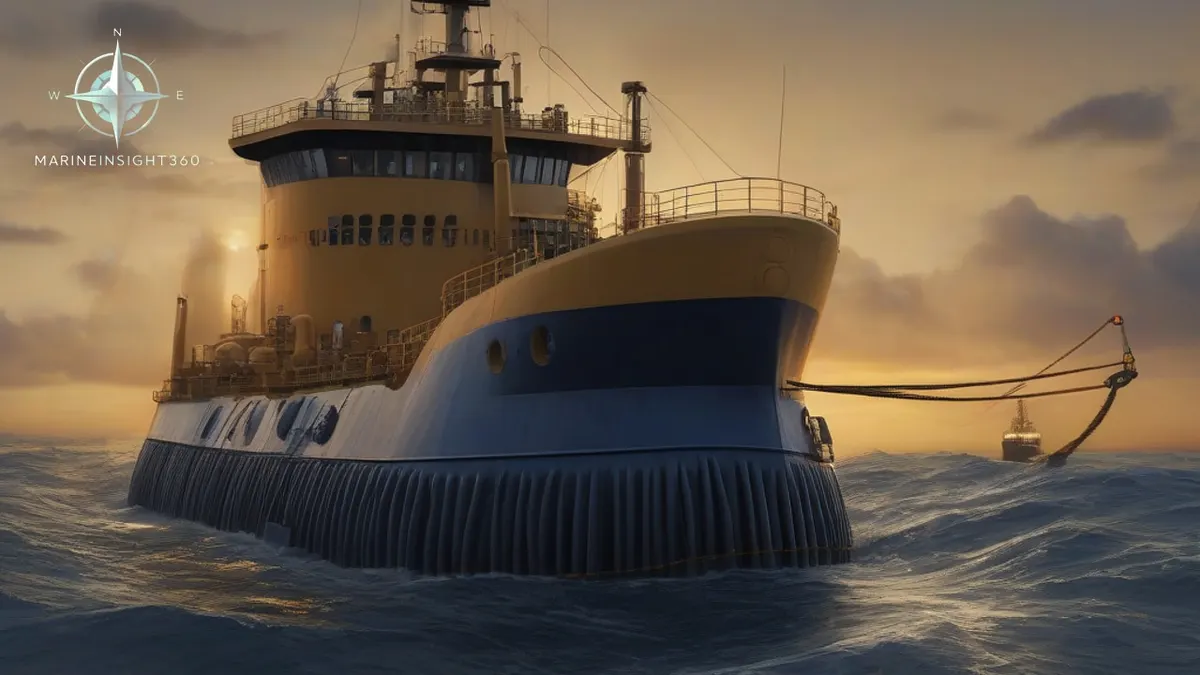
How are submarine cables installed on cable vessels?
How are submarine cables installed on cable vessels?: technology, equipment and fleet context for US, UK, Canada, Australia, Singapore and European...
Best Cable Laying Vessels in the World
Cable-laying vessels are specialized vessels that lay underwater cables on the seabed or ocean floor. These cables are used for communications, data…