
Coast Guard Fast Response Cutters: The 154 Foot Sentinel Class Explained
What Coast Guard fast response cutters do, the Sentinel class dimensions and speed, and what merchant crews should expect when one comes alongside.
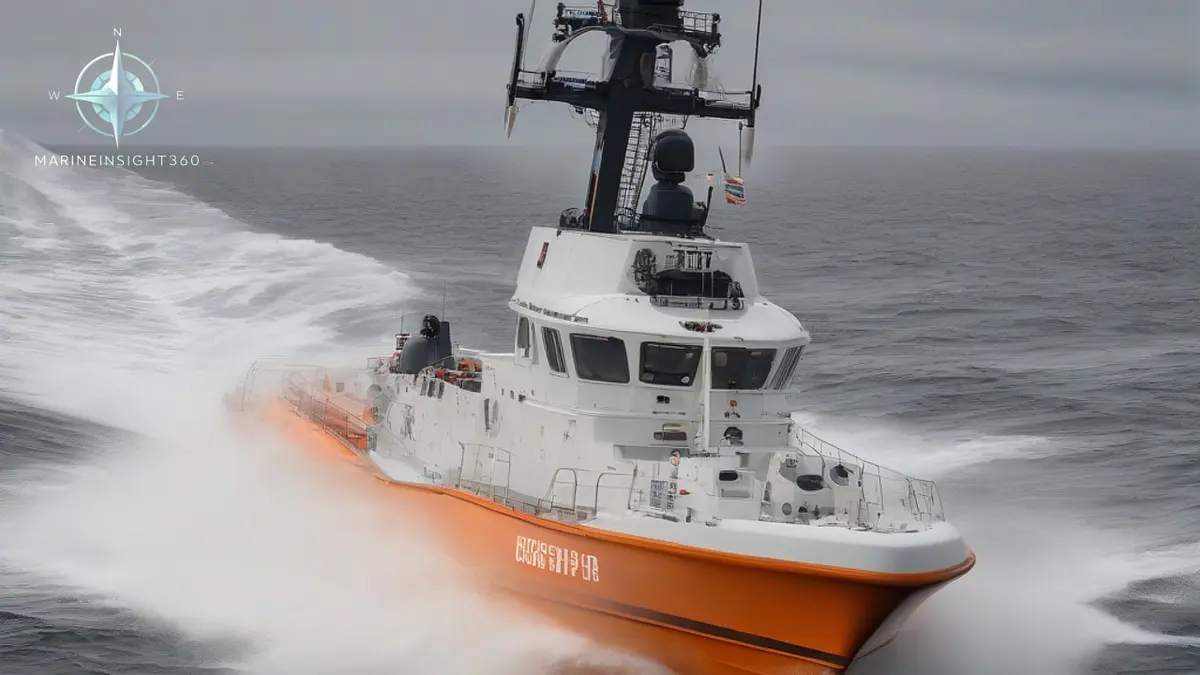
Coast Guard fast response cutters are 154 ft (47 m) patrol vessels that can work offshore on their own for up to five days. They run at speeds above 28 knots with a crew of 24. In United States service the type is the Sentinel class, and it fills the gap between harbor small boats and the larger endurance cutters.
Merchant crews calling at US ports usually meet one when the USCG runs a boarding, a search and rescue case or a fisheries inspection.
The design brief was replacement of an aging 110 ft patrol boat fleet with something that could keep the sea longer, carry a proper command and communications fit, and launch a boat over the stern instead of hoisting it over the side.
Sentinel class dimensions and performance
- Length: 47 m (154 ft)
- Beam: 7.6 m (25 ft)
- Draft: 2.9 m (9 ft 6 in)
- Displacement: 353 long tons
- Speed: more than 28 knots
- Range: 2,500 nautical miles
- Endurance: 5 days
- Propulsion: two diesels of 4,300 kW (5,800 shp) each, plus a 75 kW bow thruster
- Complement: 4 officers and 20 enlisted crew
Those numbers describe a coastal and near offshore asset rather than an ocean patrol vessel. A 2,500 mile range sounds generous, but five days of stores and 24 bunks are the real limit on a patrol, not the fuel.
The stern ramp is the design's key feature
The single most operationally significant feature is the stern launch and recovery ramp for a 26 ft over the horizon interceptor boat. Running a boat down a ramp while the cutter maintains way, rather than swinging it on a davit, lets the cutter put a boarding team in the water in sea states that would stop a davit launch outright.
For a merchant ship being approached, that changes the picture in a practical way. The cutter may stand off and send the interceptor, so the craft arriving at your accommodation ladder is a fast rigid hull boat rather than the cutter itself.
Sensors, communications and armament
Each cutter carries a command, control, communications, computers, intelligence, surveillance and reconnaissance suite, usually abbreviated to C4ISR. In practice that means the cutter can take a target picture from aircraft and shore centers and pass evidence ashore in real time, which is what makes a boarding stand up in court later.
Armament is a Mk 38 Mod 2 25 mm gun system, remotely operated and stabilized, with four crew served .50 caliber machine guns fitted on some hulls. That fit is sized for law enforcement and self defense, not for surface warfare.
What fast response cutters actually do
The published mission set covers port, waterway and coastal security, fisheries patrols, drug and migrant interdiction, search and rescue, and national defense support. Those missions explain the design compromises directly. High speed matters for interdiction. Five day endurance matters for fisheries work. The C4ISR fit matters for evidence handling. The class has been built in numbers, with the 45th cutter commissioned in 2021 and construction continuing after that.
What to expect if one approaches your ship
- Expect a VHF call asking for vessel details, last port, next port and crew numbers before anything comes alongside.
- Expect the boarding party to arrive by small boat rather than by the cutter coming alongside.
- Rig the pilot or accommodation ladder to the requested side, with a proper manrope and lighting, and have the master or a designated officer meet the team.
- Have certificates, crew documents, the oil record book and the garbage record book ready. Most delay comes from paperwork retrieval, not from the inspection.
- Log the boarding in the deck log with times, names and outcome. It matters if the call is later queried.
Where the FRC sits in the cutter fleet
Think of it as the middle tier. Response boats handle harbor and river work with day crews. Fast response cutters cover the near offshore for a few days at a time. Offshore and national security cutters run the long, deep water patrols. Knowing which tier is approaching tells you roughly how long the encounter will last and what the boarding team is equipped to do.
Deck officers trading in US waters should keep boarding procedures in the ship's contingency file alongside the security drills, and brief the gangway watch on them. The Marine Insight 360 Shipboard Operations section covers how to prepare for an inspection without losing the tide.
Boardings go wrong for predictable reasons, and almost none of them involve the cutter. The commonest is a badly rigged accommodation ladder: wrong angle, no manrope, missing lifebuoy or a slack safety net. The second is the oil record book. Gaps, back-dated entries and transfers logged without a matching sounding get written up, and a serious discrepancy can turn a routine boarding into a detention.
The other recurring fault is the small boat transfer itself. Boarding teams come alongside in a seaway, so a ship that fails to make a lee, keeps too much way on, or leaves the ladder swinging against the shell plating creates the hazard. Ships have been asked to alter course and reduce speed mid-boarding because the transfer was unsafe, which costs more time than the inspection.
Sources and further reading
What to read next
Recommended Reading
Typhoon Class Submarine: The Biggest Boats Ever Sent Under the Sea
The Soviet Typhoon class submarine remains the largest ever built: twin pressure hulls, 20 missile silos, and why nothing since has matched its size.
Italian Coast Guard Detains Livestock Carrier With 54 Safety Deficiencies
Italy detained the livestock carrier Blue Ocean A at Cagliari after 54 deficiencies. How Paris MoU detention works and why converted stock ships fail.
USCG Licensing Exam: How the Coast Guard Tests Deck and Engineer Officers
How the USCG licensing exam works: NMC modules, Regional Exam Centers, allowed references, passing scores, retest rules and a realistic preparation plan.