
Italian Coast Guard Detains Livestock Carrier With 54 Safety Deficiencies
Italy detained the livestock carrier Blue Ocean A at Cagliari after 54 deficiencies. How Paris MoU detention works and why converted stock ships fail.
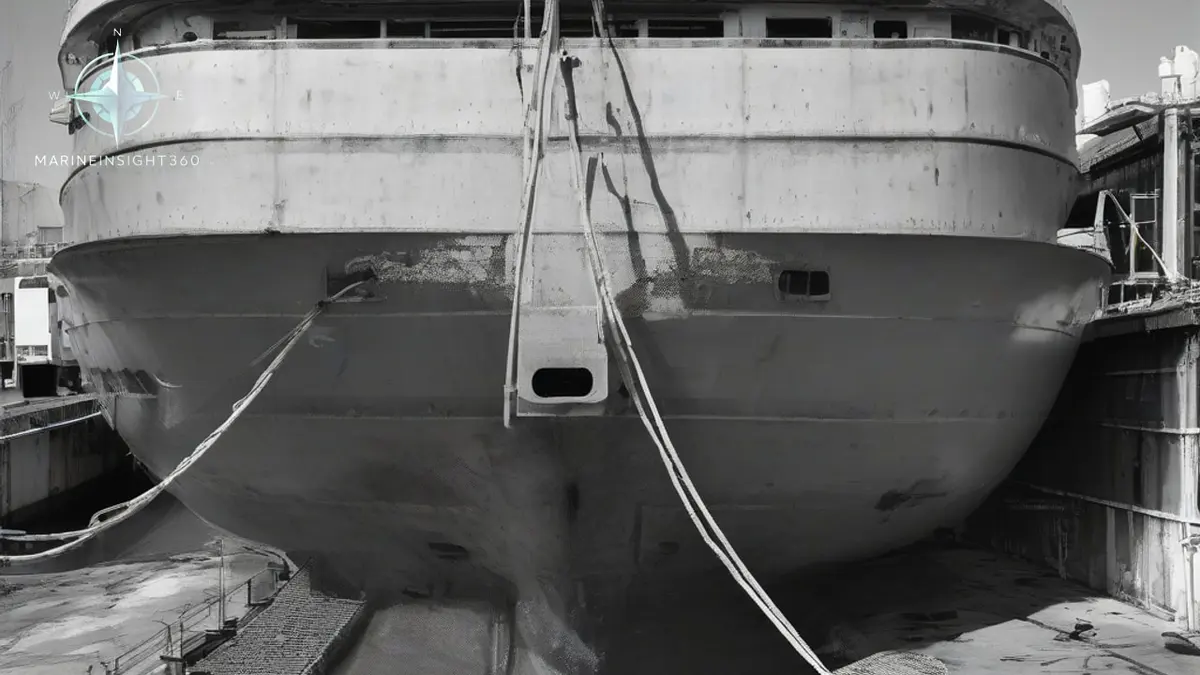
The Italian Coast Guard detained the livestock carrier Blue Ocean A at Cagliari after an inspection recorded 54 safety deficiencies. Thirty of them justified detention on their own. She had come close to grounding off San Pietro Island on 29 January. Her main engine failed with 33 crew on board. Cagliari Coast Guard units and Rimorchiatori Sardi tugs held her and towed her clear. They worked in 5 meter (16 ft) seas and 50 knot winds.
Under the Paris MoU she stays in port until the defects are cleared.
The deficiency list covered firefighting systems, life-saving appliances and bridge equipment, and inspectors also examined crew living conditions and onboard training. The vessel is 4,780 dwt and about 117 meters (384 ft) long, built in 1992 as a containership and converted to a livestock carrier in 2013. She is registered in St Kitts and Nevis and Turkish owned.
What 54 deficiencies and 30 detainable items actually signal
Port state control inspections in Europe run under the Paris Memorandum of Understanding, the regional agreement that coordinates inspection of foreign-flagged ships. Inspectors record deficiencies against coded categories. A deficiency is classed as detainable when it is serious enough that the ship should not sail until it is fixed. Thirty detainable items is not a documentation problem. It is a safety management system that has stopped functioning.
That distinction matters for how the case will be resolved. Deficiencies spread across firefighting, life-saving and navigation are not three unrelated faults. They are evidence that planned maintenance, defect reporting and internal audit are all failing at once. The International Safety Management Code requires every operator to run a documented safety system. That pattern normally produces a major non-conformity and a company audit under the Code, rather than a simple repair list.
How Paris MoU detention works in practice
The ship risk profile decides who gets inspected
Selection is not random. The Paris MoU assigns each ship a risk profile. It is built from flag performance, the performance of the recognized organization that acts for the flag, company performance across its fleet, ship type and ship age. High risk ships attract expanded inspections at shorter intervals. A 34-year-old converted livestock carrier under a small registry sits close to the worst end of every one of those inputs before an inspector steps aboard.
Repeated detentions can close the whole region
Detention is not the end of the escalation ladder. Repeated detentions within a rolling period can lead to a refusal of access order. That order bars the ship from every port in the region, not just the one where the inspection took place. For a vessel in a niche trade with a limited set of loading ports, that is a commercial death sentence rather than an inconvenience.
Why converted livestock carriers keep failing
Splash247 has reported that livestock carriers remain the worst-performing fleet in shipping on detention data, and the reasons are structural rather than bad luck.
- Most are conversions from old container or general cargo hulls that were never designed for the loads they now carry.
- Adding tiers of pens raises the center of gravity and increases windage. That changes handling and stability margins on a hull whose original data assumed neither.
- Ventilation, fresh water production and waste handling for thousands of animals impose electrical and machinery loads well beyond the original design.
- Ammonia, moisture and manure attack steel, cabling and fire detection heads continuously, so corrosion runs faster than a normal survey cycle assumes.
- Bedding, feed and manure add a substantial fire load in spaces that are hard to reach with fixed firefighting systems.
- Multi-tier pen decks obstruct escape routes and make a muster count slower in exactly the casualty where speed decides the outcome.
Now add a single main engine with no propulsion redundancy on a hull past 30 years of age. An engine failure in bad weather close to a lee shore becomes the scenario the Cagliari tugs actually faced.
What superintendents and crews should check on this ship type
- Test the emergency fire pump and the fixed system release under load, not on paper. Check the pipework in pen spaces for corrosion at supports and penetrations.
- Verify life-saving appliance servicing dates and the actual condition of launching gear, which corrodes fast in an ammonia-rich atmosphere.
- Confirm bridge equipment is not just present but calibrated and functional, including the echo sounder, the gyro repeaters and the steering changeover procedure.
- Check the stability booklet reflects the conversion as built and as currently loaded, including pen weights, feed, water and manure accumulation.
- Walk every escape route with a stopwatch at working pen density and record the result.
- Review main engine defect history and the availability of critical spares before accepting a voyage with limited sea room.
- Inspect crew accommodation, sanitation and provisions as a leading indicator, because operators who cut there cut elsewhere.
Why this detention matters to the wider trade
Live export is already under regulatory pressure in Europe. Council Regulation (EC) No 1/2005 governs the protection of animals during transport there, including carriage by sea. A high-profile detention with 30 detainable items strengthens the argument of every regulator and insurer who wants tighter conditions on the fleet. It also raises the vetting bar for the operators that do maintain their ships properly.
Charterers in this trade should be reading the Paris MoU inspection record before fixing, not after the tugs arrive. Related coverage of inspection regimes and shipboard safety systems sits in the Maritime Safety section.
Sources and further reading
- Italian Coast Guard Finds 54 Deficiencies After Saving Livestock Carrier
- Italian Coast Guard detains livestock carrier after grounding
- Livestock carriers remain shipping's worst-performing fleet
What to read next
Recommended Reading
USCG Licensing Exam: How the Coast Guard Tests Deck and Engineer Officers
How the USCG licensing exam works: NMC modules, Regional Exam Centers, allowed references, passing scores, retest rules and a realistic preparation plan.
Coast Guard Fast Response Cutters: The 154 Foot Sentinel Class Explained
What Coast Guard fast response cutters do, the Sentinel class dimensions and speed, and what merchant crews should expect when one comes alongside.
Suspected Smuggling Vessel Intercepted by U.S. Coast Guard off San Diego: How Panga Interdictions Work
A suspected smuggling vessel intercepted off San Diego shows how panga interdictions work, why these transits are lethal, and what other mariners should do.