
Engineering Officers: Ranks, Duties and Certification at Sea
How marine engineering officers are ranked, what each engineer owns in the machinery space, the STCW certificates required, and where the career leads.
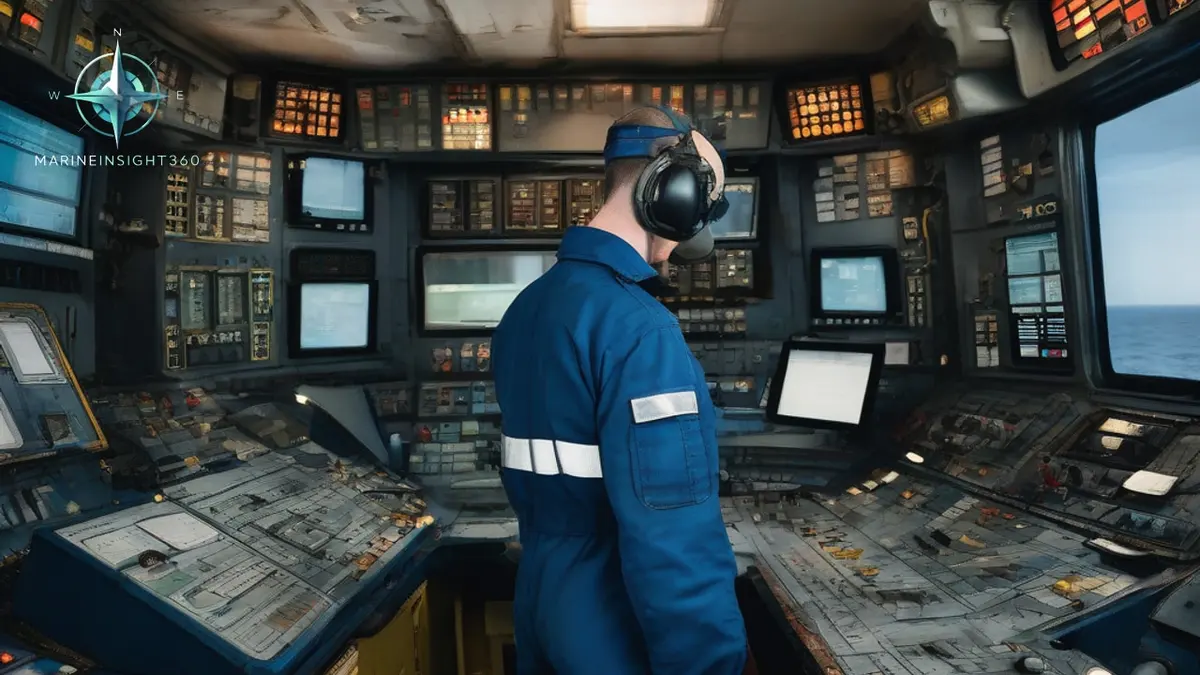
Engineering officers are the certificated engineers who operate and maintain a ship's propulsion plant, auxiliary machinery, electrical systems and pollution-prevention equipment. A deep-sea merchant ship normally carries a chief engineer, a second engineer, one or two watchkeeping engineers and an electro-technical officer. Every one of those certificates is issued under STCW Chapter III, the part of the IMO training convention covering the engine department, and is graded by the propulsion power of the ships it permits.
In practice the certificate is issued by a national administration such as the UK MCA, the USCG, Transport Canada or AMSA, and it is that flag's standard a port state inspector will check.
The engine room is a plant, not a machine. What separates engineering officers from shoreside plant engineers is that no contractor, no spare crew and no replacement part arrives until the next port.
Watchkeeping and the unattended machinery space
Most deep-sea ships hold an unattended machinery space notation, marked E0 or UMS, which allows the engine room to run without a physical watch overnight. Alarms extend to the duty engineer's cabin and to the bridge. That does not remove the watch. It moves it.
The duty engineer still does rounds, logs parameters and answers every alarm. Ships without the notation, and any ship in restricted maneuvering or carrying defective machinery, revert to a manned watch. Deciding when to break UMS and man the space is one of the chief engineer's regular judgment calls, and getting it wrong shows up in casualty reports as an unattended fire or an undetected leak.
How the engineering officer ranks split the plant
Fourth and third engineer
The operational-level ranks. They keep the engineering watch and each own a slice of the plant, typically auxiliary engines, purifiers, boilers, air compressors and the fresh water systems. Their certificate is officer in charge of an engineering watch under STCW Regulation III/1.
Second engineer
The engine room's operations manager. The second engineer runs the planned maintenance system, orders spares, plans overhauls around the trading pattern, supervises the ratings and does the heavy work on the main engine. This is the rank where a plant either stays ahead of its wear or falls behind it.
Chief engineer
Accountable for the whole plant, the bunkers, the department budget and its compliance record. The chief engineer signs for fuel, maintains the oil record book, deals with class surveyors and port state control, and decides what can be repaired at sea and what needs a yard.
Electro-technical officer
Automation, high-voltage systems, control gear and navigation electronics. The ETO became a certificated rank under STCW Regulation III/6 following the 2010 Manila amendments, reflecting how much of a ship's reliability now sits in switchboards and software rather than in moving parts.
The kilowatt limits on engineering certificates
Engine certificates are rated by propulsion power, not by tonnage. Regulation III/1 covers the watchkeeping engineer on ships powered by main propulsion machinery of 750 kW or more. Regulation III/2 covers chief engineer and second engineer on ships of 3,000 kW propulsion power and above. Regulation III/3 covers those same two ranks in the 750 kW to 3,000 kW band.
Promotion therefore depends on the class of ship as much as on the months served. Time on a 2,500 kW coaster does not by itself qualify an engineer to sail as second on a 20,000 kW container ship, and candidates who plan sea time carelessly lose whole promotion cycles to that gap.
Fuel and emissions rules reshaped the job
MARPOL Annex VI turned part of the engine room into a compliance function. The global sulfur limit of 0.50 percent mass by mass took effect in 2020, with 0.10 percent inside emission control areas, which made fuel changeovers, compatibility checks and scrubber operation routine work. Engineers now manage fuel segregation and the stability of blended fuels as a daily task rather than an occasional one.
Carbon rules added a second layer. The Energy Efficiency Existing Ship Index and the Carbon Intensity Indicator, both under Annex VI, tie machinery performance and voyage planning to a rating the operator has to defend. Engineers are increasingly asked to justify consumption per voyage, not only to keep the plant turning.
Where the career leads ashore
Sea-going engineering experience converts well. The common moves are technical superintendency, class surveying, marine insurance and casualty investigation, port engineering, newbuilding supervision, and commissioning or service work for equipment makers. Superintendents in particular are recruited almost entirely from former chief and second engineers, because the job is arguing with a shipyard about work the person has personally done.
- Plan sea time by kilowatt band , not only by months, so the certificate you want stays reachable.
- Keep an overhaul record of the units and systems you have personally stripped. Superintendent interviews turn on it.
- Learn the fuel rules properly. Bunker disputes and Annex VI findings are the two areas where a chief engineer's decisions carry direct financial weight.
If you are weighing deck against engine, compare how the certificates are limited: deck by tonnage, engine by propulsion power. That single difference shapes which ships you can sail on for the next fifteen years. The Marine Machinery section covers the systems behind each rank in more detail.
Sources and further reading
- IMO: International Convention on Standards of Training, Certification and Watchkeeping for Seafarers (STCW)
- STCW III/2: Chief Engineer and Second Engineer, 3,000 kW or More
- STCW III/3: Chief Engineer and Second Engineer, 750 to 3,000 kW
What to read next
Recommended Reading
Deck Officers: Ranks, Watch Duties and Career Path at Sea
What deck officers do on board, how the third officer to master ranks differ, the STCW certificates each rank needs, and how to build the sea time.
Naval Architecture and Marine Engineering: Two Disciplines, One Ship
Naval architecture and marine engineering split a ship between hull and machinery. Here is what each discipline owns, the degree route and career paths.

Naval Engineer: What the Role Covers and How It Differs From Marine Engineering
What a naval engineer does, how the role differs from marine engineering and naval architecture, and the qualifications, clearances and employers involved.