
Deck Officers: Ranks, Watch Duties and Career Path at Sea
What deck officers do on board, how the third officer to master ranks differ, the STCW certificates each rank needs, and how to build the sea time.
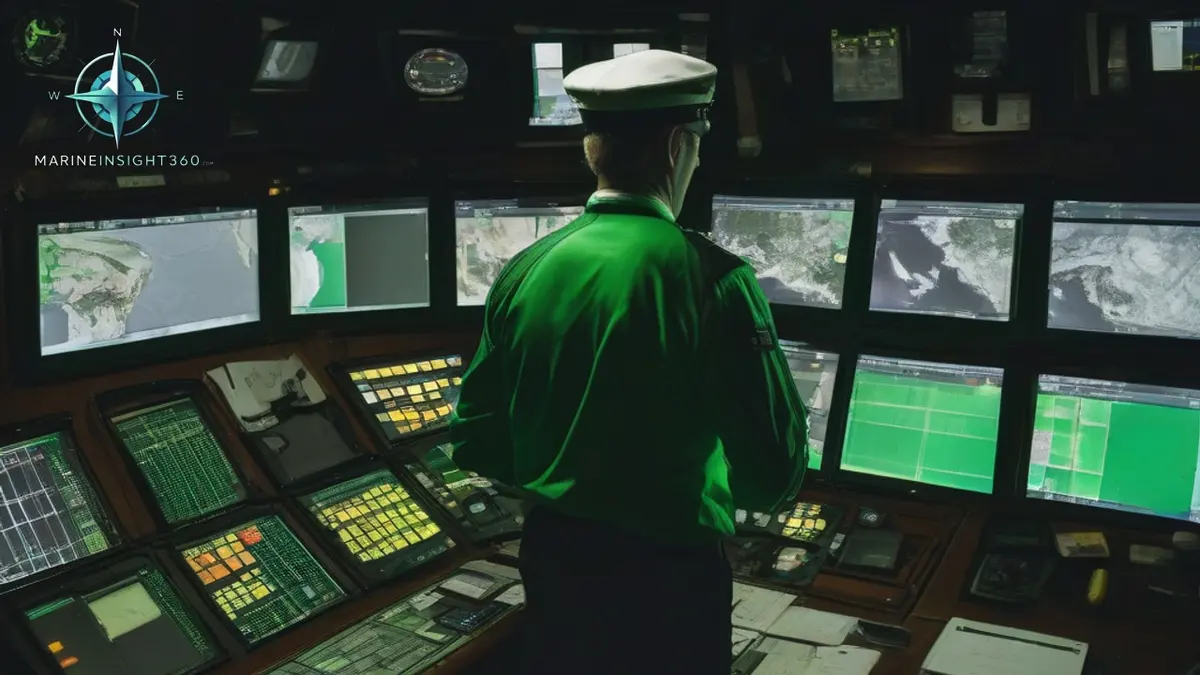
Deck officers are the certificated navigators who run a merchant ship's bridge, cargo work and safety systems. They keep navigational watches, plan and monitor passages, supervise loading and discharge, maintain stability and lifesaving gear, and lead emergency parties. Most cargo ships carry four deck officer ranks: third officer, second officer, chief mate and master. Each holds a Certificate of Competency issued under STCW, the IMO convention that sets minimum training and watchkeeping standards for seafarers.
Rank is not only seniority. Every step carries a different legal competence, a different sea-time requirement, and a different set of failures the holder is expected to prevent.
The navigational watch is the core of the deck officers' job
A watchkeeping officer is the master's representative on the bridge for four hours at a time, twice a day. The usual rotation is four hours on and eight off, split 12 to 4, 4 to 8 and 8 to 12. The officer of the watch owns collision avoidance under the COLREGs, the international rules for preventing collisions at sea, along with the ship's position and the decision to call the master.
This is judgment work rather than button pressing. Radar and ECDIS, the electronic chart display and information system, supply the data. The officer still decides whether a crossing situation under Rule 15 needs a bold alteration now or a small one in ten minutes. Fatigue sits behind a large share of bridge casualties, which is why STCW sets minimum rest hours and why rest-hour records get inspected.
How the four ranks divide the work
Third officer
The first certificated rank. The third officer keeps a watch and normally owns lifesaving and fire-fighting equipment: lifeboat and liferaft servicing dates, extinguishers, emergency escape breathing devices, muster lists and drill records. It is an inspection-facing job, because port state control officers open those lockers early.
Second officer
The ship's navigator. The second officer builds the passage plan berth to berth, keeps charts and publications corrected, manages ECDIS updates and cell permits, and usually runs the medical locker. Paperless bridges changed the method, not the duty. The route still has to be checked against no-go areas, under-keel clearance and traffic separation schemes.
Chief mate
Cargo, stability and the deck crew. The chief mate approves the loading plan, watches shear force and bending moment limits, controls ballast, runs deck maintenance and manages the ratings. On tankers the chief mate stands cargo watch through loading and discharge. This is the first management-level rank, and it is where careers either accelerate or stall.
Master
Command, with overriding authority for safety and pollution prevention. The master answers to the flag state, the owner, the charterer, port state control and any investigation board that follows an incident. Masters keep no routine watch. They take the bridge for pilotage, restricted visibility, heavy weather, close-quarters traffic and anything that does not look right.
The certificates behind each rank
STCW Chapter II splits deck certification into two levels. Regulation II/1 covers the officer in charge of a navigational watch, which is the third and second officer job. Regulation II/2 covers chief mate and master on ships of 500 gross tonnage and above. Both demand approved seagoing service, approved training and examination by the issuing administration.
The limitations attached to a certificate catch people out more often than the certificate itself. Tonnage and trading-area restrictions, tanker and gas endorsements, and separate ECDIS, GMDSS and medical care certificates all sit alongside the main document. GMDSS is the global maritime distress and safety system, and its operator certificate is a legal requirement for keeping a bridge watch. A certificate from one flag also needs an endorsement of recognition before its holder can sail on another register.
Entry routes in the United States, United Kingdom and Europe
The routes differ far more than the job does. In the United States, deck officers qualify through a federal or state maritime academy or an approved sea-service route, and sail on a Merchant Mariner Credential with a Third Mate endorsement issued by the US Coast Guard. In the United Kingdom, a sponsored cadetship leads to an MCA Officer of the Watch Certificate of Competency, with the sponsoring company covering fees and providing sea time.
Most of Western Europe runs degree-linked cadetships through national maritime universities, and Australia, Canada, New Zealand and Ireland follow broadly similar patterns. All of them converge on the same STCW standard, which is why deck competence transfers across flags in a way that many shore qualifications never do.
What separates a strong deck officer from an adequate one
- Calling early. Investigation reports repeatedly find officers who waited too long to call the master or to take avoiding action. Nobody is criticized in hindsight for calling early.
- Owning the passage plan. Accepting the last voyage's plan without rechecking tides, squat and traffic schemes is a common and expensive mistake.
- Defending the cargo numbers. A chief mate who can justify a stowage and stability calculation to a surveyor protects the owner from claims worth many years of salary.
- Record discipline. Drill records, rest-hour logs and maintenance entries are what an inspector actually reads.
If you are planning a route into the deck department, choose the flag state whose certificate you want first, then find the academy or sponsored cadetship that leads to it. The Merchant Navy Careers section sets out those entry routes in more detail.
Sources and further reading
- IMO: International Convention on Standards of Training, Certification and Watchkeeping for Seafarers (STCW)
- IMO: Training and Certification
- STCW Requirements for Officer in Charge of a Navigational Watch
What to read next
Recommended Reading
Engineering Officers: Ranks, Duties and Certification at Sea
How marine engineering officers are ranked, what each engineer owns in the machinery space, the STCW certificates required, and where the career leads.
Merchant Navy Rating Jobs: Duties and Career Path
Merchant Navy Rating Jobs: Duties and Career Path: career, certification and hiring context for US, UK, Canada, Australia, Singapore and European...
Boatswain: The Bosun's Job, Rank and Career Path at Sea
What a boatswain does on a merchant ship, where the bosun sits in the deck department, and the sea time and STCW certificates needed to get there.