
Hydrogen Fuel for Maritime Transportation
Hydrogen Fuel for Maritime Transportation: ports, trade and shipping-market context for US, UK, Canada, Australia, Singapore and European maritime readers.
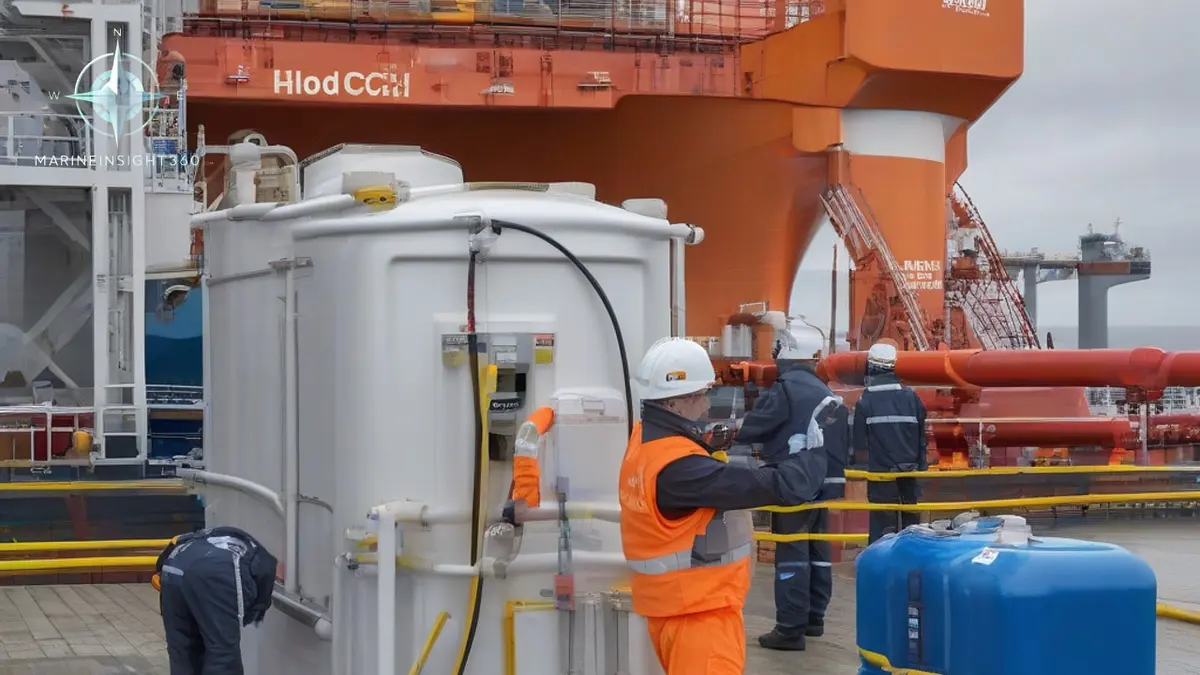
Hydrogen maritime fuel is one of the options being studied as shipping looks for lower-emission energy. It is not a simple drop-in replacement for marine diesel or heavy fuel oil. Hydrogen affects ship design, storage space, bunkering arrangements, crew training, safety systems and commercial planning.
This guide explains where hydrogen may fit in maritime transportation, what makes it attractive, what limits it today and what shipowners, engineers and seafarers should understand before treating it as a universal solution.
Why hydrogen is being considered
Hydrogen can be used in fuel cells to generate electricity, or in some combustion concepts where the machinery is designed for it. When used in a suitable fuel cell system, the ship can reduce direct exhaust emissions compared with conventional fossil fuels. That makes hydrogen interesting for ports, ferries, short-sea shipping, offshore support vessels and pilot projects near reliable supply infrastructure.
The attraction is strongest where the vessel has predictable routes, regular bunkering points and enough space for storage. Deep-sea cargo ships are more difficult because energy demand, voyage length and available volume become major constraints.
Storage is the central design challenge
Hydrogen has low volumetric energy density compared with many marine fuels. It may need high-pressure tanks, cryogenic storage or carrier fuels that add complexity. Storage arrangements can affect cargo capacity, stability, ventilation, segregation and emergency access.
Designers must consider tank location, structural protection, leakage detection, fire zones, piping routes, pressure relief and classification society requirements. The result is not only an engine-room question. Hydrogen changes the ship layout.
Fuel cells, engines and ship power demand
Fuel cells can supply electrical power for propulsion motors, hotel loads or auxiliary systems. They may be combined with batteries, power management systems and conventional backup machinery. For larger vessels, kW and MW demand, redundancy, transient load response and maintenance access all need careful design.
Combustion concepts may use modified engines, but they still require attention to flame speed, fuel injection strategy, NOx control, ventilation and safety. Engineers should avoid assuming that hydrogen can be handled like normal bunker fuel.
Bunkering and port infrastructure
A hydrogen vessel is only useful if fuel can be supplied safely and reliably. Bunkering requires trained personnel, compatible connectors, emergency shutdown systems, gas detection, exclusion zones and clear communication between ship and shore.
Ports also need storage, delivery logistics and procedures accepted by authorities and insurers. For early adoption, routes with fixed schedules and dedicated terminals are more practical than tramp trading where the next port may not have suitable fuel.
Safety and crew training
Hydrogen is light, diffuses quickly and can ignite under certain conditions. This means crew training, ventilation, detection, isolation and emergency response are essential. Safety plans should include gas leaks, fire response, enclosed-space risks, electrical isolation and maintenance of high-pressure components.
Training should be vessel-specific. A rating or engineer working near hydrogen equipment needs clear procedures, not just a general alternative-fuel briefing.
Common mistakes
- Calling hydrogen zero-emission without considering how the hydrogen is produced.
- Ignoring storage volume and vessel layout changes.
- Assuming every trade route will have bunkering infrastructure soon.
- Underestimating crew training, emergency planning and maintenance requirements.
The rulebook hydrogen has to pass through
The IMO's IGF Code governs ships using gases and other low-flashpoint fuels, but its detailed prescriptive provisions were written for natural gas. Hydrogen has no equivalent chapter, so a hydrogen ship is approved through the alternative design and arrangements route in SOLAS Chapter II-1.
That route is not a shortcut. The designer has to demonstrate to the flag state, with the classification society involved, that the arrangement gives a level of safety equivalent to the prescriptive rules. The evidence is a documented hazard identification study, a quantified risk assessment and a test programme, and the approval attaches to that ship rather than to a fuel type.
The consequence for an owner is scheduling. Approval work runs in parallel with design and cannot be compressed at the end, and a change to tank location or ventilation late in the build reopens the safety case rather than amending a drawing.
The numbers behind the storage problem
Hydrogen is stored either as a compressed gas at 350 or 700 bar, or as a liquid at about minus 253 degrees Celsius. Even as a liquid it holds roughly a quarter of the energy per litre of marine gas oil, so the tank volume for a given range is several times larger before insulation and structure are counted.
Cryogenic storage adds boil-off. A liquid hydrogen tank warms however good the insulation is, and the gas that forms has to be consumed, reliquefied or vented through a safe route. A ship lying idle alongside for a week needs an answer for that, and venting flammable gas in port is a conversation with the port authority rather than a design detail.
The safety case then has to deal with the gas itself. Hydrogen burns in air across a wide range of concentrations, roughly 4 to 75 percent, so a leak too lean or too rich to ignite with another fuel can still find a flammable mixture. The flame is close to invisible in daylight, which is why detection has to be instrumented.
Production is the other half of the emissions claim. Hydrogen made by steam reforming natural gas carries the carbon released at the reformer. Only hydrogen electrolysed with low-carbon electricity delivers the well-to-wake reduction the fuel is chosen for, and a charterer counting emissions will ask which one was bunkered.
Recommended Reading
How Hydrogen Fuel Cells Will Transform the RoPax Fleet
How Hydrogen Fuel Cells Will Transform the RoPax Fleet: ports, trade and shipping-market context for US, UK, Canada, Australia, Singapore and European...

Shipping Faces Fuel Transition Hurdles Amid IMO Delay and Fragmented Rules
Learn how the IMO’s one‑year delay and fragmented emissions rules affect shipping fuel transition, compliance options, and crew operations.
Shipboard Fuel, Diesel, & Lubricant Oil Storage Tanks
Shipboard Fuel, Diesel, & Lubricant Oil Storage Tanks: ports, trade and shipping-market context for US, UK, Canada, Australia, Singapore and...