
Hapag-Lloyd Invests in APM Terminals Rotterdam to Drive Growth
Hapag‑Lloyd’s new stake in APM Terminals Rotterdam aims to expand capacity, improve hinterland links and enhance crew efficiency in Europe’s busiest port.
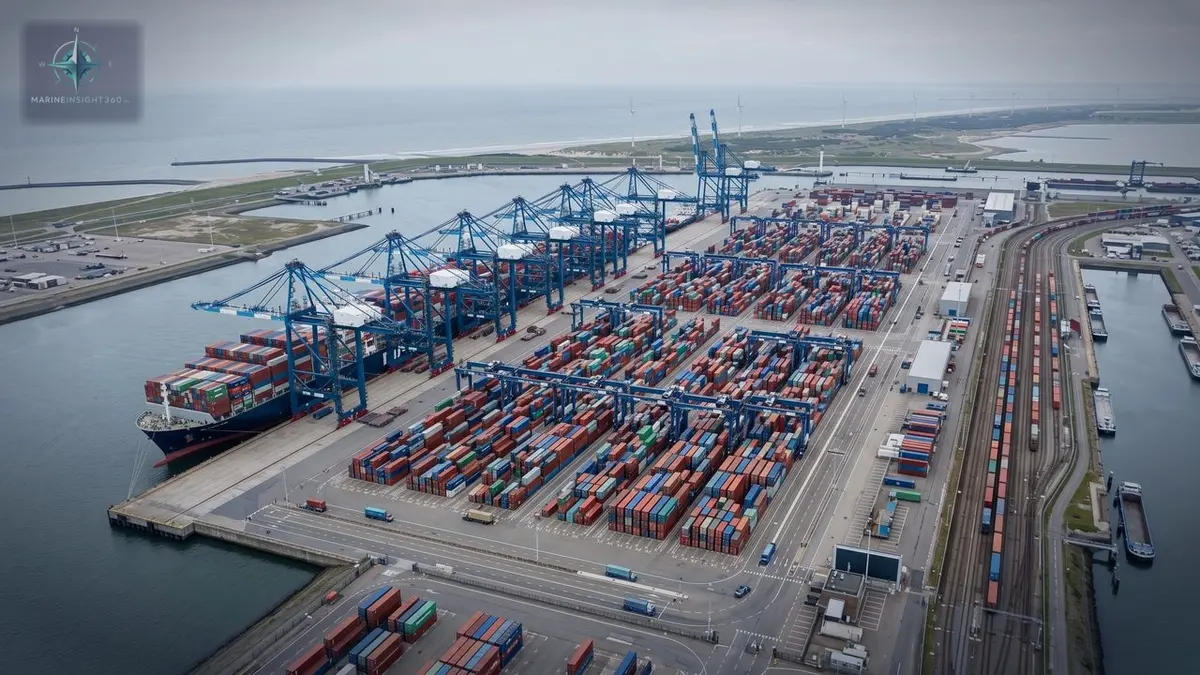
What Hapag‑Lloyd’s APM Terminals Rotterdam Investment Means for You
Hapag‑Lloyd’s minority investment in APM Terminals Rotterdam will give carriers faster berth turn‑arounds, lower fuel burn while waiting and more predictable schedules, because the plan adds new berths, automates yard handling and improves rail and inland‑waterway links for the shipping chain.
In practice, crews can expect less idle time at berth, cadets will see more reliable training windows, and shipping managers will gain tighter schedule control across Europe’s busiest gateway.
Rotterdam Remains the Strategic Hub Connecting Continents
Rotterdam is the world’s largest container port by throughput, moving over 9 million TEU (twenty‑foot equivalent units) each year. Its deep‑water berths accommodate the biggest ocean‑going vessels, while an extensive rail network and direct access to the North Sea make it the primary entry point for cargo from Asia, the Americas and the European Union.
For carriers, a stronger link to Rotterdam translates into a direct, high‑capacity route to the heart of Europe, reducing trans‑shipment delays and supporting just‑in‑time supply chains.
What the APM Terminals Deal Actually Covers
The partnership is a capital investment in APM Terminals’ Rotterdam terminal group. Although equity and financial terms are confidential, the agreed actions focus on four key areas:
- Berth expansion and yard automation – new berths and automated stacking systems are planned to cut vessel turnaround times.
- Hinterland connectivity – coordinated rail and inland‑waterway links will smooth cargo flow to and from the port.
- Operational synergies – shared logistics platforms aim to lower handling costs and improve scheduling accuracy.
- Shared logistics platforms – integrated IT solutions will provide real‑time visibility for carriers and terminal operators.
Berth Expansion and Automated Stacking
Adding berths increases the number of vessels that can dock simultaneously, while automated stacking cranes (ASCs) speed up container placement and retrieval. The combined effect is a measurable reduction in the time a ship spends alongside the quay.
Hinterland Connectivity Improvements
Coordinated rail services and enhanced inland‑waterway connections will reduce bottlenecks on the land side of the terminal. Faster rail lifts and barge transfers mean cargo moves more swiftly from ship to final destination, supporting tighter delivery windows.
Direct Operational Impact for Crews, Cadets and Shipping Managers
For seafarers, the investment translates into more reliable berth availability, which directly cuts idle time and the associated fuel consumption. Cadets on board will experience smoother cargo operations, as automated yards reduce the manual handling steps that often cause delays.
Shipping managers can anticipate tighter berth schedules, but with the benefit of improved port services and faster cargo clearance. Lower handling costs and better predictability in cargo flow can improve route planning and overall profitability.
Benefits for Seafarers
- Reduced waiting time at berth, leading to lower fuel burn and emissions.
- More predictable arrival windows, easing crew fatigue management.
- Automation in the yard lessens the need for manual cargo supervision on deck.
Benefits for Operators and Managers
- Improved schedule adherence supports tighter liner rotations.
- Lower handling costs enhance margin calculations.
- Enhanced data sharing through shared logistics platforms aids decision‑making.
Risks, Trade‑offs and What to Watch
While efficiency gains are clear, several risks accompany the investment:
- Capital allocation risk – the upgrades pay off only if throughput growth remains steady, which can be volatile.
- Regulatory exposure – changes in EU maritime or environmental rules could raise operating costs.
- Competitive dynamics – other carriers may pursue similar terminal partnerships, increasing pressure on berth slots.
Operators should monitor these factors closely, as they can affect the long‑term return on the terminal upgrades.
How to Use This Information Today
Shipping companies should track the progress of the Rotterdam upgrades and assess how the enhanced infrastructure fits their existing route plans. Crews can prepare for clearer berth schedules by reviewing the latest port call notices and updating fuel management strategies.
For detailed terminal performance data, visit the Marine Insight 360 Ports section. To understand how terminal investments affect crew operations, read the Shipboard Operations guide.
By investing in one of the world’s busiest ports, Hapag‑Lloyd is positioning itself to capture a larger share of European trade flows, delivering a more reliable and efficient service corridor for crews and operators alike.
Recommended Reading
Top Oil and Gas Terminals in Middle East
Oil and gas terminals serve as import, export, and storage gateways and logistics hubs for crude oil, liquefied natural gas (LNG), and petroleum products.…

What is a Marine Growth Prevention System (MGPS) On a Ship?
What is a Marine Growth Prevention System (MGPS) On a Ship?: shipboard and port-operations context for US, UK, Canada, Australia, Singapore and...

Iran retaliates with missiles and drones, defying Trump’s warning
Learn iran with practical maritime context, safety checks, operational guidance and related resources for global shipping readers.