
Understanding Underwater ROVs
Exploring the basics and applications of Remotely Operated Vehicles in the maritime industry
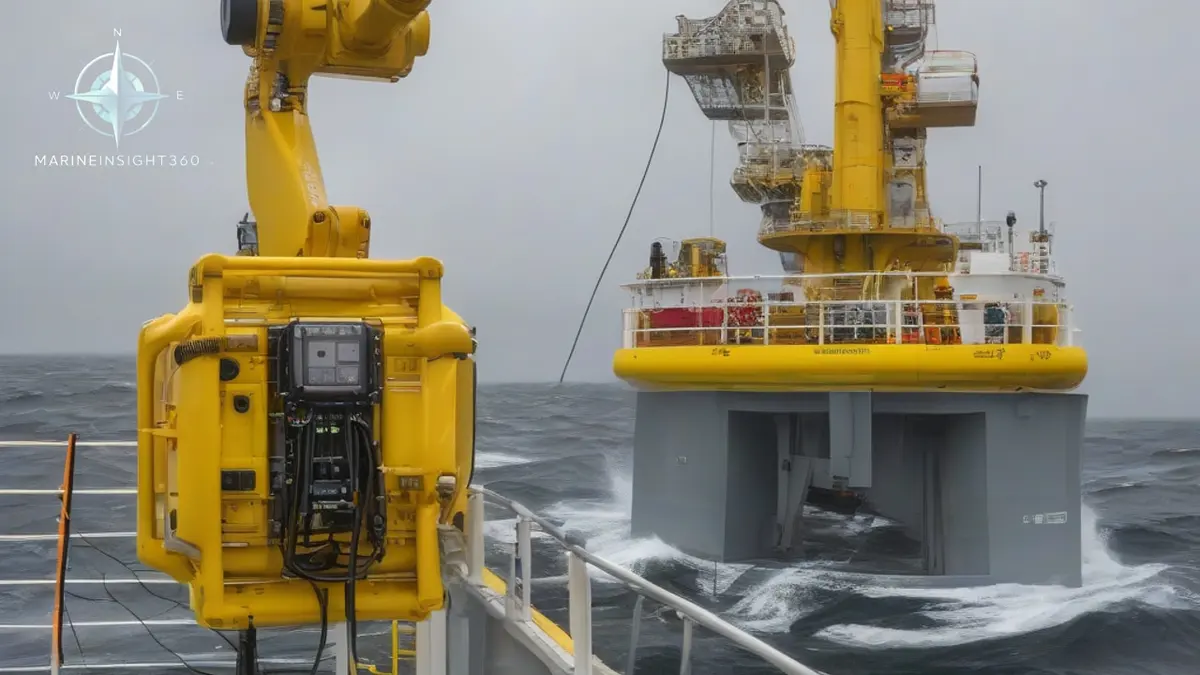
Understanding Underwater ROVs: A Comprehensive Guide
What is an Underwater ROV?
An underwater ROV (Remotely Operated Vehicle) is a tethered vehicle that carries cameras, lights, manipulators, and a suite of sensors, and is operated from a surface vessel or shore-based control station. The tether supplies power, video, and data, while thrusters provide three-dimensional maneuverability.
Core Components of an ROV
The essential parts of any ROV are: * Tether: a cable that delivers electricity and transmits high-definition video and sensor data back to the operator; its diameter and length affect drag and maximum depth. * Thrusters: usually hydraulic pumps driving propellers on work-class units, or electric motors on inspection and hobby models, enabling forward, vertical, and lateral movement. * Payload: cameras, LED lights, manipulators (robotic arms), and scientific or industrial sensors such as sonar, USBL (ultra-short baseline positioning), CTD (conductivity-temperature-depth) probes.
* Control Console: a workstation with joysticks, video monitors, and software that interprets operator commands and displays telemetry.
ROV Classes, Depth Capability, and Typical Missions
ROVs fall into four broadly recognized categories, each suited to different operational needs: * Micro/Mini: ≤ 3 kg, often used by hobbyists or for shallow-water inspections; depth limit typically under 30 m (100 ft). * Inspection: designed for work up to about 5 m (16 ft) depth; ideal for hull surveys, small-scale pipeline checks, and diver-assist tasks. * Light-Work: rated to ≤ 2 000 m (6 562 ft); common on offshore oil gas platforms for valve operation, subsea connector inspection, and marine-science sampling.
* Heavy-Work: capable of ≤ 3 500 m (11 483 ft); deployed for deep-sea cable laying, large-scale infrastructure maintenance, and high-resolution scientific surveys.
Key Applications and Operational Impacts for Crews
Across the global maritime sector, ROVs serve four primary markets: * Offshore Oil Gas: routine pipeline and well-head inspections, valve turning, and subsea structure monitoring. * Marine Science: deep-sea sampling, biodiversity surveys, and wreck exploration. * Military and Security: mine-countermeasure missions, harbor surveillance, and underwater reconnaissance. * Public Safety and Search-and-Rescue: locating sunken vessels, aircraft debris, or lost cargo.
For crew members, the main operational considerations are tether management, real-time data interpretation, and ensuring the surface support vessel has sufficient power generation capacity.
Cost, Procurement, and Regulatory Considerations
Purchasing an ROV involves balancing upfront capital outlay against mission requirements: * Price Bands: hobby micro-ROVs can cost a few hundred dollars, while heavy-work units often exceed several million USD. * Procurement Path: commercial operators typically source from specialized vendors who can customize thruster layouts, sensor suites, and manipulator reach. * Verification of Compliance: with ISO 13628-8 (underwater operations) and IMCA (International Marine Contractors Association) standards is standard practice. * Regulatory Landscape: no universal licensing regime exists for ROVs, but operators must adhere to national maritime safety regulations.
Emerging Technologies and Choosing the Right ROV
Recent advances are reshaping the ROV market: * Lighter Composite Materials: reduce overall weight, allowing smaller vessels to deploy deeper-class units. * Autonomous-Assisted Navigation: AI-driven obstacle avoidance and waypoint tracking lessen operator workload and improve safety. * Enhanced Sensor Packages: high-resolution multibeam sonar, hyperspectral cameras, and real-time 3-D mapping are becoming standard on mid-range work-class models.
When selecting an ROV, evaluate the following criteria: * Depth Requirement: match the vehicle's rated depth to the deepest point of the mission, adding a safety margin of at least 10 %.
* Payload Capacity: ensure the ROV can carry the necessary tools—manipulators, sampling devices, or specialized sensors—without compromising stability. * Power Source: decide between ship-board power (common for large units) and battery-powered autonomous operation (emerging for smaller, short-duration tasks). * Integration with Existing Systems: verify compatibility with the vessel's control consoles, data networks, and certification regime. * Total Cost of Ownership: factor in training, spare parts, tether wear, and scheduled overhauls over the expected service life.
Next Steps for Seafarers and Maritime Professionals
For a deeper explain ROV specifications, procurement checklists, and operator training resources, visit Marine Insight 360's Knowledge Base section on "Underwater Vehicles".
Why this matters
Understanding Underwater Rovs matters because maritime decisions rarely sit in one department. A route story may affect insurance, crew planning and cargo timing. A machinery topic may affect maintenance, safety permits and spare-part planning. A career question may affect training, documents and joining readiness.
For readers in the United States, United Kingdom, Europe, Canada, Australia, Singapore and other mature maritime markets, the useful angle is practical: what changes, what remains uncertain, and which checks should happen before a decision is made.
Operational context
In daily maritime work, understanding underwater rovs should be compared with vessel type, flag requirements, company procedures, port expectations, cargo risk and crew competence. The same topic can look different on a container ship, bulk carrier, tanker, offshore vessel, training ship or shore-side logistics desk.
That is why this article avoids treating the subject as a standalone headline. It connects the issue with the checks that ship operators, masters, safety officers and compliance teams can use when reading a report, preparing for a voyage, reviewing a procedure or planning a career step.
Checks for readers
- Identify whether the topic affects safety, compliance, maintenance, navigation, cargo, careers or commercial planning.
- Confirm the latest company procedure, official notice, training requirement or port instruction before acting.
- Separate background context from instructions that require a qualified officer, engineer, surveyor or shore-side approval.
- Use related Marine Insight 360 pages to build a stronger topic cluster instead of reading one article in isolation.
For related compliance and onboard procedure topics, continue with the shipboard operations knowledge base.
Recommended Reading
What is a Remotely Operated Underwater Vehicle (ROV)?
What is a Remotely Operated Underwater Vehicle (ROV)?: technology, equipment and fleet context for US, UK, Canada, Australia, Singapore and European...
The World's Largest Underwater Restaurant
There are countless amazing underwater dining options, but none compare to Under , the world's largest underwater restaurant.
What are Mid-Ocean Ridges: Earth's Underwater Mountain Chains
Mid-ocean ridges are giant underwater mountain ranges formed by the constant movement of plates and the heat and magma that erupt from the Earth's core.…