
Escalating Tensions: US Navy's Maiden Taiwan Strait Transit of with China
Escalating Tensions: US Navy's Maiden Taiwan Strait Transit of 2024 with China: career, certification and hiring context for US, UK, Canada, Australia,...
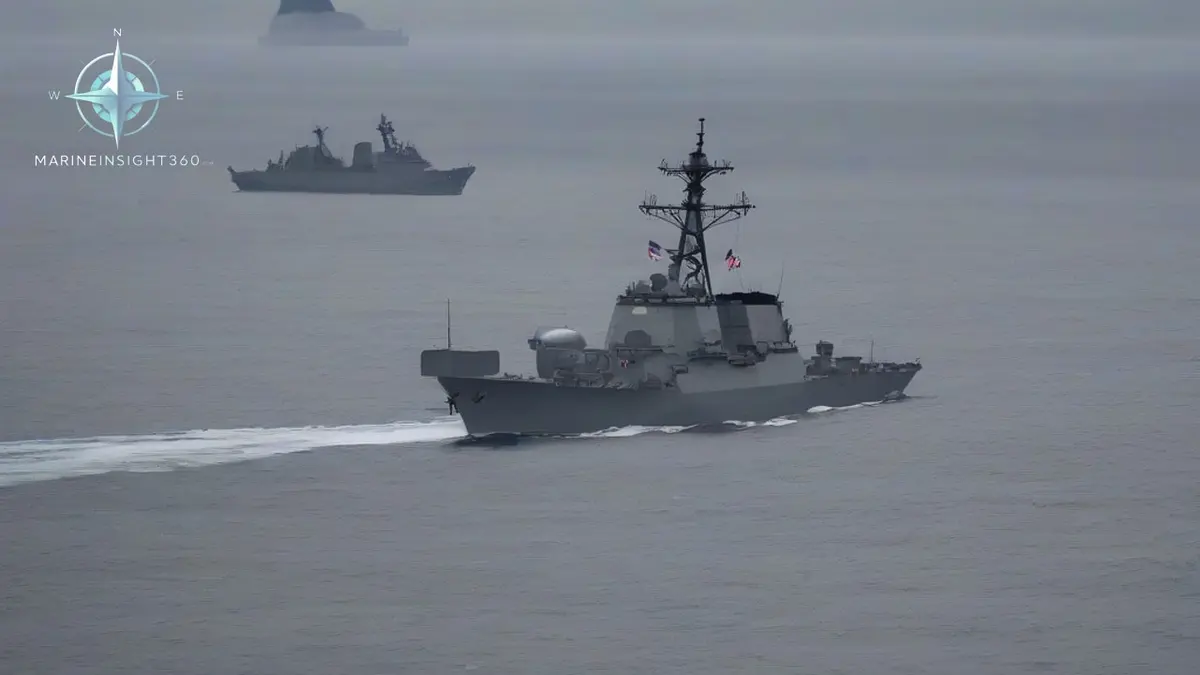
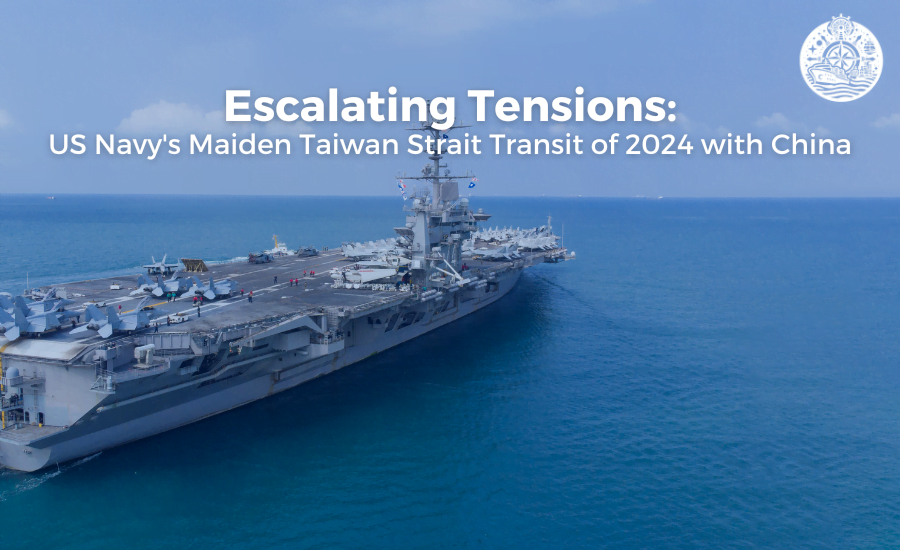
The Taiwan Strait transit of the destroyer USS John Finn drew a Chinese accusation that the American military had violated international law and acted provocatively in East Asia. It was the first passage of a U.S. Navy warship through the waterway separating Taiwan from mainland China since Taiwan held elections about two weeks earlier.
Despite warnings from Beijing that its re-election would heighten conflict risks. The ruling Democratic Progressive Party of Taiwan secured a third consecutive presidential victory. China's Communist Party regards Taiwan as its territory, although it has never controlled it. Xi Jinping has not ruled out the possibility of using military force to achieve "reunification" between the mainland and the island.
Under the Taiwan Relations Act, the U.S. is mandated to provide Taiwan with military support for self-defense. A move seen by Beijing as interference in its internal affairs. Cmdr. Meagan Greene, spokesperson for the U.S. Navy's 7th Fleet, emphasized on Wednesday that the USS John Finn's transit through the Strait was conducted under international law.
Navigating through a corridor within the Taiwan Strait, the vessel traversed waters beyond the territorial jurisdiction of any coastal state. Cmdr. Meagan Greene highlighted that the USS John Finn's passage underscores the U.S.'s dedication to safeguarding freedom of navigation, a fundamental principle for all nations.
Although the USS John Finn's passage through the Taiwan Strait marks the first such transit in 2024, U.S. military vessels and aircraft have frequently navigated the area. According to Collin Koh, a research fellow at the S. Rajaratnam School of International Studies in Singapore, records show that last year alone, U.S. Navy and Coast Guard vessels, along with Navy reconnaissance planes, made approximately 11 transits of the strait.
In response to these actions, China's Defense Ministry cautioned that the United States is engaging in risky behavior with its ongoing military operations in the region. Urging a change in behaviour to avoid maritime or aerial incidents. The ministry emphasized the need for the U.S. to adhere to international law, refrain from provocative actions, and maintain discipline among its troops.
Earlier this month, Adm. John Aquilino, the commander of the U.S. Indo-Pacific Command, accused Beijing of escalating tensions, anticipating a display of force against Taiwan following the island's recent election results. Speaking at a defense forum in Hawaii, Aquilino expressed his concerns about China's intentions in the region.
According to Singaporean analyst Koh, Beijing may feel slighted by Washington's actions, especially after agreeing to resume military-to-military talks in December 2023. Koh suggests that Beijing may perceive its decision to reopen such channels as a gesture of goodwill. But disheart by what it perceives as a lack of reciprocity from the U.S.

Reference: CNN Wire
Disclaimer:
Please note that the content present on this website is intended for general informational purposes only. While we strive to ensure that the information presented is accurate and up to date, we do not make any guarantees regarding its completeness, reliability, or suitability for your specific needs. Any reliance you place on the information provided is at your own discretion and risk.
We disclaim all liability for any loss arising from your use of this website or any information contained herein.
Why the width of the strait decides the legal argument
The two statements in this story are not really in conflict about facts. They disagree about where the water belongs. A Taiwan Strait transit by a US warship is a legal assertion as much as a ship movement.
Under the law of the sea a coastal state's territorial sea extends 12 nautical miles from its baselines. The Taiwan Strait is roughly 70 nautical miles across at its narrowest. Twelve miles from each side leaves a broad corridor in the middle that belongs to neither, and that corridor is what the US Navy statement means by waters beyond the territorial sea of any coastal state.
Beijing's position is not that the middle of the strait is territorial sea. It is that the strait falls within Chinese jurisdictional waters, and that foreign military activity there is provocative rather than routine. That is an argument about what a warship may do inside an exclusive economic zone, not about who owns the seabed beneath it.
The asymmetry worth knowing sits in the ratifications. China is a party to the UN Convention on the Law of the Sea. The United States has never ratified it, and asserts the navigation provisions as customary international law instead. Each side argues from a rulebook the other reads differently.
Recommended Reading
Average Merchant Navy Salary in US & UK
The Merchant Navy offers a thrilling career, blending high seas adventure with competitive salaries and global travel. Whether you’re eyeing a role as a…
Average Merchant Navy Salary in the UK & USA
A UK Merchant Navy salary is determined based on rank position, experience level, ship type, and employment status between private shipping companies and…
Navy or Marines: What's different?
Navy or Marines: What's different?: career, certification and hiring context for US, UK, Canada, Australia, Singapore and European maritime readers.