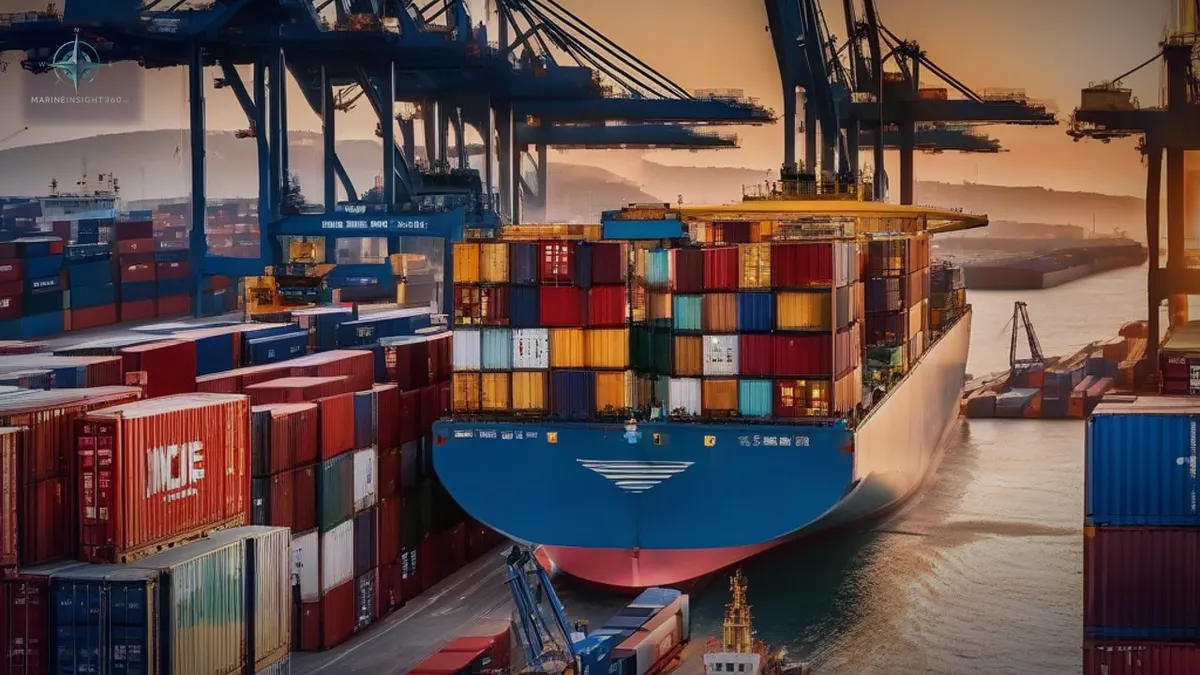
AFL-CIO Calls for Strengthening of U.S. Cargo Preference Rules
The AFL-CIO is calling for stronger US cargo preference rules to move more government cargo on US-flagged ships.
The demand
The AFL-CIO is calling for a strengthening of US cargo preference rules, aiming to increase the use of US-flagged ships in international trade. The labour federation argues that stronger rules would bolster the American maritime industry, whose fleet and workforce have contracted for decades.
Cargo preference is the long-standing mechanism behind the demand: US law requires a share of government-generated cargo, such as food aid and military equipment, to move on US-flagged vessels. That reserved cargo base underwrites ships, jobs and the shoreside ecosystem around them.
Why the rules matter more than they sound
Operating under the US flag costs more than open registries, in crew wages, compliance and building requirements, so US-flag operators rarely win purely commercial international cargo on price. Preference cargo is what keeps much of the internationally trading US fleet viable, and each percentage point of enforcement translates into ships kept in service.
The strategic argument is the one unions and defence planners share: sealift. Military logistics depend on merchant ships and, critically, on the pool of qualified American mariners to crew reserve vessels when activated. A fleet allowed to shrink below crewing thresholds is a national capability lost quietly.
The wider policy moment
The call joins a broader push to rebuild US maritime capacity, spanning shipbuilding, port investment and mariner recruitment. Whether preference rules are strengthened, and how firmly they are enforced, will signal how serious that push is.
For mariners and operators, the practical outcome to watch is enforcement and cargo volumes rather than statements. Careers and vessel employment follow the cargo, and this debate decides where a meaningful share of it sails.
The workforce math explains the urgency. Qualified mariners keep their licences current by sailing, so every US-flag ship removed from trade shrinks the pool available for sealift activation twice over, once in berths and again in lapsed credentials a few years later. Cargo preference is one of the few levers that maintains that pool without direct subsidy, which is why labour, operators and defence planners keep converging on it from their different directions.
The counterarguments, mainly about shipping cost for aid and government programmes, are part of the same debate and deserve honest accounting. What the AFL-CIO is really asking is that the full strategic value of the fleet be priced into that comparison, not just the freight differential on each cargo.
Why this matters
AFL-CIO Calls for Strengthening of U.S. Cargo Preference Rules rarely stays in one lane. A shipping development like this can reach vessel operators, charterers, insurers, port teams, seafarers and regulators at the same time.
The useful read is the signal under the headline: what actually changes, what still needs confirming, and where it touches safety, compliance, trade or fleet planning.
What it changes day to day
Shipping developments feed straight into voyage planning, compliance costs and commercial decisions. Ship managers may revisit risk assessments, commercial teams may reprice, and crews may need fresh instructions before the next call.
Confirm the detail against primary sources first, official notices, company updates, port and flag guidance, rather than acting on the headline.
Signals to follow
- Confirmation, or correction, from primary sources in the coming days.
- Movement in insurance clauses, schedules or commercial terms.
- Whether other routes, ports or fleets become exposed.
- Guidance from owners, managers or authorities that turns news into action.
For your desk
Keep this shipping development in perspective — it is one data point in a moving picture. Connect it to your own exposure: the trades you run, the rules you sit under, the roles you are filling, and act only where it genuinely bears on them.