British military reports an attack on a tanker in the Strait of Hormuz close to Oman
A British military report details a projectile strike on an oil tanker near Oman, highlighting risks and operational impacts for shipping professionals. Learn r
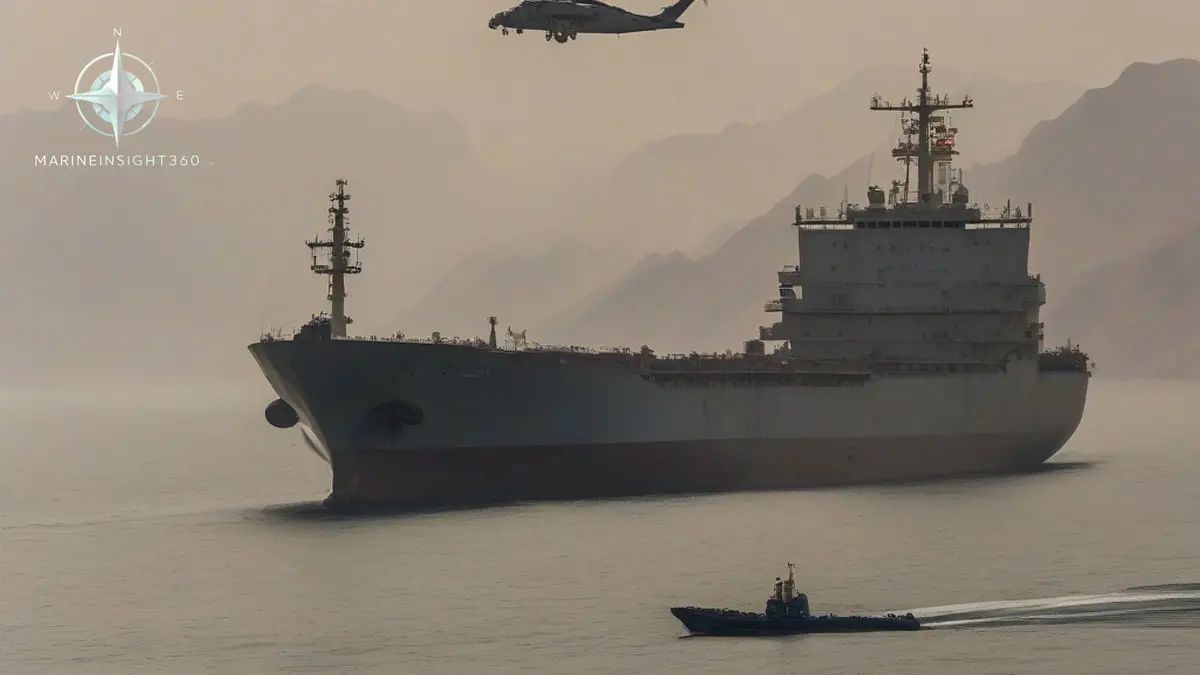
The British military reports an attack on a commercial tanker in the Strait of Hormuz close to Oman, in which an unknown projectile started a fire and injured four of the 20 crew.
Attack on Tanker in Strait of Hormuz Sparks Regional Security Concerns
The attack happened on Sunday. A commercial tanker was struck by an unknown projectile in the Strait of Hormuz near Oman. The strike caused a fire and injured four crew members. UK Maritime Trade Operations (UKMTO), the Royal Navy desk in Dubai, reported the attack. It occurred as the vessel attempted to transit southward toward the Gulf of Oman. All 20 crew members were accounted for. This incident follows recent Iranian missile strikes on US-allied nations and commercial ships.
That sequence is heightening tensions in the region.
Incident Details and Immediate Response
The UKMTO confirmed the projectile hit the port side of the tanker. The hit triggered a fire that crews extinguished without environmental damage. The source of the attack remains unconfirmed. Iranian state media claimed the vessel ignored warnings before being struck. This aligns with a pattern of Iranian Revolutionary Guard Corps (IRGC) attacks on commercial shipping. That pattern includes a Qatari LNG tanker set ablaze in recent weeks.
Crews in similar situations are advised to:
- Immediately report incidents via satellite communication to UKMTO and flag state authorities.
- Activate ship security alarms (SSA) and follow muster plans for fire and abandon-ship scenarios.
- Document damage with photographs and timestamps for insurance and legal claims.
Operational Implications for Shipping
The Strait of Hormuz is a critical global energy artery. It sees 20% of the world's oil and 15% of LNG pass through its waters daily. This attack disrupts routine operations by:
- Forcing vessels to divert to safer routes, increasing fuel costs and transit times.
- Triggering higher insurance premiums for ships transiting the region.
- Compelling shipowners to invest in additional security measures like private armed guards.
Operators should review their security plans against the International Ship and Port Facility Security (ISPS) Code. They should also consult the UKMTO's weekly security bulletins for real-time updates.
Regional Tensions and Historical Context
This attack follows Iran's recent missile strikes on US-allied nations. Those nations include Bahrain, Kuwait, and Qatar. The timing is significant as Iran mourns Supreme Leader Ayatollah Khamenei's recent death. No direct link has been established.
Maritime professionals should note:
- Iranian state media often issues vague "warnings" before attacks.
- Missile strikes typically occur within 12-50 nautical miles of Iranian territorial waters.
- UKMTO coordinates with NATO and Gulf Cooperation Council (GCC) states for joint patrols.
Decision Criteria for Shipowners and Operators
When planning transits through high-risk zones, operators must balance:
- Cost vs. Safety: Armed guards are engaged through a private maritime security company under the flag state's authorisation, and the coastal state's weapons law governs what may be carried into port.
- Route Optimization: Slightly longer routes through the Gulf of Oman may avoid chokepoints.
- Insurance Requirements: Some policies exclude coverage for politically motivated attacks.
A common mistake is underestimating the speed of threat escalation. The Marine Machinery section of Marine Insight 360 recommends regular drills for fire suppression and abandon-ship scenarios.
Next Steps for the Industry
Shipping companies should:
- Review the UKMTO's latest security bulletin for recommended transit protocols.
- Access the Marine Insight 360 Knowledge Base for historical attack patterns.
- Engage with P&I clubs to update risk assessments for 2024.
This incident underscores the need for real-time situational awareness systems. Vessels transiting the region should maintain continuous radar and visual watch for small craft.
What UKMTO is, and what reporting an incident to it does
UKMTO stands for United Kingdom Maritime Trade Operations. It is a Royal Navy organisation based in Dubai. It is not the Maritime and Coastguard Agency, which is the separate UK body responsible for survey, certification and coastguard search and rescue.
UKMTO runs a voluntary reporting scheme. A merchant vessel entering the region sends an initial report, then daily position reports, and a final report on leaving. Registration is free and carries no obligation beyond the reporting itself.
The point of registering is the response, not the paperwork. A ship already on the plot has its position, speed, crew number and cargo known before anything happens, so a distress call does not have to begin with basic identification. UKMTO passes that picture to the warships working the area and to the Combined Maritime Forces staff in Bahrain.
British military reports of an attack usually reach the trade through this channel first, ahead of any national statement. That is why an advisory arrives before attribution does, and why the early wording describes a projectile rather than naming who fired it. Readers tracking the wider picture can use the Strait of Hormuz guide and the Middle East shipping risk guide.