Explained: How UAE And Saudi Arabia Bypass Closed Strait Of Hormuz To Export Oil | West Asia War
Learn how UAE and Saudi Arabia use pipelines to keep oil flowing when the Strait of Hormuz is closed, and what it means for shipping routes.
How UAE and Saudi Arabia Keep Oil Flowing When the Strait of Hormuz Is Blocked
The UAE and Saudi Arabia keep crude moving around a closed Strait of Hormuz by pumping it through their own pipelines to loading ports outside the waterway. When the strait shut during the West Asia conflict, those lines carried oil to Fujairah and to the Red Sea coast, where tankers could still load for global markets.
Why the Strait of Hormuz Is a Global Bottleneck
The Strait of Hormuz is the only maritime outlet for about 20 % of the world’s oil and gas. A closure means that any tanker bound for Europe, Asia or the Americas must find an alternate route, adding time, cost and risk. Shipping companies therefore look for ways to avoid the choke point entirely.
UAE’s Pipeline Workarounds
Habshan–Fujairah (ADCOP)
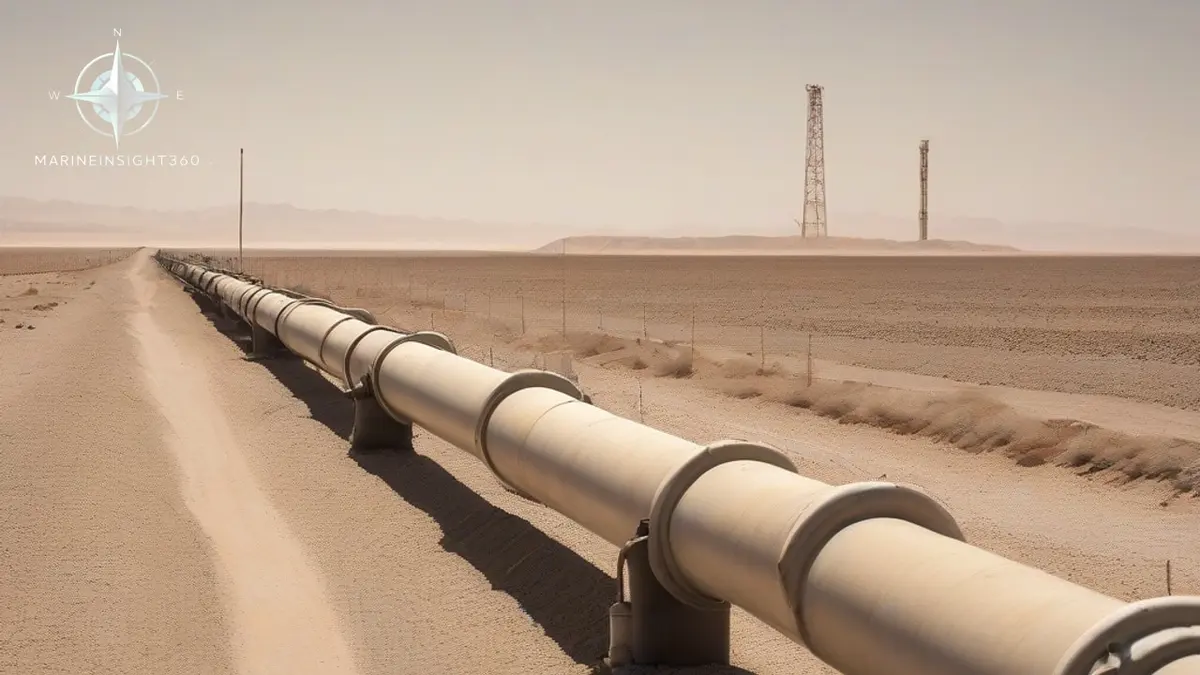
The UAE’s Habshan–Fujairah pipeline, also called the Abu Dhabi Crude Oil Pipeline, runs from the Habshan fields to the port of Fujairah on the Arabian Gulf. From there, oil can be loaded onto tankers that sail around the Arabian Peninsula, bypassing the Strait.
Second Pipeline
After Iran blocked tankers in the Strait, the UAE completed a second pipeline that also feeds into Gulf ports. The dual‑pipeline system has become essential for maintaining export volumes during periods of geopolitical tension.
Saudi Arabia’s East‑West Pipeline and Red Sea Route
East‑West Pipeline
Saudi Arabia’s East‑West pipeline carries crude from the eastern fields to the western coast, where it can be shipped via the Red Sea. This route sidesteps the Strait entirely.
Red Sea Bypass
Saudi Arabia was constructing a pipe that would run over the Red Sea, but Iran destroyed it during the war. The project was later resumed, and the pipeline is now a key alternative for Saudi exports.
Why the pipelines cannot replace the strait
Both systems are real and both work, but their combined capacity is a fraction of what passes through Hormuz. Pipelines are sized for normal export patterns, not for absorbing a closure, so even running flat out they leave most of the strait's throughput with nowhere to go.
There is a second limit that has nothing to do with pumping. Only crude produced in Saudi Arabia and the UAE can enter these lines. Qatari LNG, Kuwaiti and Iraqi crude and Iranian exports have no bypass at all, so a closure still removes a large share of Gulf energy from the market whatever the two pipelines carry.
Fujairah is a bunkering and storage hub in its own right, among the busiest anywhere. Crude leaving the Gulf by that route competes for the same jetties, tankage and anchorage as the bunker trade that normally works there, so a surge through the bypass tends to show up first as congestion and waiting time rather than as a shortfall.
Operational Impact for Shipping Professionals
- Route Planning – With pipelines feeding Gulf ports, vessels can chart a course that avoids the Strait, reducing transit time by up to 12 % for some routes.
- Port Capacity – Fujairah and western Saudi ports must handle increased tanker traffic, requiring robust berth management and crew scheduling.
- Security Considerations – Bypassing the Strait removes the risk of naval blockades but introduces new security concerns in the Red Sea and Gulf waters.
- Maintenance and Reliability – Pipeline integrity is critical; any rupture could halt exports and trigger market volatility.
Decision Criteria for Operators and Shippers
- Cost vs. Time – Pipeline exports are cheaper per barrel but may involve longer sea legs; tankers through the Strait are faster but subject to geopolitical risk.
- Port Infrastructure – Evaluate berth availability, loading rates, and hinterland connectivity at Gulf ports.
- Security Risk Assessment – Compare the likelihood of interdiction in the Strait versus the Red Sea or Gulf waters.
- Regulatory Compliance – Ensure that all export routes meet IMO and local maritime regulations.
Common Mistakes to Avoid
- Assuming pipelines are infallible; regular inspections and maintenance are essential.
- Underestimating the time required to reroute vessels to alternative ports.
- Failing to coordinate with port authorities for berth scheduling during surge periods.
- Neglecting crew training on new navigation routes and security protocols.
Why This Matters to the Shipping Industry
Understanding how Gulf states keep oil flowing when the Strait of Hormuz is closed equips operators, cadets and shipping professionals to make informed routing and logistics decisions that safeguard revenue and safety.
Next Step
For deeper insight into pipeline operations and port logistics, consult Marine Insight 360’s Marine Machinery and Shipboard Operations sections.