Greece plans green fund to accelerate shipping’s decarbonization
Greece is preparing a green fund to accelerate shipping decarbonization, supporting owners as IMO emission targets tighten.
What Greece is proposing
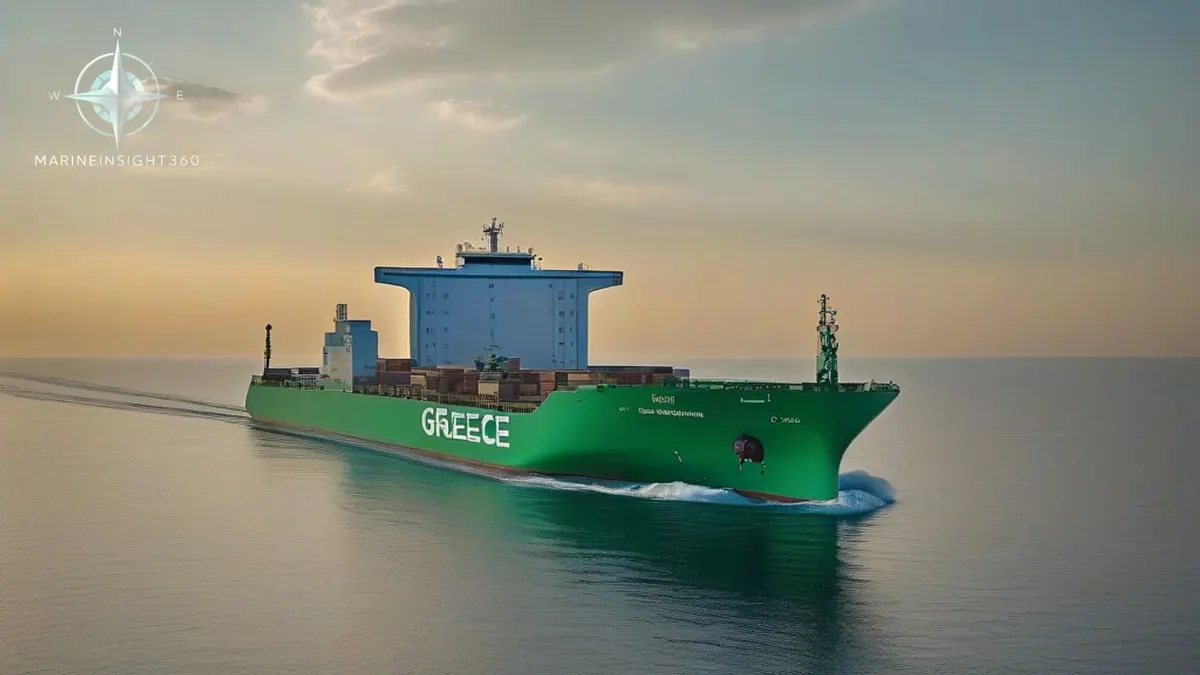
Greece is planning a green fund dedicated to speeding up the decarbonization of its shipping industry. The move is part of the country's wider effort to cut greenhouse gas emissions and support the International Maritime Organization's reduction targets, which call for emissions from shipping to fall by at least half by 2050 against a 2008 baseline.
For Greece the stakes are unusually high. Greek owners control one of the largest merchant fleets in the world, so any national financing tool that lowers the cost of cleaner tonnage moves real capacity, not just policy paper.
Why a fund, not just a rule
Regulation tells owners what to achieve. A fund helps them afford it. The gap between a conventional newbuilding and a dual-fuel or emissions-abated design is measured in millions of dollars per hull, and mid-sized owners struggle to carry that premium alone.
Public co-financing can also unlock private lending. Banks apply emissions criteria to ship finance under the Poseidon Principles framework, and a state-backed green fund gives lenders a stronger basis to price efficient vessels favourably.
What owners and crews should watch
The practical questions are scope and eligibility. Owners will want to know whether the fund covers retrofits such as energy-saving devices and fuel conversions, or only newbuildings, and whether smaller companies can access it on workable terms.
Crews will feel the outcome in the engine room. Cleaner fuels change bunkering, tank handling and safety routines, and training has to arrive before the fuel does. National funding that includes a training component tends to deliver smoother transitions on board.
For the wider market, the signal matters: when a leading ship-owning nation puts money behind decarbonization rather than statements, charterers and financiers read it as the direction of travel for the whole industry.
Timing adds pressure of its own. Greek-controlled tonnage trades heavily into European waters, where emissions already carry a price through the EU's trading system, and compliance costs rise each year a vessel stays conventional. A national fund that helps owners move early converts a mounting regulatory bill into a one-time investment decision, which is precisely the calculation most fleets are struggling to close on their own.
Why this matters
Greece plans green fund to accelerate shipping’s decarbonization rarely stays in one lane. A sustainability development like this can reach vessel operators, charterers, insurers, port teams, seafarers and regulators at the same time.
The useful read is the signal under the headline: what actually changes, what still needs confirming, and where it touches safety, compliance, trade or fleet planning.
What it changes day to day
Sustainability developments feed straight into voyage planning, compliance costs and commercial decisions. Ship managers may revisit risk assessments, commercial teams may reprice, and crews may need fresh instructions before the next call.
Confirm the detail against primary sources first, official notices, company updates, port and flag guidance, rather than acting on the headline.
Signals to follow
- Confirmation, or correction, from primary sources in the coming days.
- Movement in insurance clauses, schedules or commercial terms.
- Whether other routes, ports or fleets become exposed.
- Guidance from owners, managers or authorities that turns news into action.
For your desk
Keep this decarbonisation story in perspective — it is one data point in a moving picture. Connect it to your own exposure: the trades you run, the rules you sit under, the roles you are filling, and act only where it genuinely bears on them.