Houthi Red Sea Attacks: Maritime Security & Shipping Impact
Explore how Houthi attacks have cut Red Sea shipping by up to 90%, the costs, crew risks, and decision points for vessels in 2024.
Houthi Red Sea attacks numbered more than 190 against commercial ships and warships by October 2024, and container traffic through the corridor fell 90% between December 2023 and February 2024 as vessels avoided the route.
What Happened? Houthi Attack on a Tanker
On Monday, a commercial oil tanker in Yemeni waters was struck by five small boats operated by Houthi forces, according to maritime security reports from JFeed. The incident highlights the growing threat posed by the Houthi movement in the Red Sea and the Gulf of Aden.
Scale of the Threat: Numbers and Trends
Since November 2023, Houthi forces have launched more than 100 attacks against commercial ships and warships, JFeed reports. By October 2024, that figure had risen to over 190 attacks. The attacks have forced a sharp decline in shipping activity: container traffic through the Red Sea fell 90% between December 2023 and February 2024, and the capacity of container ships in the same corridor dropped 80%. Shipments in the region have also dropped 75% as vessels avoid the route.
Operational Impact on Shipping Routes
Vessels that previously traversed the Suez Canal and the Red Sea are now rerouting around the Cape of Good Hope or through the Strait of Malacca. These detours add 10–15 days to voyages, increase fuel consumption, and expose crews to harsher weather. The sudden loss of a 90% corridor also strains port schedules and cargo handling capacities at alternative hubs.
Decision Criteria for Vessels and Operators
Risk Assessment
Operators must weigh the probability of an attack against the cost of detour. A lower‑risk route may be 20–30% more expensive in fuel and time.
Insurance and Liability
Premiums for vessels that continue through the Red Sea have risen sharply. Insurers now require additional security measures—such as armed guards or escort vessels—to maintain standard rates. Failure to comply can result in higher payouts or policy cancellations.
Crew Safety and Training
Crews must be briefed on emergency procedures specific to small‑boat attacks, including rapid damage control and evacuation drills. Regular training reduces the risk of casualties and equipment loss.
Common Mistakes and How to Avoid Them
- Underestimating the Threat – Some operators still treat the Red Sea as a routine passage, ignoring the 190+ attacks recorded by October 2024.
- Ignoring Updated Intelligence – Relying on outdated maritime security reports can lead to misinformed routing decisions.
- Neglecting Crew Preparedness – Failing to conduct regular drills for small‑boat attack scenarios can increase damage and loss of life.
- Overlooking Cost-Benefit Analysis – Choosing the safest route without evaluating fuel, time, and port congestion can inflate operating costs unnecessarily.
What ship hardening can and cannot stop
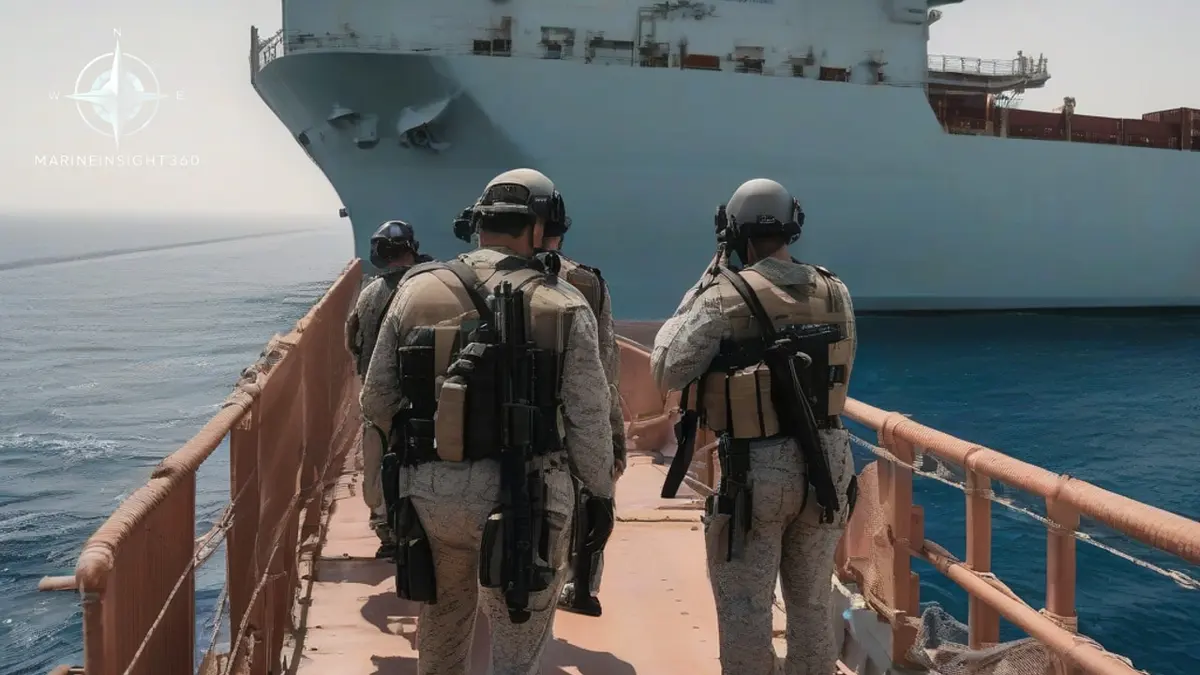
The measures in the industry Best Management Practices guidance were written for boarders: razor wire on the rails, water spray at the low points, doubled lookouts, a citadel with independent communications, and speed and manoeuvre to make a skiff's approach hard. Against the five-boat attack described here, that package still works.
It does not work against a missile or a one-way attack drone. Nothing a merchant crew can rig will defeat those, which is why the practical measures in that phase of the Red Sea crisis were different: naval escort, routing further offshore, and keeping fewer people exposed on deck during the transit.
Crews also changed what they broadcast. Vessels began writing ownership and crew nationality into the AIS destination field in the hope of being read as unaffiliated, which shows how little else was available.
Cost and Time Implications
Detouring around the Cape of Good Hope adds roughly 1,200 nautical miles to a voyage. At an average fuel burn of 30 tonnes per day, that translates to an extra 36 tonnes of fuel per vessel. If fuel costs $700 per tonne, the added expense is $25,200 per voyage. In addition, the extra 10–15 days increase port turnaround times and may delay delivery schedules, affecting contractual penalties.
Strategic Trade‑offs and Future Outlook
Operators face a classic trade‑off: stay on the fastest, most economical route and accept a higher security risk, or choose a longer, safer path and absorb higher operational costs. The trend of increasing Houthi attacks suggests that the risk will not abate soon. Shipping companies are therefore investing in real‑time threat monitoring systems and negotiating security escorts with navies and private contractors.
For seafarers and cadets, understanding these dynamics is essential. Knowledge of the latest threat assessments, insurance requirements, and emergency protocols will improve safety and operational efficiency. Shipping professionals should take routeing and threat information from UKMTO and the Joint Maritime Information Centre rather than from news reporting.
Why this matters: The Red Sea crisis has reshaped global shipping economics and crew safety standards. By making informed routing and security decisions, vessels can mitigate risks and maintain service reliability.
Next step: Consult Marine Insight 360’s Shipboard Operations section for detailed guidance on emergency drills and Marine Machinery for fuel consumption calculations during detours.