Russia escalates war tactics, raising NATO clash concerns
Learn how Russia’s new military tactics could impact shipping routes, insurance, and crew safety. Practical steps for seafarers and operators.
What the Escalation Means for Shipping
Russia’s gray‑zone tactics and direct threats of force have raised the risk of a NATO clash, which one cited assessment puts at a 16.5% probability by 31 December 2026. The shipping lanes most exposed run through the Black Sea, the Baltic and the North Atlantic, where escalation would hit port access, insurance premiums and crew safety first.
Assessing the Risk: Decision Criteria
When a conflict threatens to spill into the maritime domain, the first step is to evaluate the likelihood of a direct confrontation. The source notes a 16.5 % probability that Russia could clash with NATO by 31 December 2026. That figure should be weighed against:
- Geographic proximity. Vessels transiting the Black Sea, the Baltic Sea, or the North Atlantic face the highest exposure.
- Political developments. Russia has sealed borders with three NATO members and conducted massive military drills, signalling increased tension.
- Operational history. The Ukraine war has returned to the spotlight, and Russia has threatened a “devastating response” if conflict escalates.
- Strategic objectives. Russia aims to weaken NATO’s eastern flank and assert a veto over its actions.
Use these criteria to decide whether to alter routes, adjust schedules, or seek additional insurance coverage.
Operational Trade‑offs and Common Mistakes
Route Planning vs. Time Efficiency
Diverting a vessel around a high‑risk area can add days to a voyage and increase fuel costs. However, the cost of a port closure or a security incident can far outweigh the extra mileage. A common mistake is to assume that a single incident will not spread; in practice, a localized clash can trigger a chain reaction that disrupts entire shipping corridors.
Insurance and Liability
Premiums rise sharply when a vessel operates near a conflict zone. Many insurers now require a risk assessment before covering voyages that pass within 200 km of the Black Sea or the Baltic. Ignoring this requirement can lead to coverage gaps and costly claims.
Communication and Crew Safety
Operators often underestimate the need for real‑time updates. A failure to communicate new threat information to the crew can leave them unprepared for sudden changes in navigation or port operations. The standard practice is to issue a daily risk bulletin and to conduct a brief safety drill whenever a new threat is identified.
Planning Ahead: Practical Steps for Seafarers
1. Monitor official alerts. Keep an eye on the IMO’s maritime security advisories and the U.S. Department of State’s travel and shipping warnings.
2. Update SOPs. Incorporate a “conflict‑zone” protocol that defines when to alter course, when to notify the master, and how to report incidents.
3. Engage with insurers. Discuss coverage options that include political risk and potential port closures.
4. Coordinate with port authorities. Verify that port facilities in potentially affected regions have contingency plans for rapid evacuation or emergency response.
5. Train the crew. Conduct scenario‑based drills that cover sudden route changes, crew evacuation, and communication with maritime authorities.
What gray-zone pressure has already looked like in the Baltic
The tactics described here have a maritime record that does not depend on forecasting. In October 2023 the Balticconnector gas pipeline between Finland and Estonia was damaged, and Finnish investigators traced the damage to an anchor dragged along the seabed by a passing vessel. Telecom cables in the same waters have been cut on several occasions since.
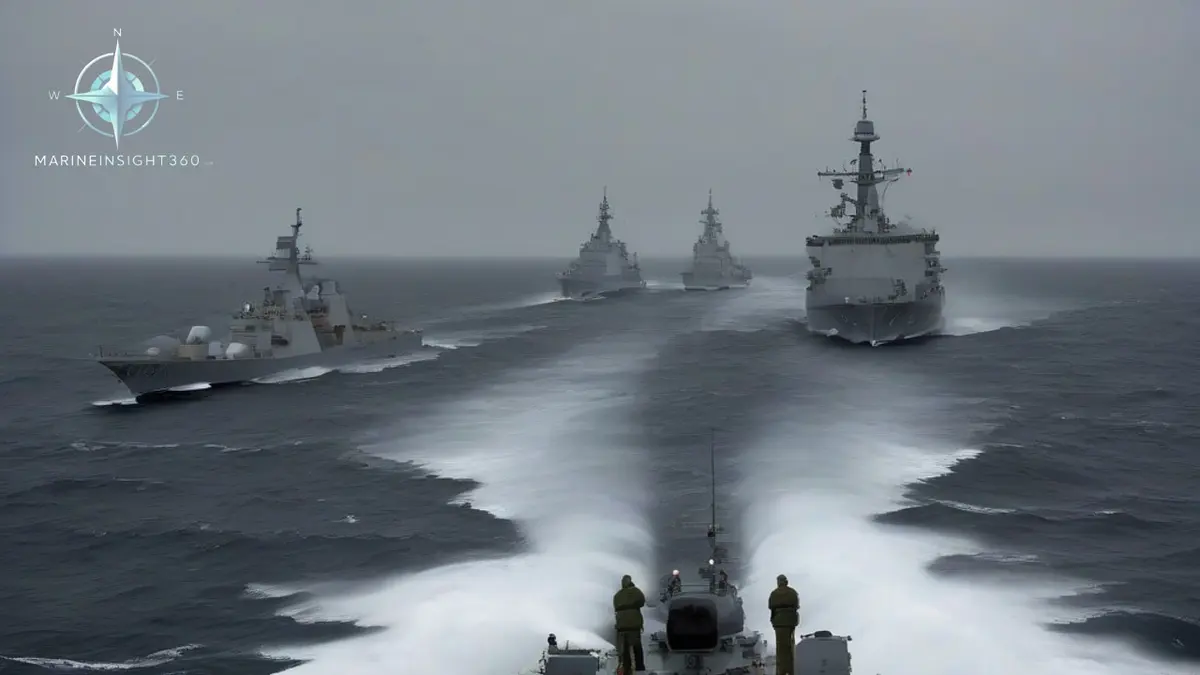
NATO's answer was a standing patrol rather than a declaration. Baltic Sentry, launched in January 2025, put frigates, maritime patrol aircraft and naval drones over the cable and pipeline routes of the Baltic. It treats undersea infrastructure as something watched continuously, which is a different posture from investigating an incident after the fact.
For a merchant ship the practical consequence is attention. Baltic and Gulf of Finland coastal states now query transiting tankers about insurance cover, and a vessel loitering near a cable route can be asked to account for itself. An anchor dragged in those corridors, for any reason, is now an investigated event, so anchoring outside a designated area is a decision worth logging at the time.
Why This Matters to the Industry
Increased geopolitical tension can turn a routine voyage into a high‑risk operation. By proactively assessing risk, adjusting routes, and updating SOPs, shipping professionals can protect crews, reduce insurance costs, and maintain supply chain continuity.
For deeper guidance, consult Marine Insight 360’s Shipboard Operations section, which offers detailed checklists for risk assessment and crew training in conflict‑affected waters.