Saudi Arabia rejects Iran’s destabilizing regional actions
Saudi Arabia condemns Iran’s attacks on ships in the Strait of Hormuz and warns against using its airspace, outlining deterrence options for regional security.
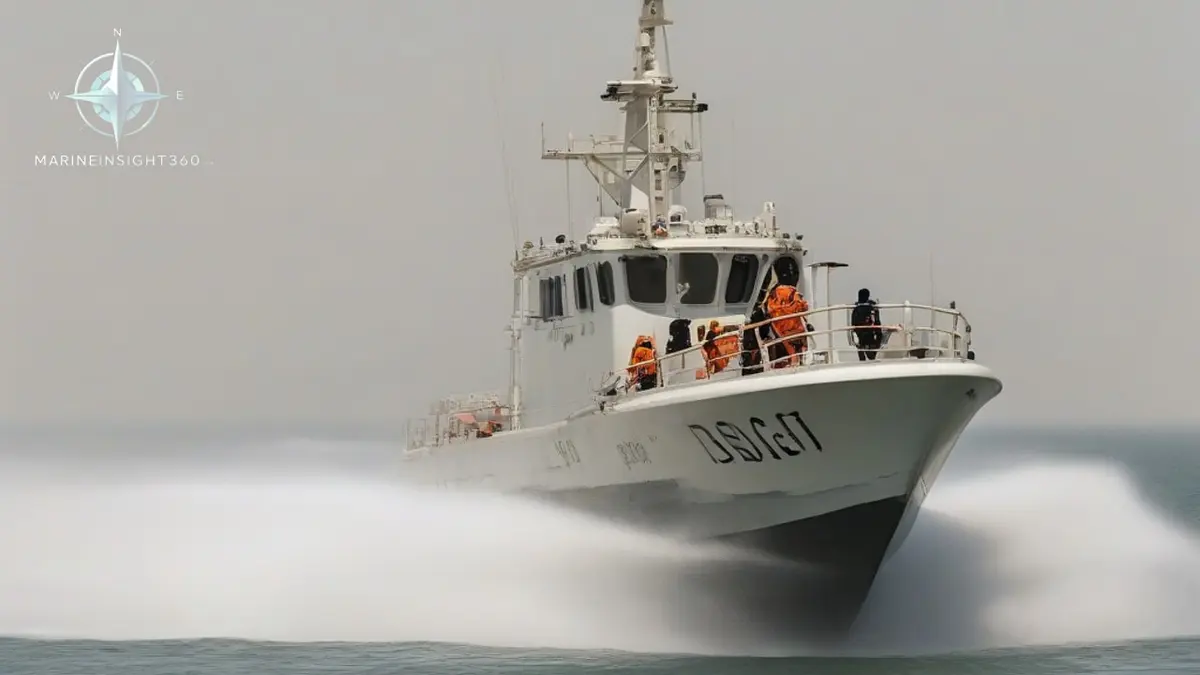
Saudi Arabia’s Warning to Iran
Saudi Arabia rejects Iran’s missile and drone attacks on ships in the Strait of Hormuz, and has warned that it will not allow its airspace or territory to be used for them. Riyadh calls the conduct “destabilizing behavior” and has set out three deterrence options: diplomacy, external protection and stronger military capability.
Why the Strait of Hormuz Is a Shipping Hotspot
The Strait of Hormuz is the world’s narrowest chokepoint for crude oil, with roughly 20 % of global oil passing through its 21 km width. A single vessel’s loss can ripple through global markets and trigger insurance premium spikes. Seafarers and shipping managers must therefore monitor political developments that could threaten navigation or port access.
Saudi Arabia’s Deterrence Options
Riyadh has outlined three main deterrence options that are not mutually exclusive:
- Diplomacy – engaging with regional partners and international bodies to isolate Iran’s aggressive actions.
- External protection – coordinating with allies such as the United States to secure shipping lanes and airspace.
- Enhanced military capabilities – bolstering naval and air assets to deter future attacks.
These options reflect a layered approach that balances political pressure with force readiness.
Operational Impact for Seafarers and Shipping Companies
When a major state issues a warning about its airspace, shipping lines must reassess flight paths for aircraft support and emergency evacuation. If a vessel requires a medical evacuation, the crew may need to divert to a port outside the Kingdom’s airspace, adding time and cost.
In addition, the threat of missile or drone strikes on the Strait of Hormuz forces operators to consider:
- Route optimization to avoid high‑risk zones.
- Insurance coverage adjustments for “political risk” and “terrorism” clauses.
- Enhanced crew training on emergency response to sudden attacks.
Failure to update risk assessments can lead to costly delays, damage claims, or even loss of life.
Common Mistakes in Risk Assessment
Many shipping managers fall into two traps:
- Underestimating political escalation – assuming that a single incident will not repeat, which can leave vessels exposed during a flare‑up.
- Overlooking airspace restrictions – not accounting for the possibility that a country may deny access to its airspace, thereby complicating rescue operations.
Both mistakes can inflate operational costs and jeopardize crew safety.
Why Saudi Arabia is not exposed to Hormuz the way its neighbours are
Saudi Arabia loads crude on two coasts. Ras Tanura and Ju'aymah sit inside the Gulf, and everything they load must pass Hormuz. Yanbu sits on the Red Sea and does not. That split is unusual in the region, and it changes what a warning from Riyadh is worth.
The link between the coasts is the East-West Pipeline, which carries crude from the Eastern Province across the peninsula to Yanbu. Its capacity runs to roughly 5 million barrels a day. That is enough to redirect a large part of Saudi exports away from the Gulf if the strait became unusable.
The pipeline swaps one chokepoint for another rather than removing the problem. A cargo leaving Yanbu still has to clear the Red Sea, north through Suez or south through the Bab el-Mandeb. Both approaches have carried attack risk of their own in recent years.
The bypass has also been hit directly. Drones struck two pumping stations on the East-West line in May 2019. The Abqaiq processing plant that feeds it was attacked that September, briefly removing a large share of Saudi output. An alternative route is not the same thing as a safe one.
Iran sits inside the same arithmetic. Its own crude loads at Kharg Island, in the northern Gulf, so closing Hormuz would stop Iranian exports alongside everyone else's. That constraint is part of why the strait has been threatened far more often than it has been shut.
What Shipping Professionals Should Do Now
1. Update your company’s risk matrix to include the latest Saudi warning and the potential for Iranian missile or drone activity in the Strait of Hormuz. 2. Review insurance policies for coverage gaps related to political risk and maritime terrorism. 3. Coordinate with port authorities and maritime security agencies to ensure that emergency plans remain viable under changing airspace conditions. 4. Keep crew briefed on the latest geopolitical developments and on the procedures for rapid evacuation if required.
By acting proactively, seafarers and shipping managers can mitigate the impact of regional tensions on their operations.
Source: Middle East Online