Ukraine Claims Drone Strikes on 14 Ships in the Sea of Azov
Ukraine says drones struck 12 tankers, a cargo ship and a tug in the Sea of Azov; damage and several vessel details remain unverified.
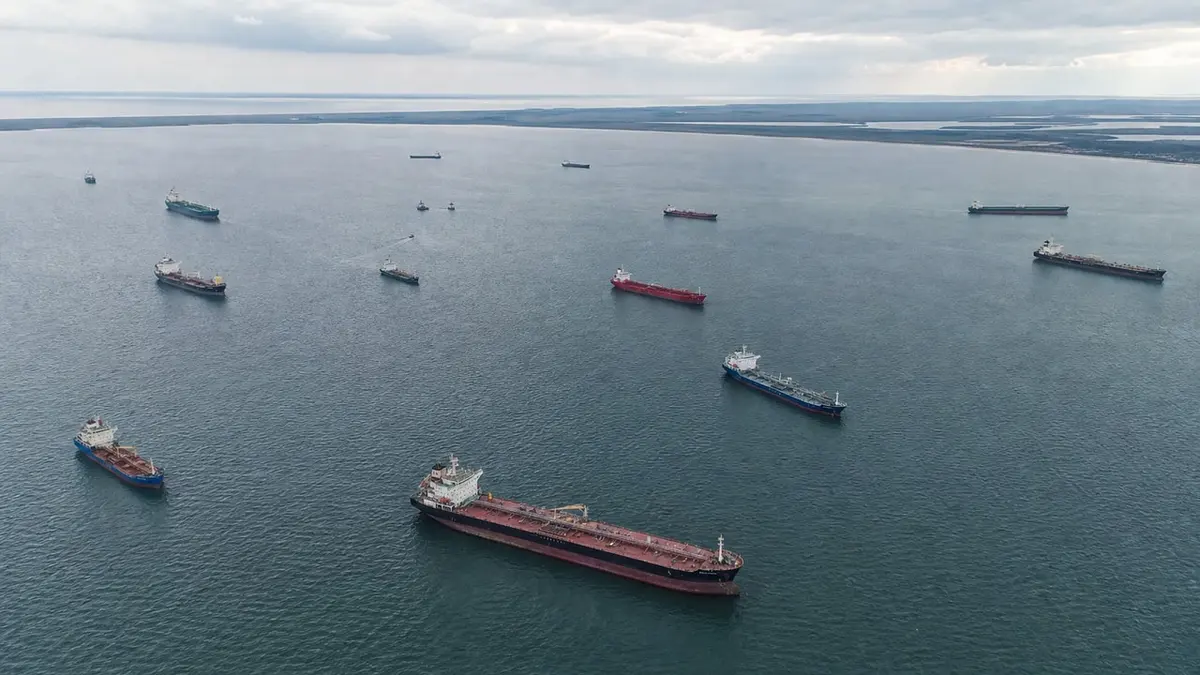
Ukraine claims drone strikes hit 14 vessels in the Sea of Azov during an overnight operation reported on 9 July 2026. Its Unmanned Systems Forces put the total at 12 tankers, one dry-cargo ship and one tug, and the account has not been independently confirmed in the cited report.
What Ukraine's unit claimed
The statement was attributed to the 414th Unmanned Strike Aviation Brigade, known as Magyar's Birds. The unit also released footage that it said showed attacks against vessel upper decks, including strikes directed toward bridge areas on at least two ships.
Marine Insight listed Chelsea 6, Aura, Mercury, Galiasgar Kamal, Venus III, Penelope, the tug Alfo and Ilya Repin among vessels named in the Ukrainian account. The article also noted uncertainty in public tracking data because vessels operating in the Black Sea and Sea of Azov may switch off their transponders for security reasons.
A separate tanker incident
The same source cited maritime security firm Vanguard Tech regarding a separate reported attack on the Turkish-flagged tanker Yasa Polaris on 7 July. The vessel was said to be sailing toward the Caspian Pipeline Consortium terminal off Novorossiysk. According to that account, no injuries or pollution were reported.
This separate incident should not be treated as proof of every vessel claim in the later operation. Vessel identity, location, damage and responsibility require corroboration from operators, authorities or independent maritime-security reporting.
Risk to crews and nearby shipping
Marine security company Ambrey was cited as warning that attacks directed at upper decks and bridges increase the risk to seafarers. The source also reported concern about possible retaliatory action and exposure for ships waiting near the Sulina Anchorage or sailing to Ukrainian Danube and Black Sea ports. Sulina lies at the Danube mouth in Romania, so the anchorage named in that warning sits in European Union waters.
Those assessments describe a changing security environment, not a confirmed forecast of a specific attack. Masters and operators should rely on current flag-state, coastal-state, company and recognised maritime-security notices when evaluating a voyage.
Confirmed, claimed and still unknown
- Claimed by Ukraine: 14 vessels were struck in one overnight operation.
- Reported separately: Yasa Polaris was hit without reported injury or pollution.
- Not independently established: the full target list, damage to each vessel and the operational effect of the claimed strikes.
Follow the latest maritime security news and our maritime route guides for related context.
Source and verification
This article summarizes a report by Marine Insight. Claims made by parties to the conflict are clearly attributed and should not be read as independent confirmation.