
What is the 8 Biggest Ship Propeller in the World?
Some of the largest marine propellers, from Emma Maersk to the Maersk Triple-E class, with diameters and weights, plus Prelude FLNG, which uses thrusters instead.
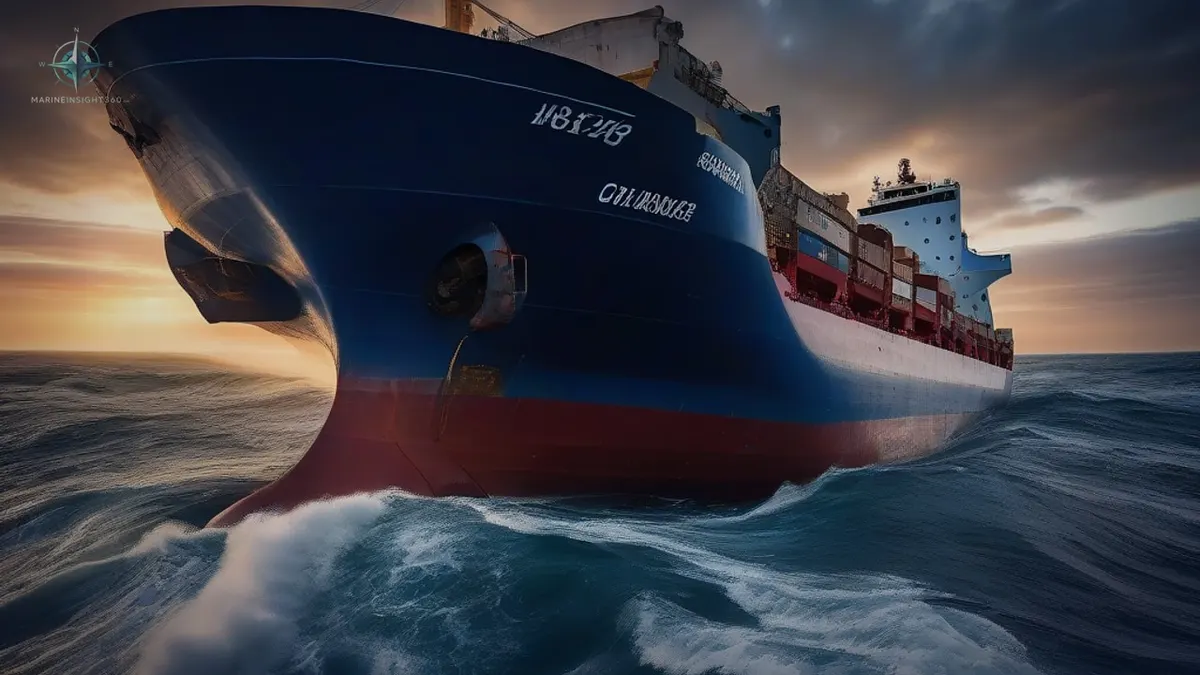
Huge ships often take our breath away with their sheer size. But it's the technological marvels that make them truly remarkable. The propellers that propel the ship forward are so large they can drive gigantic vessels. It is only natural, therefore, to give them some recognition of their greatness. Here is a list of some of the largest marine propellers the maritime world has ever seen.
8 Biggest Ship Propellers
1. Emma Maersk
Emma Maersk, a wonder of advanced marine engineering, is considered one of the biggest container ships in the world. Launched in 2006, this behemoth of the oceans is part of the Maersk Line's E-class fleet. The ship's colossal dimensions—397 meters in length and also 56 meters in width—necessitate a propulsion system able to give a significant thrust.
Central to this system is its fixed pitch propeller, which measures a noteworthy 9.6 meters (31.5 feet) in diameter and also weighs 131 tons. This enormous propeller is significant for achieving the ship's top speed of 25.5 knots, ensuring it can meet the demanding schedules of worldwide trade routes.
The propeller's power source is the Wärtsilä RT-flex96C engine, the largest reciprocating engine in the world, generating a stunning 80,080 kW of power. This engine not only impels Emma Maersk at high speeds but also contributes to its efficiency, reducing fuel consumption and also emissions.
The combination of advanced design and also sheer size makes Emma Maersk a symbol of advancement within the shipping industry, illustrating the capabilities of cutting-edge shipbuilding and also the significance of robust propulsion systems in maintaining worldwide trade flows.
2. OOCL Hong Kong
OOCL Hong Kong, a landmark in container shipping, was the first vessel to surpass the 21,000 TEU (Twenty-foot Equivalent Unit) capacity, setting new benchmarks in maritime logistics. Delivered in 2017, it measures 400 meters in length and also 58.8 meters in width, requiring a similarly amazing propeller to drive its operations. The fixed pitch propeller of OOCL Hong Kong spans roughly 10.3 meters (33.8 feet) in diameter and weighs around 130 tons. This propeller is instrumental in enabling the ship to reach an operational speed of 22.5 knots, ensuring timely and efficient delivery of goods across continents.
The ship is powered by a MAN B&W G95ME-C9.5 engine, one of the most powerful marine engines available, known for its reliability and also efficiency. The propeller, combined with this advanced engine, ensures that OOCL Hong Kong can handle its enormous cargo loads while maintaining fuel efficiency and reducing environmental impacts. This combination of innovation and design underscores the ship's role in pushing the boundaries of marine engineering and also logistics, making it a crucial asset within the worldwide supply chain.
3. CMA CGM Antoine De Saint Exupéry
The CMA CGM Antoine de Saint Exupéry, named after the eminent French author and pilot, is one of the biggest container ships in the world, symbolizing both innovative ability and a tribute to a literary legend. Delivered in 2018, this vessel extends 400 meters in length and 59 meters in width, able to carry 20,600 TEU. Its propulsion is facilitated by a fixed pitch propeller measuring 10 meters (32.8 feet) in diameter and weighing around 130 tons.
This gigantic propeller is significant in achieving the ship's cruising speed of 22 knots, enabling efficient and reliable transportation over tremendous maritime distances.
The ship's propulsion system is driven by a WinGD X92 engine, renowned for its power and efficiency. This engine, coupled with the huge propeller, ensures that CMA CGM Antoine de Saint Exupéry operates with optimal fuel efficiency and diminished emissions. The ship's design centers on sustainability, incorporating various eco-friendly technologies to minimize its environmental footprint.
As such, it not only serves as an essential link within the worldwide logistics chain but also as a testament to the shipping industry's endeavors to improve efficiency and environmental responsibility.
4. MSC Gülsün
MSC Gülsün, part of the Mediterranean Shipping Company's fleet, is recognized for its gigantic size and state-of-the-art design, marking a new era in container shipping. Launched in 2019, it is one of the biggest container ships, with a capacity surpassing 23,000 TEU. The ship's propulsion is driven by an enormous fixed pitch propeller that measures roughly 10.5 meters (34.4 feet) in diameter and weighs 123 tons.
This propeller plays a vital part in enabling the vessel to attain speeds of up to 22 knots, ensuring timely and efficient deliveries.
The propulsion system is powered by a MAN B&W 11G95ME-C9.5 engine, a cutting-edge model that gives high power output and fuel efficiency. MSC Gülsün is designed with a focus on sustainability, including advanced innovations to reduce emissions and improve energy efficiency. The ship's noteworthy size and inventive propulsion system make it a noteworthy player in worldwide trade, reflecting the industry's ongoing endeavours to balance capacity, efficiency, and environmental impact.
5. HMM Algeciras
HMM Algeciras, the flagship of Hyundai Merchant Marine, represents a noteworthy accomplishment within the field of marine engineering. Launched in 2020, this vessel stood out with its massive cargo capacity and advanced design. The ship measures 400 meters in length and 61 meters in width, requiring a powerful propulsion system. Its fixed pitch propeller, measuring around 10.8 meters (35.4 feet) in diameter and weighing 124 tons, is necessary for its performance.
This propeller helps the ship achieve a top speed of 22.5 knots, ensuring efficient and reliable operations on long-haul routes.
The ship is powered by a MAN B&W 11G95ME-C10.5 engine, a highly efficient model known for its strength and performance. This engine, combined with the huge propeller, ensures that HMM Algeciras operates with optimal fuel efficiency, reducing both operational costs and environmental effects. The vessel's design incorporates various eco-friendly features, aligning with the industry's thrust towards sustainability.
HMM Algeciras not only embodies the most recent advancements in shipbuilding but also underscores the significance of advancement in improving the efficiency and environmental performance of maritime transport.
6. Ever Ace
Ever Ace, a lead ship of the Evergreen Line fleet, represents the apex of cutting-edge container ship design. Launched in 2021, this vessel boasts a capacity of over 23,000 TEU, making it one of the biggest container ships in operation. The ship's propulsion system features a gigantic fixed pitch propeller with a diameter of 11 meters (36 feet) and a weight of 132 tons.
This propeller is essential in achieving the ship's cruising speed of 22.6 knots, enabling it to meet the demands of worldwide trade with efficiency and reliability.
The ship is powered by a WinGD 11X92-B engine, which is famous for its high power output and fuel efficiency. This combination of a powerful engine and a huge propeller ensures that Ever Ace operates with optimal performance, minimizing fuel consumption and emissions. The vessel's design emphasizes sustainability, incorporating advanced technologies to improve energy efficiency and diminish its environmental footprint.
Ever Ace is a testament to the continuous advancement of the shipping industry, illustrating how development can drive both capacity and sustainability.
7. Maersk Triple-E Class
The Maersk Triple-E class ships are famous for their size, efficiency, and environmentally friendly design. Launched in 2013, these vessels are among the biggest container ships in the world, each capable of carrying 18,000 TEU. The propulsion system of these ships features twin fixed pitch propellers, each measuring 9.8 meters (32.1 feet) in diameter and weighing 70 tons.
These propellers are essential for the ships to achieve a top speed of 23 knots, enabling them to maintain tight shipping schedules while decreasing fuel consumption.
The ships are powered by two MAN B&W 8S80ME-C 9.2 engines, which give reliable and efficient propulsion. The design of the Triple-E class centers on the principles of economy of scale, energy efficiency, and environmental performance, hence the name "Triple-E." These vessels incorporate various green innovations, such as waste heat recovery systems and hull designs that reduce resistance.
The Maersk Triple-E class represents a noteworthy step forward in sustainable maritime transport, exhibiting how innovative engineering can improve both performance and environmental stewardship.
8. Prelude FLNG
The Prelude FLNG (Floating Liquefied Natural Gas) platform, operated by Shell, is a one-of-a-kind and gigantic offshore facility designed for the extraction, liquefaction, and storage of natural gas. Its hull was launched in 2013 and it arrived on site off Western Australia in 2017. It is the biggest floating offshore facility ever built, measuring 488 meters in length and 74 meters in width.
While not a conventional ship, Prelude FLNG has no propulsion propeller: it was towed to its site and is moored to the seabed through a turret. Instead, three electrically powered Rolls-Royce azimuth thrusters at the stern keep its heading against wind, current and waves so that tankers can berth safely.
The platform's design incorporates advanced technologies to ensure safety, efficiency, and minimal environmental impacts. Prelude FLNG represents a noteworthy development within the energy sector, highlighting the intersection of marine engineering and offshore energy production. Its thrusters and turret mooring system are key components that enable this floating mammoth to perform its complex and critical functions in remote offshore areas.
Recommended Reading
Seawise Giant: World’s Biggest Ship
Seawise Giant was the longest ship ever built at 458.45 m. Struck by missiles in 1988, salvaged, renamed four times, and scrapped in India in 2010.
Typhoon Class Submarine: The Biggest Boats Ever Sent Under the Sea
The Soviet Typhoon class submarine remains the largest ever built: twin pressure hulls, 20 missile silos, and why nothing since has matched its size.
5 Biggest Oil Rigs in the World
Oil rigs, or offshore drilling rigs, are built to extract, store, and also process crude oil and natural gas from the ocean floor. These platforms come in…