
After Decades Of Arctic Sea Ice Getting Faster, Models Suggest A Dramatic Reversal Is Coming
Will ice floating in the Arctic Sea move faster or slower over the coming decades? The response will tell us whether marine transportation can be expected…
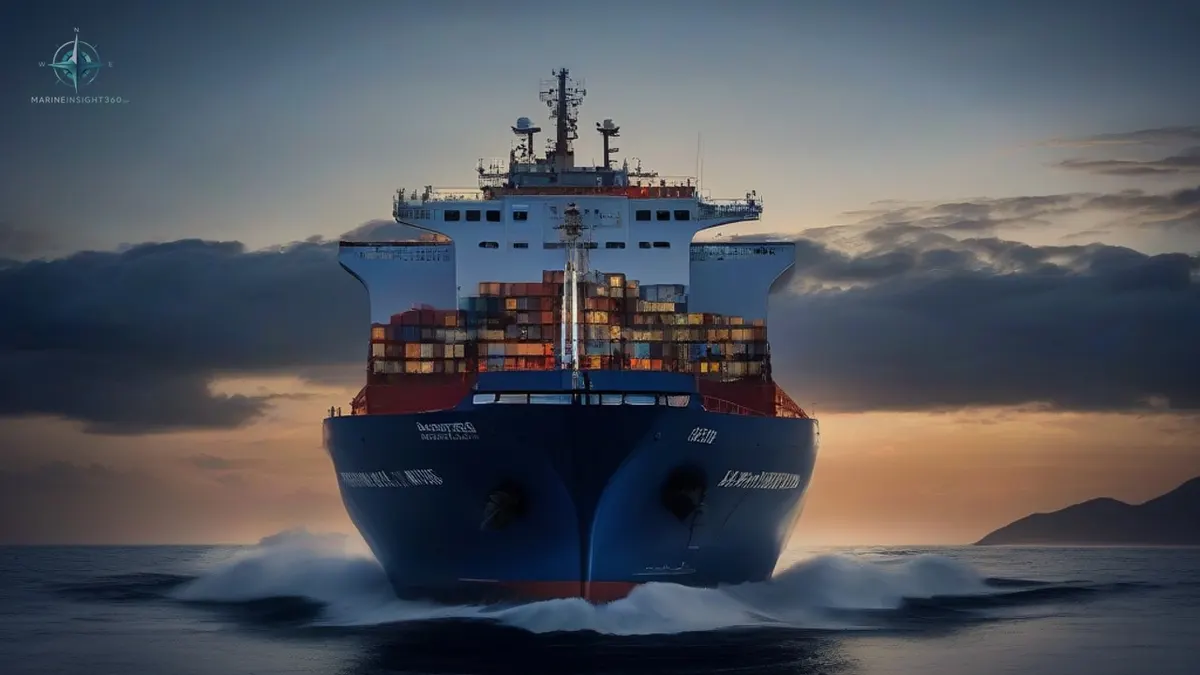

Will Arctic sea ice move faster or slower over the coming decades? The response will tell us whether marine transportation can be expected to become more or less dangerous. It might also have meaningful implications for the rate of arctic ice cover loss, which is hugely consequential for Northern Indigenous communities, ecosystems, and the global climate system.
While observational data suggest the trend has been towards faster sea ice speeds, climate models project that those speeds will slow down during the summer. This contrast has led to some questions about the plausibility of the model projections.
In a new paper published today in The Cryosphere, Lassonde School of Engineering Associate Professor Neil Tandon and Postdoctoral Visitor Jamie Ward found that, while the mechanisms driving the ice slowdown remain plausible, questions remain regarding the timing of the slowdown.
"Understanding how sea ice motion is going to change is clearly of interest. Yet we didn't know if what the models were projecting was reasonable," says Tandon. Also with the Centre for Research in Earth and Space Science (CRESS) at York University. We can expect sea ice to continue to speed up for some time. There will be a point in the coming decades when the dynamics will shift.
Floating sea ice presents a particular hazard for marine transportation, says Tandon, pointing to a dramatic example from 2017 when arctic sea ice trapped and sunk two fishing boats around Newfoundland. And the faster the ice, the more hazardous the conditions.
A Spring Analogy of Arctic Sea
To understand why sea ice has been speeding up, Tandon says a spring can be a useful analogy. As temperatures warm and the ice thins, it can expand and contract more readily. Just as a spring made of thinner metal can expand and contract more easily than a thicker metal spring.
"As the thinner sea ice expands and contracts more, it generates more momentum for the sea ice, just like one of those spring-loaded toy cars goes faster the farther back you pull it," explains Tandon.
However, this is not the only force acting on the ice. When the ice gets thin enough, the internal stresses that produce "springiness" start to fade, and other forces start to dominate.
"As ice enters what they call a free drift state, the internal stress becomes negligible. The external forces of wind and the ocean surface tilt beginning to dominate. The models indicate that changes in the wind and ocean surface tilt will drive a slowdown of the sea ice during the summer season."
Tandon says that while the models generally agree that this summertime slowdown will occur. They do not agree on when it will start. Some models suggest that the slowdown will start within the next decade. While others suggest it will start toward the end of this century.
Faster ice drifts can create hazardous conditions for marine transport, so in that sense, an ice slowdown could be seen as a positive, but Tandon says there are bigger considerations.
"It does not change the fact that sea ice cover is steadily declining, right? This is a problem because of the impact on ecosystems. These Indigenous populations rely on being able to hunt certain animals, the animal's ability to survive the changing habitat.
The overall effect on the global climate," says Tandon. "But, I would say it is marginally good news in that the models are telling that some of the most destructive aspects we were expecting about ice cover decline are not being projected."
Why drift speed matters more to a ship than ice extent
Ice extent tells a master whether a route exists. Drift speed tells him whether it stays open behind him.
Ships in ice work along leads, the open lanes that wind and current tear through a floe field. A lead is not a channel. It closes when the pack on one side is pushed against the pack on the other, and a vessel caught inside is beset: held fast, unable to steer, and taking pressure along her sides rather than her bow.
That is why the Newfoundland losses cited above happened in a season of ordinary ice cover. The ice did not have to be thick or extensive. It had to be moving. Faster drift closes leads sooner and leaves a master less time to read the pattern and get clear.
The projected summer slowdown would ease that specific hazard while doing nothing about the others. Thinner ice moving more slowly is still ice, and a declining cover draws more traffic into waters with sparse charting, limited icebreaker cover and long distances to any rescue.
What the Polar Code requires of ships in these waters
Operating there is not left to judgement. The IMO Polar Code has been mandatory since 1 January 2017 and works through SOLAS and MARPOL rather than as a standalone treaty. A ship in polar waters carries a Polar Ship Certificate and a Polar Water Operational Manual setting out the limits she was assessed for.
The code sorts ships into three categories. Category A is designed for at least medium first-year ice, Category B for at least thin first-year ice, and Category C for open water or ice less severe than the other two. Deck officers need polar training under the STCW convention, at basic or advanced level according to the role and the conditions.
Drift speed is the sort of variable that can push a Category C ship outside its assessed conditions without the ice cover ever looking unusual.
Recommended Reading
Nigeria Upbeat Over Maritime Competitiveness After US Lifts 12-Year Ban
Explore how the U.S. lifting a 12‑year ban on Nigerian vessels opens new routes and compliance requirements for global shipping professionals.
Top 5 Marine GPT Models
Top 5 Marine GPT Models: safety, training and compliance context for US, UK, Canada, Australia, Singapore and European maritime readers.
Sonion Tanker 'Poses Environmental Risk' After Attack In Red Sea
Sonion Tanker 'Poses Environmental Risk' After Attack In Red Sea: safety, training and compliance context for US, UK, Canada, Australia, Singapore and...