
What Is the Difference Between the Chief Engineer and the Captain in the Merchant Navy?
The difference between the chief engineer and the captain in the merchant navy: command authority, certificates, career paths and pay compared.
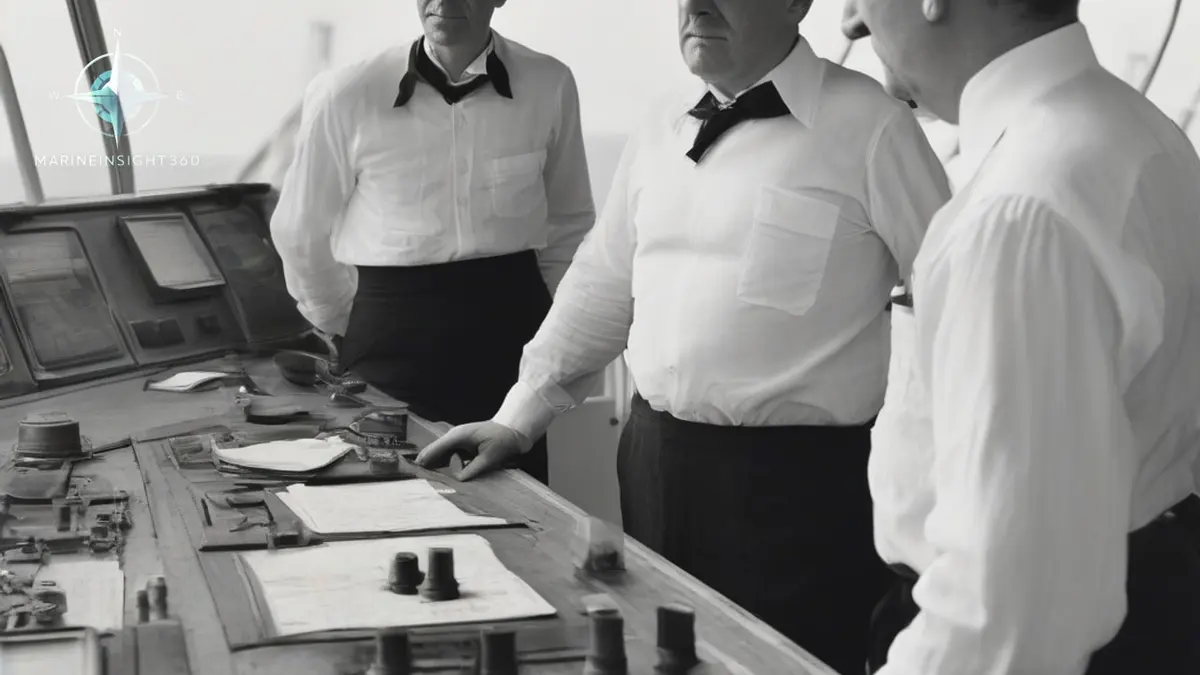
What is the difference between the chief engineer and the captain in the merchant navy? It comes down to command versus department. The captain, formally the master, holds overall command and legal responsibility for the ship, everyone aboard and the cargo. The chief engineer is the top rank of the engine department and answers to the master for the machinery that keeps the vessel running.
Both are four-stripe ranks, both sit at the peak of their profession, and on many ships their pay is broadly comparable. The real distinction lies in authority, certification and the route each officer took to get there.
Who does what: chief engineer and captain compared
The master commands the whole ship. That covers navigation and the bridge team, cargo operations, crew discipline and welfare, compliance with international and flag-state law, and every dealing with charterers, agents, port officials and coast guards. When the ship is inspected, detained or salvaged, the master is the legal face of the vessel and its owner.
The chief engineer runs the engine department: main engine, generators, boilers, steering gear, fuel and lubricating systems, refrigeration and the machinery side of pollution prevention. Bunker operations, spare parts budgets and the engine room watch organization all sit on the chief's desk. After consultation with the master, the chief assigns duties across the engineering team.
Command authority: why the master has the final word
Rank on paper is close to equal, and merchant navy tradition treats the chief engineer as second in seniority only to the master. Command, however, is not shared. International conventions such as SOLAS, the safety-of-life-at-sea convention, place overriding authority and responsibility for safety with the master alone, and every crew member, the chief included, sails under the master's command.
In practice the relationship works as a partnership. A master cannot safely take a disabled ship anywhere without the chief's assessment of the machinery, and no sensible chief runs engine trials or shuts down a generator without clearing it with the bridge. The two consult daily on speed, fuel, weather routing and maintenance windows.
Two certificate ladders under STCW
STCW, the international convention setting minimum training and certification standards for seafarers, defines separate qualification paths. Masters qualify under the deck chapter, culminating in a Master certificate of competency, known as Master Unlimited when valid for any ship on any voyage. Chief engineers qualify under the engineering chapter, holding a Chief Engineer certificate of competency, often called a Class 1 engineer ticket.
Neither certificate substitutes for the other. A master cannot legally fill the chief engineer's berth, and a chief cannot take command, however experienced either becomes. National administrations such as the UK Maritime and Coastguard Agency and the US Coast Guard issue the certificates against the STCW framework, with written and oral examinations at each step.
Career paths from cadet to the top rank
- Deck route: deck cadet, then officer of the watch, chief mate and finally master, building sea time and passing a certificate of competency examination at each rank.
- Engine route: engine cadet, then engineering officer of the watch, second engineer and finally chief engineer, on the same pattern of sea service plus examinations.
Timescales are similar on both ladders, commonly a decade or more from cadet to the senior rank, depending on trade, sea time and exam results. Switching ladders midway is rare because little of the sea service transfers between them.
Pay, seniority and how the two ranks work together
Wage scales vary by ship type, flag and contract, but master and chief engineer occupy the top two lines of almost every crew wage table, usually within a modest margin of one another. Senior positions on tankers and gas carriers pay at the top of the market for both ranks.
For anyone weighing the two careers, the honest comparison is temperament rather than status. The deck route leads to command, commercial exposure and the paperwork of the ship's legal life. The engine route leads to deep technical ownership of a power plant that could run a small town. Both carry the same expectation: when something breaks at 0300, it is your problem.
The Merchant Navy Careers section of Marine Insight 360 breaks down each rank on both ladders, with the certificates and sea time required at every step.
Sources and further reading
- Seafarer's professions and ranks - Wikipedia
- STCW III/2 - Chief Engineer and Second Engineer - EduMaritime
- MCA Merchant Shipping Notice MSN 1857 - GOV.UK
What to read next
Recommended Reading
Difference Between Merchant Navy Ranks and Defense Ranks
If you're fascinated by life at sea and considering a career in the maritime world, you've likely come across two distinct paths: the Merchant Navy and…
Difference Between Merchant Navy & Defense Navy
Those who aspire to work in the maritime field often have a question in their mind: Merchant Navy or Navy? Although the careers in both fields are almost…
What is the Difference between the Merchant Navy and the Defence Navy?
What is the Difference between the Merchant Navy and the Defence Navy?: career, certification and hiring context for US, UK, Canada, Australia,...