
Chinese-Built Containership Fines Could Force Ocean Carriers Out of U.S. Trade
Chinese-Built Containership Fines Could Force Ocean Carriers Out of U.S. Trade: ports, trade and shipping-market context for US, UK, Canada, Australia,...
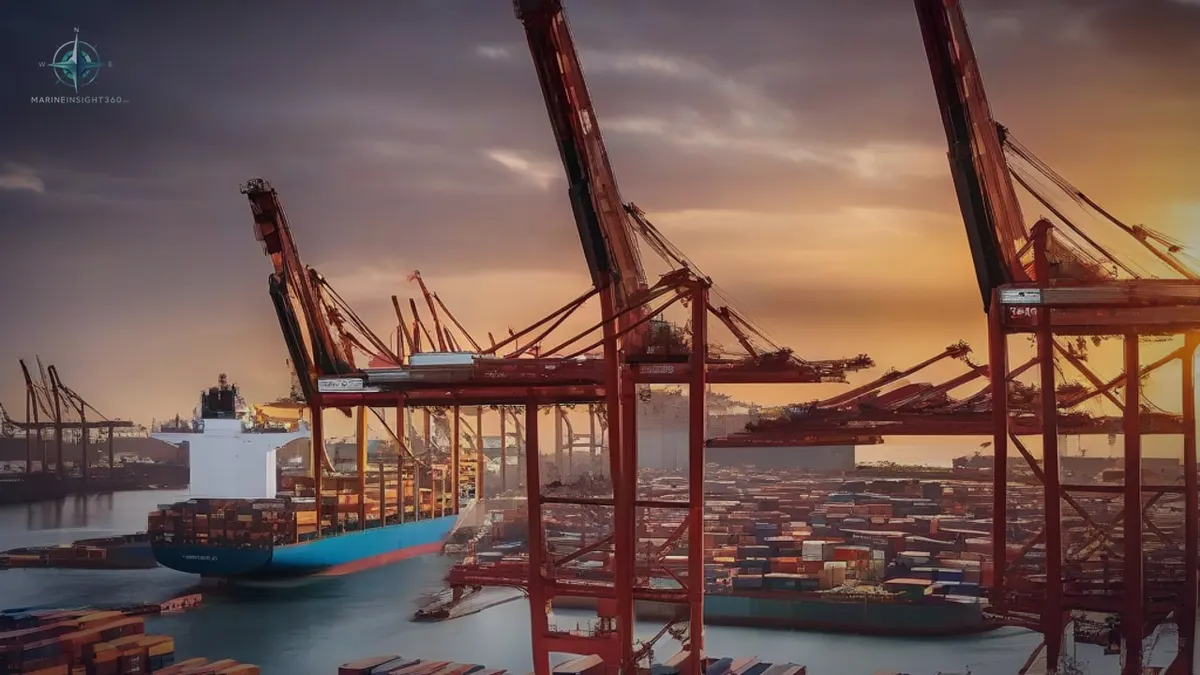
Chinese-built containership fines are under consideration in Washington, and ocean carriers that run those ships warn the penalties would push them out of the American market altogether. Nothing is enacted yet: the proposal is still under discussion and industry leaders are lobbying against it.
What’s Behind the Proposed Fines?
The U.S. government has been increasingly scrutinizing Chinese involvement in critical industries, including shipping. Lawmakers are considering imposing fines on vessels constructed in China, citing national security concerns and efforts to reduce reliance on Chinese manufacturing. If these penalties take effect, carriers that rely on Chinese-built ships could face steep financial burdens, making it unfeasible to continue operations in U.S. waters.
Industry Reaction: ‘We’re Out of Business’
A major ocean carrier has warned that such fines would be devastating. "If this happens, we're out of business in the U.S.," the company stated, emphasizing that many global shipping lines depend on Chinese-built vessels due to their cost-effectiveness and advanced shipbuilding capabilities.
While the U.S. aims to bolster domestic shipbuilding, industry leaders argue that there aren’t enough alternative production facilities to meet current demand. This could lead to increased shipping costs, supply chain disruptions, and a decline in overall trade efficiency.
Impact on Global Trade
If major carriers exit U.S. routes, businesses and consumers could see higher costs for imported goods, delays in deliveries, and potential shifts in supply chains. American ports might also experience reduced activity, affecting local economies dependent on maritime trade.
What’s Next?
The proposal is still under discussion, and industry leaders are lobbying against its implementation. However, if enacted, it could significantly alter the global shipping landscape, forcing carriers to rethink their strategies and potentially reshaping trade between the U.S. and the rest of the world.
The US-built rule that already exists, and why it does not cover this trade
The United States already reserves part of its shipping to domestically built tonnage. Under the Jones Act, cargo moved by water between two points in the United States has to travel on a vessel built in a US shipyard, US-flagged, US-owned and crewed by US citizens. Customs and Border Protection rules on whether a movement counts as coastwise trade, and the Coast Guard documents the vessel.
That reservation stops at the water's edge. A containership carrying imports from Asia to Los Angeles or Savannah is in foreign trade, so it has never had to be American-built. A construction-origin fine would be the first time where a hull was welded carried a cost on that side of the business.
The yard capacity gap the industry points to shows up in the size of the fleet the existing rule supports. US yards deliver large oceangoing commercial ships in ones and twos a year, against Chinese, South Korean and Japanese yards that between them build most of the world's merchant tonnage. No carrier can reorder its way out of the charge on a timescale that matters to a service contract.
How a per-ship charge reaches the cargo owner
A fine assessed on the ship is paid by the operator, not the builder, and it lands once per port call rather than once per box. Carriers recover that kind of cost the way they recover fuel and canal costs, as a named surcharge on the bill of lading spread across the containers discharged.
The Federal Maritime Commission regulates ocean common carriers in the US foreign trades, so a new surcharge would surface as a published tariff line and in service contract talks rather than disappear into the base rate. Shippers would see the number; they would also see which carriers absorbed it to hold market share.
Withdrawal is rarely the first move. An operator can reshuffle which ships are assigned to a US string, keeping non-Chinese-built tonnage on the American rotation and sending the rest to Europe or intra-Asia. It can also stop short of the border and discharge at Vancouver, Prince Rupert or Lazaro Cardenas, then rail the boxes into the Midwest and Texas.
The failure a shipper actually meets is rarely a cancelled service. It is a thinned rotation, blank sailings while the string is rebalanced, and empty containers sitting at the port that lost the call rather than the one that needs them. Those are the symptoms to watch for, and they appear well before any carrier announces that it is leaving.
Recommended Reading
Container Tracking: How Shippers Actually Follow a Box Across the Ocean
How container tracking works, from free carrier lookups to visibility platforms: what each tool layer does, what it costs, and how to pick for your volume.
Ro-Ro Ships: How Roll-On Roll-Off Vessels Work and Why They Dominate Vehicle Trade
How ro-ro ships work: ramps, decks and lane meters, the difference between PCTC, ConRo and RoPax types, and the stability risks unique to roll-on roll-off.
The 7 Types of Cargo Ships That Carry World Trade
The seven types of cargo ships and what each carries: container ships, bulk carriers, tankers, gas carriers, ro-ro, general cargo and reefer vessels.