
First Boats Invented
Discover the oldest known boat, the Pesse canoe, its age, and why boat invention was a gradual evolution rather than a single inventor.
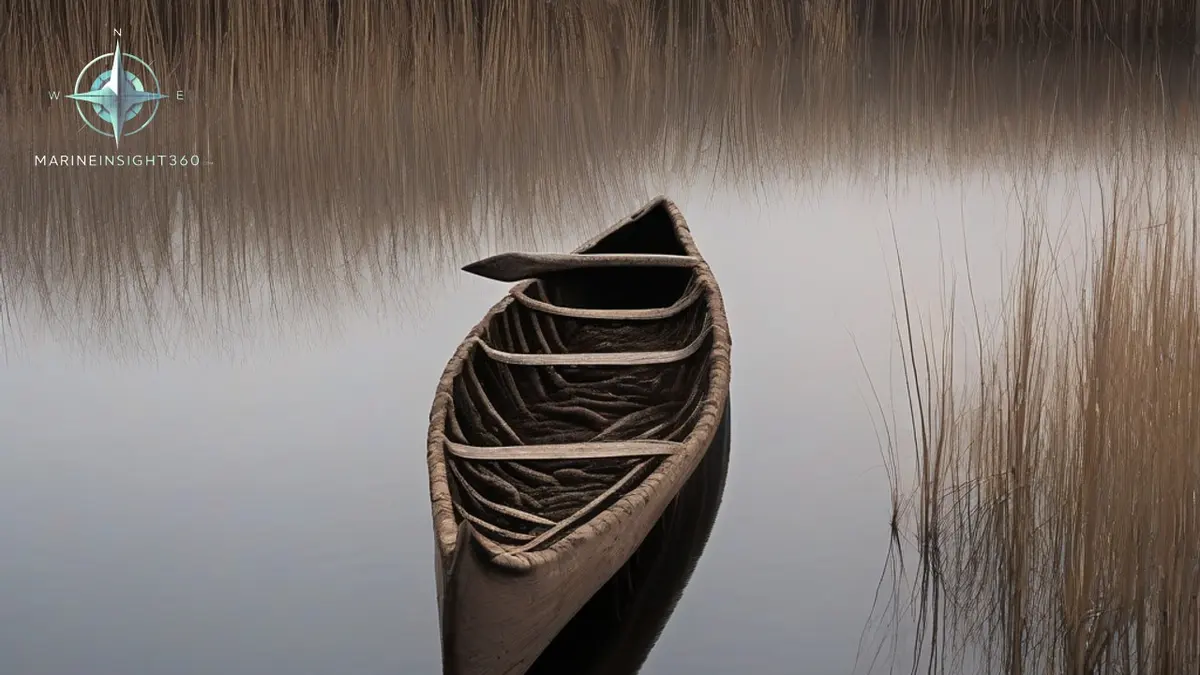
No one can name who built the first boats invented, and the oldest craft confirmed by physical remains is the Pesse canoe. It is a 10-foot dugout carved from a single pine log, found in a Dutch peat bog in 1955.
Who invented the boat? The story begins with a 10‑foot pine dugout
The oldest confirmed boat is the Pesse canoe, a 10‑foot dugout carved from a single pine log. Discovered in 1955 in a peat bog near the Dutch village of Pesse, it is the earliest physical evidence of human watercraft. Its shape, tool marks and pine species confirm its identity, and its size—about 3 m long—shows that early peoples were already mastering simple boat design.
Evidence that humans crossed water before the Pesse canoe
Archaeologists and geneticists agree that people were navigating bodies of water long before the Pesse canoe surfaced. While the canoe itself is the first confirmed vessel, indirect data suggest earlier crossings. These findings underline that boat building was a gradual, adaptive process rather than a single invention.
Contested claims of ultra‑ancient watercraft
Some researchers point to stone tools found on various islands as possible evidence of ancient boats. However, no definitive boat remains have been recovered to support these claims. Until such evidence appears, the Pesse canoe remains the benchmark for the earliest confirmed watercraft.
From dugouts to plank‑built vessels: the evolution of construction
After the Mesolithic dugout, societies diversified their building techniques:
- Plank construction – Neolithic cultures in the Near East and China began fastening split planks together, creating larger and more stable hulls.
- Sail introduction – Sewn‑on sails appear in the Mediterranean, marking the first use of wind power for propulsion.
- Metal fastenings – Iron nails and later bronze rivets improved hull integrity, allowing vessels to withstand harsher conditions.
Why the origin story matters for modern crews
Recognising that boat technology emerged from simple, locally sourced solutions helps crews appreciate the ingenuity behind today’s complex vessels. Each incremental improvement—from a carved pine log to a metal‑fastened sailboat—reflects a response to specific environmental challenges and operational needs.
Common misconceptions: a single “inventor” of the boat
Many online articles claim a single “inventor” of the boat. The archaeological record shows a gradual, multi‑regional evolution. No single individual or culture can be credited with the invention; instead, boat building evolved independently in several regions as people adapted to their waterways.
Why so few early boats survive, and how the ones that do are dated
Wood rots, and a dugout left to dry cracks along the grain. The Pesse canoe survived because a peat bog is waterlogged, acidic and low in oxygen, which stops both the bacteria that would consume it and the drying that would split it.
Almost every early hull we have comes from a bog, a river bed, a desert burial or a wreck lying in anoxic water. That is a filter on the record, not a picture of where boats were built.
Dating rests on two independent methods. Radiocarbon places the Pesse canoe at roughly 8000 BC. Dendrochronology, where enough rings survive, can narrow a felling date much further by matching the ring pattern against a regional reference sequence. The canoe itself is held at the Drents Museum in Assen.
Two surviving hulls that show what came next
The Khufu ship, lifted from a pit beside the Great Pyramid, is about 43 m of cedar assembled from shaped planks held with mortise and tenon joints and rope lashings. It was found dismantled in 1954 and reassembled from more than a thousand pieces. At roughly 4,500 years old it shows plank building already mature rather than experimental.
The Dover Bronze Age Boat, found under a street in Dover in 1992 and now in the Dover Museum, is about 3,500 years old and sewn: oak planks stitched together with yew withies and caulked with moss. Stitched construction was not a stage that ended. It stayed in use in the Indian Ocean for centuries because a sewn hull flexes where a rigidly fastened one splits.
Next steps for seafarers and maritime professionals
Understanding the historical development of boat construction can inform modern design choices and maintenance practices. For deeper insight, explore Marine Insight 360’s Shipbuilding section, which covers the evolution of vessel construction from ancient times to the present.
Recommended Reading

When Were Boats Invented? A Timeline From the First Dugout to the First Sail
The oldest boat ever found is about 10,000 years old, and humans were crossing open water long before that. The real timeline of when boats were invented.

Typhoon Class Submarine: The Biggest Boats Ever Sent Under the Sea
The Soviet Typhoon class submarine remains the largest ever built: twin pressure hulls, 20 missile silos, and why nothing since has matched its size.
What Are Fast Rescue Boats (FRBs)?
What Are Fast Rescue Boats (FRBs)?: safety, training and compliance context for US, UK, Canada, Australia, Singapore and European maritime readers.