
What are Microskiff Boats?
What are Microskiff Boats?: technology, equipment and fleet context for US, UK, Canada, Australia, Singapore and European maritime readers.
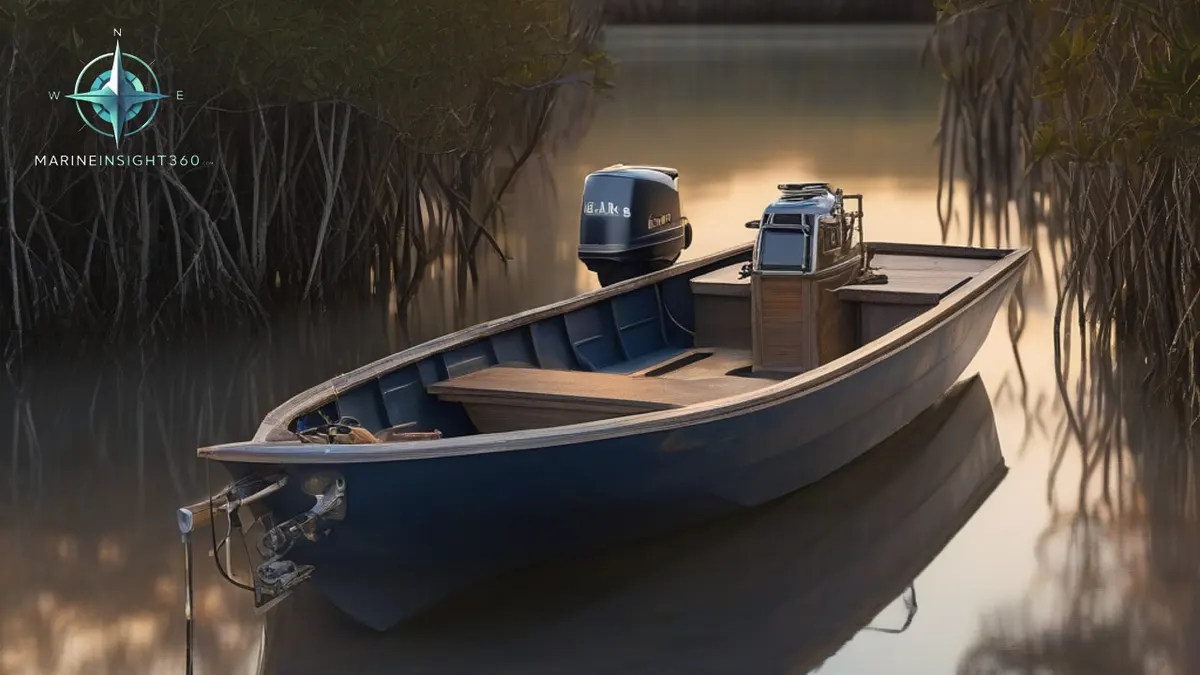
Microskiff boats are small, lightweight, shallow-draft craft under 4.5 meters long, with a flat bottom and a sharp upturned bow, built for fishing and light work in calm shallow water.
What are Microskiff Boats?
A microskiff is a small watercraft used primarily for fishing, recreational activities, watersports, and other purposes, including aquatic livelihood activities such as aquaculture, weed and plant gathering, weeding, and cleaning.
Microskiffs are small, shallow-draft, short, and narrow, with a simple, flat bottom and a sharp, closed bow that curves upward. They also have a simple, flat keel and no peak.
Their designis straightforward and uncomplicated, as they are designed to float in shallow, calm waters and have simple uses. The bow of a microskiff is vertical or nearly vertical.
Furthermore, Microskiffs are very lightweight and can accommodate one to two people, depending on their size. Traditionally, these boats were made of wood, but polymer-based materials are now also being used. They are primarily made of polyvinyl chloride (PVC) and other composite fiber materials, which reduces weight and drag.
They can also be made of rubber-based materials, though steel is also possible. The hull is composed of molded panels, connected by rods and tubes that act as connectors, or, in the case of steel hulls, simply welded.
The weight of these boats ranges from approximately 136 kg (450 lbs) for the largest to less than 45 kg (136 lbs) for the smallest, and they can be easily stored in places like the back of a small truck or on the roof of a car.
- Top 20 Types of Boats – Explained
- How Many Types of Boats Are There?
- What are Freeing Ports On Ships?
- How To Tell Difference Between Boat vs Ship?
- The Most Expensive Ships in History
For practical purposes, a microskiff is less than 4.5 meters (15 ft) in length. Draft and beam vary by design, but the top is typically around 1.5 meters (5 ft). They are completely open but may contain small compartments for storing fish, tackle, tools, and other items. They are often equipped with a transverse seating platform.
Due to their light weight, narrow hull, and small size, dinghies are fast, agile, and easy to maneuver. However, they require manual propulsion using oars, paddles, or low-powered outboard engines (usually less than 30 horsepower).
Technically, a dinghy is a smaller version of a skiff, and the terms can even be used interchangeably. A dinghy is a general term for these small boats, but more broadly, it also includes wider, lower, and lighter vessels used for the same purpose.
The word "sledge" can be traced back to the word "ship," which has roots in Italian, German, English, and French, all of which share a common underlying meaning.
Operational context
What to verify next
- Check whether microskiff boats affects safety, commercial planning, crew training, documentation or compliance.
- Confirm the latest company procedure, manual, port instruction or training requirement before acting.
- Link this page with one related article or knowledge-base topic so readers can continue their research naturally.
Recommended Reading
Typhoon Class Submarine: The Biggest Boats Ever Sent Under the Sea
The Soviet Typhoon class submarine remains the largest ever built: twin pressure hulls, 20 missile silos, and why nothing since has matched its size.
When Were Boats Invented? A Timeline From the First Dugout to the First Sail
The oldest boat ever found is about 10,000 years old, and humans were crossing open water long before that. The real timeline of when boats were invented.
First Boats Invented
Discover the oldest known boat, the Pesse canoe, its age, and why boat invention was a gradual evolution rather than a single inventor.