
How to Read Draft Marks on a Ship Accurately
Draft marks are read where the waterline meets the bottom of a figure. Metric and imperial marks, the six reading positions and draught survey corrections.
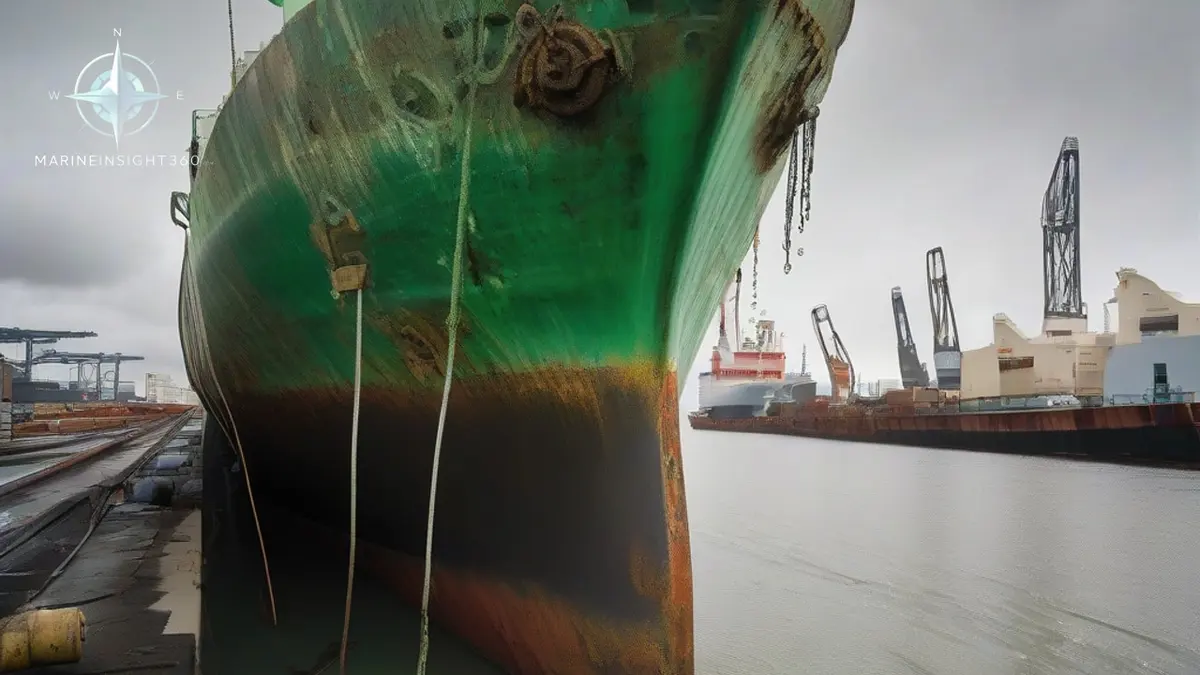
How to read draft marks comes down to one rule: the bottom edge of each figure sits at the depth that figure represents . On metric marks, each figure is 10 cm high with a 10 cm gap above it. A waterline touching the bottom of the figure 4 in the 12 meter block means a draft of 12.40 m. If the water reaches halfway up that figure, add 5 cm, giving 12.45 m.
Imperial marks use figures 6 inches high with a 6 inch gap, and the same logic applies in feet and inches. At the grain and coal berths of Vancouver, Newcastle and Rotterdam, these readings become the draught survey figure behind the bill of lading.
Six sets of marks are read for a full picture: forward port and starboard, midship port and starboard, and aft port and starboard. Anything less leaves you guessing about list, trim or hull deformation, and any of those will corrupt a cargo quantity calculation.
Reading metric and imperial marks
Metric marks
Metric marks are usually painted as Arabic numerals. Figures are 10 cm tall and spaced 10 cm apart vertically, so each figure and its gap covers 20 cm. Whole meters are shown with the full number, for example 12, and intermediate decimeters with a single digit, for example 2, 4, 6, 8. Interpolate within a figure to the nearest 2 cm at best; claiming a 1 cm reading from a hull alongside is optimistic.
Imperial marks
Imperial marks use figures 6 inches tall with 6 inch gaps, marking feet. The bottom of each figure is the stated foot mark, and the waterline halfway up a figure adds 3 inches. Older vessels and traditional craft sometimes carry Roman numerals, so a mark reading XXIV indicates 24 feet. Roman marks are increasingly rare but still appear on smaller and older tonnage.
Getting the reading right in real conditions
Errors in draft reading come from the observer's position and the sea state far more often than from arithmetic.
- Read from as close to the water as possible. Looking down from the main deck introduces parallax that makes the waterline appear higher on the marks than it is. A launch, a low quay or a pilot ladder platform gives the correct eye line.
- Average the wave motion. Watch several complete cycles and take the mean of the crest and trough readings rather than a single glance.
- Check both sides. A difference between port and starboard readings at the same station is list, and the mean of the two is what enters the calculation.
- Beware fouling and paint. Marine growth, fresh paint over marks and rust streaks all shift the apparent position of the figures.
- Note the water density. Fresh, brackish and salt water change the draft for the same displacement, and dock water density must be measured, not assumed.
From six readings to a usable mean draft
Once the six readings are taken, the calculation follows a fixed sequence:
- Mean each pair: forward mean, midship mean and aft mean.
- Correct each mean for the distance between the draft marks and the corresponding perpendicular. Marks are rarely exactly on the perpendiculars, and with trim on the ship that offset changes the effective draft.
- Calculate trim as the corrected aft draft minus the corrected forward draft.
- Calculate the mean of means, commonly the quarter mean, which weights the midship reading heavily: six times the midship mean, plus the forward mean, plus the aft mean, all divided by eight.
The heavy weighting on midship exists because the hull bends. A ship loaded heavily at the ends and light amidships hogs, and the midship draft reads less than the average of forward and aft. Loaded heavily amidships it sags, and the midship draft reads more. Ignoring that deformation is one of the largest sources of error in cargo quantity disputes.
Where draft readings end up
On a bulk carrier, the readings feed a draught survey. The surveyor takes the corrected mean draft into the ship's hydrostatic tables to find displacement, applies corrections for trim and for dock water density, then deducts everything on board that is not cargo: ballast water, fuel oil, diesel, lubricating oil, fresh water and the ship's constant. What remains is the cargo weight, and on a capesize cargo a small draft error translates into hundreds of tonnes.
For the deck officer, the same readings serve narrower but equally important purposes: confirming the loading computer's predicted condition, verifying under keel clearance before a shallow water passage, checking compliance with the applicable load line for the zone and season, and checking that the ship is upright before sailing.
Draft marks are not load line marks
The two get confused. Draft marks run vertically up the hull at the six stations and tell you how deep the ship is floating. The load line mark , the disc with a horizontal line through it and the associated timber and seasonal marks alongside, sits amidships and tells you the maximum permitted draft for the zone, season and water density under the International Convention on Load Lines. Reading the draft is a measurement; the load line is a limit.
Before the next loading
Check that all six sets of marks are legible and correctly positioned after any docking or hull repair, take a hydrometer sample of the dock water at the same time as the readings, and record who read the marks and from where. Those three habits close most of the gaps that draught survey disputes are argued over. The cargo operations material in the Marine Insight 360 Shipboard Operations section covers the survey calculation in full.
The marks are not only a working tool, they are checked. Port state control officers under the Paris MoU and Tokyo MoU, and USCG inspectors in US ports, check that the ship floats within her assigned load line, and a vessel found overloaded on arrival is detained until cargo comes off. The certificate assigning those marks is issued by the flag administration or by a class society such as DNV acting for it.
Reading errors have a predictable shape. Marks obscured by fresh paint, a hull lying off the fenders so the observer sights at an angle, and a density sample taken from surface water rather than at mid draft all push the figure the wrong way. Surveyors also find marks deformed or repositioned after steel renewal, which corrupts every survey made from them until they are checked against the plans.
Sources and further reading
- Draft survey: principles and calculation
- GOTEC: what is the draft of a ship, a complete guide
- Draft (hull): definition and measurement
What to read next
Recommended Reading
How to Read the Draft of a Ship: Marks, Corrections and Costly Errors
Read metric and imperial draft marks correctly, take all six readings, apply list and trim corrections, and avoid the errors that skew a draft survey.

What Are Loadline Marks & Draft Markings?
What Are Loadline Marks & Draft Markings?: safety, training and compliance context for US, UK, Canada, Australia, Singapore and European maritime readers.
What Are Plimsoll Lines? Reading a Ship's Load Line Marks
Plimsoll lines mark how deep a ship may legally load. How to read the circle, the TF to WNA scale, and why freeboard keeps ships alive at sea.