
What Are The Future Trends In The Maritime Industry In 2024?
The trends that shaped shipping in 2024: EU carbon pricing, IMO climate targets, new fuels, Red Sea and Panama disruption, cyber rules and the crew shortage.
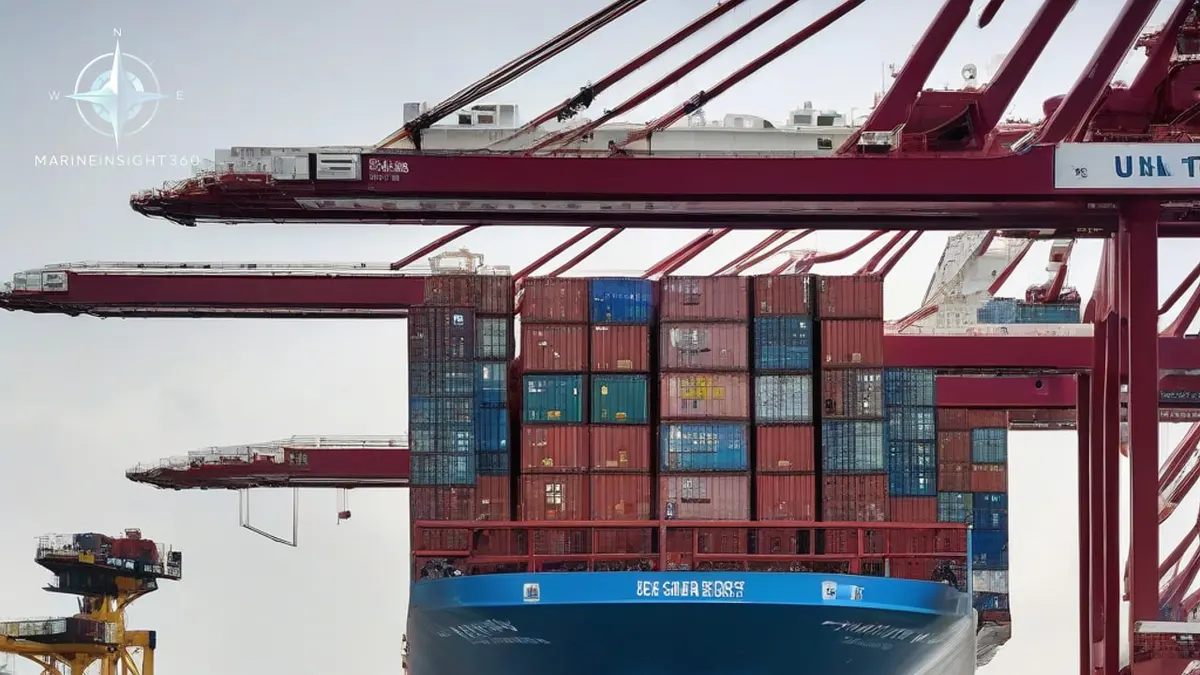
The trends that shaped shipping in 2024 came as much from rules and events as from technology: carbon pricing arrived in Europe, the IMO's climate targets began to bite, and two of the world's busiest trade routes were disrupted at the same time. Behind them, cleaner fuels, digital systems and automation spread steadily through the fleet. This article was rewritten in October 2026; where a 2024 development has a later date attached, we say so.
Top 10 Maritime Industry Trends in 2024
1. Carbon Pricing Reaches Shipping
From 1 January 2024, shipping joined the EU Emissions Trading System. It covers ships of 5,000 gross tonnage and above calling at EU ports, whatever flag they fly: all emissions on voyages between EU ports and while at berth in them, and half of the emissions on voyages that start or end outside the EU. The cost is being phased in.
Companies surrender allowances for 40% of their 2024 emissions, 70% of their 2025 emissions and all of their emissions from 2026 onwards. For the first time, a ship's carbon output carried a direct price.
2. Tougher IMO Climate Targets and Carbon Ratings
The International Maritime Organization's revised greenhouse gas strategy, adopted in July 2023, set the direction for 2024. It aims for net-zero emissions from international shipping by or around 2050, with checkpoints of at least a 20% cut (striving for 30%) by 2030 and at least 70% (striving for 80%) by 2040, both compared with 2008.
It also calls for zero or near-zero emission fuels to supply at least 5% (striving for 10%) of the energy used by international shipping by 2030.
Two IMO measures have applied since 1 January 2023: the Energy Efficiency Existing Ship Index (EEXI) and the annual Carbon Intensity Indicator (CII). Each ship receives a CII rating from A, the best, to E, and 2024 was the first year in which ratings were issued for a full year of operation. A ship rated E, or D three years in a row, needs a corrective action plan, which puts pressure on owners and ship managers to cut fuel use.
3. The Move to Alternative Fuels
Orders for ships that can burn something other than conventional fuel oil kept growing. LNG-fuelled ships remained the largest group, and methanol gained ground. In early 2024 Maersk named Ane Maersk , the first of a series of large methanol-capable container ships, with a capacity of about 16,000 TEU. The line's first methanol-capable ship, the much smaller Laura Maersk , had entered service in 2023. Ammonia and hydrogen were still largely at the testing stage. Most of these ships have dual-fuel engines and propulsion systems that can also run on oil, because supplies of the new fuels are still limited. Our guide to LNG propulsion explains how gas-fuelled ships work.
4. Red Sea Attacks and the Long Way Round
Attacks on merchant ships by Yemen's Houthi movement, which began in late 2023, led most of the large container shipping companies to avoid the Red Sea and the Suez Canal through 2024 and sail around the Cape of Good Hope instead. UNCTAD reported in early 2024 that trade volumes through the Suez Canal had fallen by 42% in two months. The longer route added days to each voyage, increased fuel use and emissions, and tied up more ships to carry the same cargo. We cover the security side in Houthi Red Sea attacks and their impact on shipping.
5. Drought at the Panama Canal
Low water in Gatun Lake, which supplies the Panama Canal's locks, led the canal authority to limit daily transits and the maximum permitted draught from 2023 into 2024. The restrictions were eased during 2024 as water levels recovered. Coming at the same time as the Red Sea crisis, it showed how much world trade depends on a few narrow passages.
6. Data, Connectivity and Artificial Intelligence
Ships now produce a steady stream of data from engines, sensors and navigation systems, and better satellite connections let operators see it ashore in near real time. Companies use it to plan routes around weather, track fuel consumption against CII targets and schedule predictive maintenance before a part fails. Artificial intelligence is being applied to the same data, for example in voyage optimisation and in spotting abnormal machinery behaviour. Environmental data collection at sea is growing too.
7. Cyber Security Becomes a Class Requirement
More connectivity means more exposure to cyber attack. The IACS unified requirements E26 and E27 became mandatory for new ships contracted for construction on or after 1 July 2024. E26 covers the cyber resilience of the ship as a whole, and E27 the onboard systems and equipment supplied by manufacturers. Since 2021 the IMO has also expected companies to address cyber risk in their safety management systems. Our article on maritime cybersecurity trends in 2024 goes into more detail.
8. Autonomous Ships Move Towards Rules
In May 2024 the IMO's Maritime Safety Committee revised its timetable for a code on Maritime Autonomous Surface Ships (MASS). A non-mandatory code was to come first, followed by a mandatory code planned to take effect on 1 January 2032. Remote-controlled and autonomous vessels were being trialled, mostly small ships on short, well-defined routes.
9. Robots and Drones for Inspection and Maintenance
Drones inside cargo holds and tanks, and remotely operated vehicles under the hull, are increasingly used for inspections, and classification societies accept these remote inspection techniques for some surveys. Robots are also used to clean hulls, since fouling adds drag and fuel cost. These tools reduce the time crews and surveyors spend in enclosed or dangerous spaces.
10. The Crew Shortage
The BIMCO/ICS Seafarer Workforce Report 2021 found a shortfall of 26,240 STCW-certified officers and estimated that an additional 89,510 officers would be needed by 2026 to crew the world fleet. New fuels and digital systems also call for new skills, from handling methanol or LNG safely to managing networked machinery, so training in marine engineering and navigation has had to keep pace. For shipping companies, recruiting and keeping qualified seafarers remained one of the hardest problems of the year.
Conclusion
In 2024 the direction of shipping was set less by any single technology than by rules and events: carbon pricing in Europe, the IMO's climate targets, and disruption at Suez and Panama. Cleaner fuels, data and automation are the tools companies are using to respond, and the people who run the ships remain the constraint on all of them.
Sources: European Commission, Reducing emissions from the shipping sector; IMO, Cutting GHG emissions from shipping; IACS, UR E26 and E27; UNCTAD, Red Sea, Black Sea and Panama Canal; IMO, Autonomous shipping; BIMCO/ICS Seafarer Workforce Report 2021.
Recommended Reading
Top 10 Trends in the Maritime Industry
How are emerging technologies shaping the future of the maritime industry? Explore our in-depth research on 1,163 emerging and established companies in…

New Trends in Maritime Cybersecurity in 2024
Like many others, the maritime industry is undergoing a rapid digital transformation. While this brings efficiency and innovation, it exposes ships and their infrastructure to evolving cyber threats.
The Future of Merchant Navy: Trends and Predictions
Yesterday, approximately 800 councilors raised the Merchant Navy flag , or 'Red Duster,' to commemorate Merchant Marine Day. Since 2000, Merchant Navy Day…