
Master 200 Ton Oral Exam Questions: What the USCG Actually Tests
Master 200 ton oral exam questions demystified: the ONC05 modules, question counts, pass marks, and the route limits on an orally assisted exam.
What the 200 ton oral exam actually is
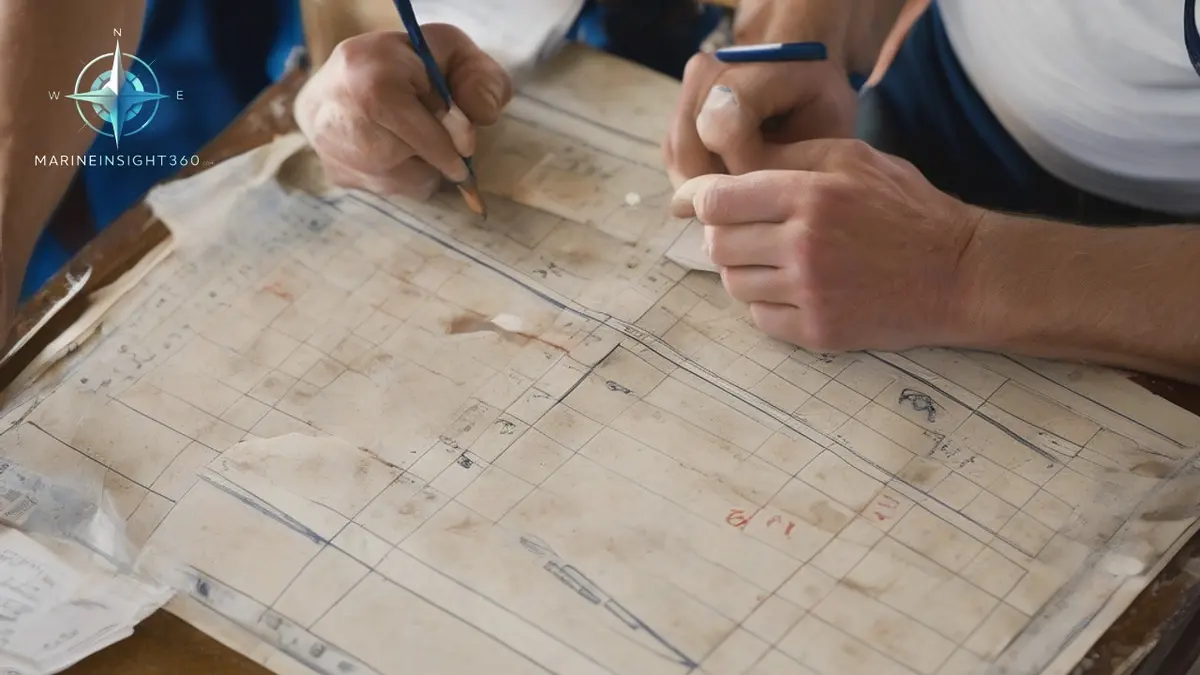
There is no published list of master 200 ton oral exam questions. What exists is an orally assisted examination: a Coast Guard examiner works through the same approved question banks with you verbally instead of handing you a written paper. Any applicant for a deck or engineer endorsement limited to vessels of less than 200 gross register tons may request it.
The trade-off is written into the rule. An endorsement obtained through an orally assisted examination is limited to the specific route and type of vessel on which the applicant gained the majority of their service.
The modules the examiner works from
The Coast Guard exam set for Master or Mate of less than 200 GRT on oceans or near coastal routes is ONC05. It contains seven modules and 155 questions in total.
- Q100 Rules of the Road, 50 questions.
- Q150 Deck General, 50 questions.
- Q151 Deck Safety, 50 questions.
- Q152 Navigation General, oceans and near coastal, 50 questions.
- Q153 Chart Plot, 10 questions.
- Q154 Navigation Problems, oceans, 10 questions.
- Q155 Navigation Problems, near coastal, 10 questions.
Pass marks are not uniform. Q100 Rules of the Road and Q153 Chart Plot both require 90 percent. Q154 and Q155 require 80 percent. The remaining modules require 70 percent.
Where candidates actually fail
Rules of the Road at 90 percent is the wall. Five wrong answers out of 50 ends the module. Candidates who treat the rules as general knowledge rather than memorized text fail here more than anywhere else.
Chart plot is the second wall for the same arithmetic. Ten questions at 90 percent means one error is survivable and two are not. Plotting speed matters less than a repeatable method: label every line, work in true, and sanity check each answer against a rough mental estimate before committing to it.
The subject areas behind each module
Rules of the Road
Lights and shapes for every vessel category, sound and light signals, conduct in restricted visibility, risk of collision and the action required to avoid it, narrow channels, traffic separation schemes, and the differences between the international and inland rules. Learn light configurations cold, including arcs and ranges.
Deck General
Anchoring and mooring, ground tackle, wire and synthetic line, blocks and tackle, basic stability and free surface effect, cargo handling on small vessels, marlinspike seamanship, and vessel construction terminology.
Deck Safety
Lifesaving appliances and their servicing intervals, firefighting agents and their correct application, damage control, man overboard recovery, personal protective equipment, and pollution prevention and reporting requirements.
Navigation General
Aids to navigation and the US buoyage system, compass error and deviation, tide and tidal current tables, navigation publications, electronic navigation systems, weather, and voyage planning.
Chart plot and navigation problems
Set and drift, course to steer, estimated position, running fixes, distance off, and time speed distance work. Near coastal problems lean on coastal fixing, while ocean problems reach into celestial and great circle work.
How to prepare for an oral rather than a written sitting
- Know your own vessel and route in detail. The examiner anchors questions in the service you actually performed, and the resulting endorsement is limited to that route and vessel type.
- Practice answering out loud. Recognizing a correct multiple choice option is far easier than producing an answer unprompted.
- Drill lights and shapes with flashcards until recall is instant.
- Work chart plots on paper under time pressure, not on a screen.
- Say what you do not know rather than guessing. Examiners weigh judgment, and a confident wrong answer about firefighting or collision avoidance reads badly.
Should you take the oral at all
The orally assisted route helps candidates who read slowly, work in a second language, or have a documented reading difficulty. It costs you scope, because the endorsement will be limited to the route and vessel type behind your sea service.
If you expect to move between vessel types, or between inland and near coastal work, the standard written examination keeps more doors open. Check the current module list and pass marks with the National Maritime Center before booking, since exam sets are revised. For related licensing pathways, see the Careers section on Marine Insight 360.
Sources and further reading
- USCG Deck Officer License Exams for Oceans or Near Coastal Endorsements - EduMaritime
- U.S. Coast Guard Merchant Marine License Examinations - EduMaritime
- Upgrade Master 100 Tons to Master 200 Tons, Near Coastal - MPT
What to read next
Recommended Reading
Container Tracking: How Shippers Actually Follow a Box Across the Ocean
How container tracking works, from free carrier lookups to visibility platforms: what each tool layer does, what it costs, and how to pick for your volume.
USCG Licensing Exam: How the Coast Guard Tests Deck and Engineer Officers
How the USCG licensing exam works: NMC modules, Regional Exam Centers, allowed references, passing scores, retest rules and a realistic preparation plan.
How to Improve a RightShip Safety Score: What Actually Moves the Number
The RightShip Safety Score runs 1 to 5 and rebuilds as data arrives. Where scores are lost, what fixes them, and how long improvement takes.