
Measures Prepare for Tropical Revolving Storm (TRS)
Measures Prepare for Tropical Revolving Storm (TRS): technology, equipment and fleet context for US, UK, Canada, Australia, Singapore and European...
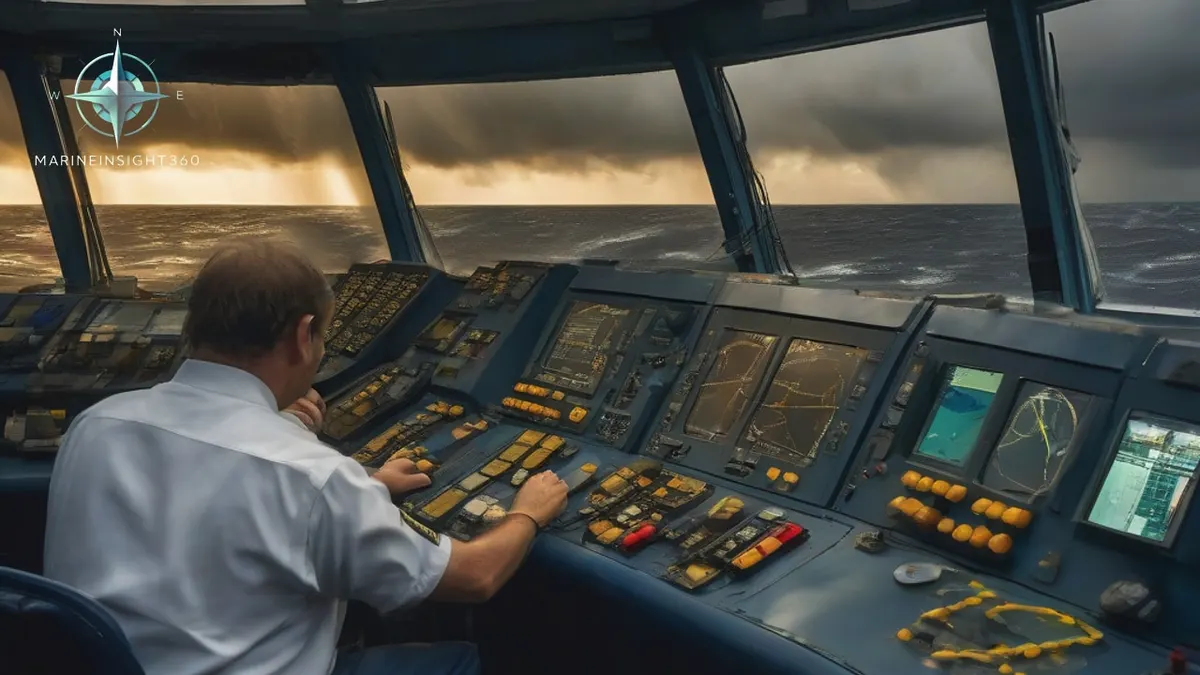
Ships must prepare for a tropical revolving storm by monitoring broadcast warnings, watching swell, wind and cloud changes, comparing a calibrated barometer against the seasonal average, and using radar, which gives warning about 100 miles out.
What measures should ships take to prepare for a Tropical Revolving Storm (TRS)?
All seafarers are familiar with the term "TRS," or tropical cyclone. It is an intense rotating low-pressure area (surface low-pressure area) that forms over tropical oceans. It consists of a rotating mass of warm, moist air that can generate thunderstorms with strong winds, heavy rain, large waves, and destructive storms. Convective forces typically extend from the surface low-pressure area to the tropopause.
The most important characteristics of atropical cyclone (TRS):
- It appears smaller than a moderate low-pressure area.
- It forms near the Intertropical Convergence Zone, an unstable region.
- It has nearly circular pressure lines.
- It lacks an air front (a front is the boundary between two air masses, typically deformed by warm air rushing against cold air).
- It creates a steep pressure gradient.
- It is very intense.
Rotating Tropical Storm
For this article, however, we will examine the early signs of a rotating tropical storm to better assess the appropriate measures.
1. Warning and Alert Information
Navigational radios, telexes, and all other available means should be tuned to the correct frequency and monitored closely, as they broadcast comprehensive warnings about known storms. Refer to the relevant ALRS volume for more information and the frequencies of radio stations in the area. Although rarely used, telexes are a vital and highly accurate tool.
Coastal weather stations may not be able to detect all storms, so all equipment and observations aboard a ship are crucial to avoiding disasters.
2. Waves
When there is no visible land in the vicinity, waves may form within a TRS area, indicating that a storm is developing. Typically, waves will approach the direction of the storm.
3. Air Pressure
If you suspect an impending storm, monitor the barometer closely. If the calibrated barometer reading falls below or exceeds 3 millibars (this is the average reading for this time of year; refer to the navigation guide for precise information on air pressure readings), a tropical cyclone (TRS) may be present. Please note that the barometer used must be calibrated for latitude, altitude, temperature, and other factors for maximum accuracy and efficiency.
- Black Sea Once Again A Danger Zone
- “Dead zone” in Gulf of Mexico Is 12th Largest Ever Seen
- How to Become a Shipbroker – Everything You Need to Know
- What is a Remotely Operated Underwater Vehicle (ROV)?
- What are Volatile Organic Compounds (VOCs)?
- Whale Atlas: Safer Whale Navigation Worldwide
4. Wind
Wind direction and speed are relatively constant in tropical regions. Moreover, wind direction and speed that differ from the normal wind direction for the region and season are indicators of an approaching tropical cyclone. Any significant change in wind direction or strength indicates the presence of a nearby tropical storm system (TRS).
5. Clouds
Clear, colorful skies at sunrise and sunset can be a sign of an approaching tropical cyclone. Cirrus clouds can be seen 300 to 600 miles from the storm, thinning out and covering a larger area (upper layer) as you get closer. Cumulus clouds typically follow as you get closer to the storm.
6. Visibility
Although it may sound paradoxical, visibility is excellent when a rotating tropical storm approaches!
7. Radar
Radar can provide ample warning of a rotating tropical storm (TRS) about 100 miles before it approaches. The eye of the storm sometimes appears on the screen. Rain areas surrounding the eye of a storm (the center of the storm's eye) can cause noticeable distortion on radar screens. Remember, while these signs may be visible on radar, by the time they become visible, the vessel may already be encountering high waves, strong winds, and other adverse weather conditions.
Action must be taken before such conditions occur.
Storm Actions
While it is unlikely to sail into a storm with all navigation and communication systems (both shore and ship) active, shore personnel typically have backup plans in place to avoid such storms (coordinated with the company and the chosen route). However, if a direct encounter with a TRS system occurs, the situation may be subdued or weak, depending on sea conditions, and the captain may be able to navigate with experience and knowledge.
To fully avoid this situation, the captain should gather as much information as possible about the storm.
Avoidance measures include:
Maintain a distance of at least 80 kilometers from the center of the storm. If possible, a distance of at least 320 kilometers is ideal to avoid any danger.
Maintain a good speed. A vessel moving away from the center of the storm at approximately 20 knots can easily escape an approaching tropical cyclone (TRS). This storm moves very slowly. This maneuver must be done before winds become too strong to hinder navigation, speed, or maneuvering.
As mentioned earlier, a rapid drop in air pressure signals the arrival of a tropical cyclone (TRS). Unless the barometer reading drops by 5 or 3 millibars and there are strong winds, the vessel must maintain its course. If the vessel is in the tail (behind) of the storm, within the navigation semicircle, there must be sufficient time and sea space to avoid the center of the storm.
Northern Hemisphere
If the wind direction changes, the vessel may find itself in a dangerous semicircle. The vessel must sail at full speed and maintain a tack angle of between 10 and 45 degrees to starboard (depending on speed). When the wind changes, the vessel must veer to starboard.
If the wind is steady or leeward, the vessel is in a navigable semicircle, the wind must be at one-quarter of the vessel's starboard side, and the vessel must steam at full speed. When the wind changes, the vessel must veer to port.
Southern Hemisphere
If the wind is leeward, the vessel may be in a dangerous semicircle. The vessel must steam at full speed and maintain a tack angle of between 10 and 45 degrees to port (depending on speed). When the wind is steady, the vessel must veer to port.
If the wind is steady or light, the vessel is in a navigable semicircle, the wind must be steadily veering to port, and the vessel must steam at full speed. In calm waters, the vessel should veer to starboard. If the vessel is on the port side and a rotating tropical storm is approaching, it is best to set sail immediately. Remaining at the dock, especially if there are other vessels nearby, can be extremely dangerous.
Even following best anchoring practices may not protect a vessel from the effects of a storm.
Recommended Reading
Maritime Cybersecurity in 2026: Why Every Ship and Port Must Prepare
Practical measures for ships and companies A robust maritime cybersecurity programme does not have to start with costly hardware.
Oil Market Expected To Be In Surplus Despite OPEC+ Measures
Oil prices have come under considerable pressure this year, with markets concerned about demand and surplus expectations for 2025. Even after a decision…
How Do I Prepare for the IMU CET Exam?
How Do I Prepare for the IMU CET Exam 2024?: ports, trade and shipping-market context for US, UK, Canada, Australia, Singapore and European maritime...