
MPA Harbor Craft License: Operating Workboats in Singapore Port
What the MPA harbor craft license covers in Singapore, the license categories, documents required, port limit manning rules and temporary permits.
What an MPA harbor craft license authorizes
An MPA harbor craft license is the permission issued by the Maritime and Port Authority of Singapore for a vessel to operate commercially inside Singapore port limits. The license is craft-specific, not company-specific, and it is issued strictly for use within the port limits or the places stated on the craft license certificate. Operating a commercial workboat in those waters without it is not an option. Note that MPA spells the instrument harbour craft licence in its own documents.
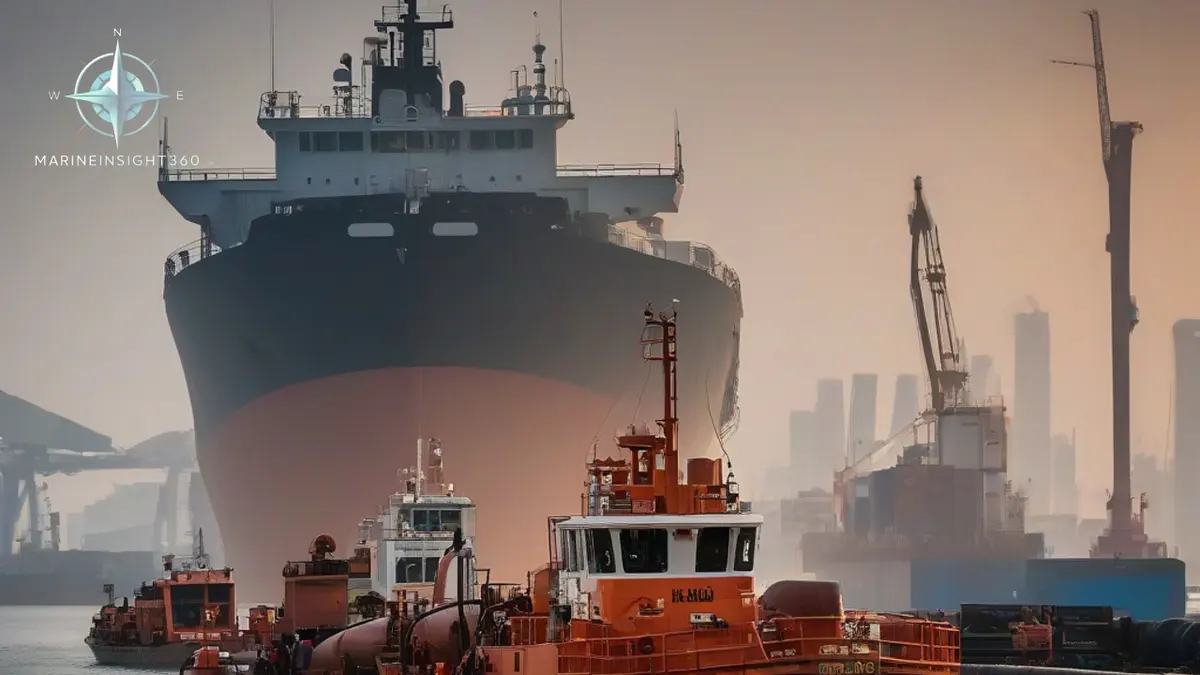
Singapore handles one of the densest concentrations of ship traffic anywhere, and the harbour craft fleet is what makes that traffic work: tugs, bunker barges, water boats, crew boats, supply launches and bumboats moving between anchorages, terminals and ships at the fairway. Licensing is how MPA keeps that fleet identifiable, insurable and manned by certificated people.
Which craft need a license and in which category
MPA issues harbour craft licences in categories set by the purpose and type of the craft. Published examples of the categories include bumboat, passenger boat and tug boat. The category matters because it defines what the craft may lawfully do: a licence issued for one purpose does not authorize a different commercial activity.
Pleasure craft sit in a separate licensing stream. If a vessel is used for private recreation rather than commercial work in port, it is licensed as a pleasure craft, and the two regimes should not be mixed up in an application.
The application: documents and the in-port rule
The application is made on MPA form PM74, the application form for a harbour or pleasure craft licence, submitted with originals and copies of supporting documents at MPA's One-Stop Document Centre.
- Individual applicants submit the NRIC of the owner or licensee.
- Corporate applicants submit an instant information printout from the Accounting and Corporate Regulatory Authority (ACRA), which is Singapore's company register.
- The craft itself must be in port at the time a new harbour craft licence application is made, because MPA needs to be able to inspect and verify it.
That last point is the one that catches new operators. A vessel bought abroad cannot be licensed from a distance; the delivery voyage has to be planned so the craft arrives before the licence process starts rather than after.
Crewing: the Port Limit Manning Licence
A licensed craft still needs licensed people. Every certificated crew member working on board a harbour craft must hold a valid Port Limit Manning Licence issued by MPA. This is a separate application from the craft licence and it has its own renewal cycle, which is a common source of non-compliance when a company focuses on the vessel paperwork and forgets the crew documents.
Foreign crew add a second requirement. Anyone working on board an MPA-licensed harbour craft who is not a Singapore citizen or permanent resident must also hold a valid work pass. Manning licence and work pass are not substitutes for each other, and both have to be current at the same time.
Temporary harbour craft permits
MPA also issues a temporary harbour craft permit, which covers craft that need to work in port limits for a limited period rather than on a standing basis. It suits a vessel brought in for a specific project, a short charter or a one-off movement. The permit is not a route around the full licence for continuing commercial operation, and operators planning sustained work should apply for the licence itself.
Practical points that cause delays
- Match the category to the actual work. Changing what a craft does may mean changing the licence, not just the contract.
- Track expiry dates separately. The craft licence, the manning licences and every work pass expire independently.
- Keep the certificate on board. The licence certificate states the places within port limits where the craft may operate, and that text is the operative limit.
- Budget for time, not just fees. Document verification at the One-Stop Document Centre, crew licensing and any survey requirement all sit on the critical path before the craft can earn.
Why this matters beyond Singapore
Port-limit workboat licensing is not unique to Singapore, and the underlying structure repeats in most major ports: a vessel permission tied to a defined operating area, a separate manning permission for the people on board, and an immigration layer for foreign crew. An operator moving a business between hubs should expect the same three-part structure with different form numbers.
For current forms, fee schedules and validity periods, work directly from the MPA pages rather than from third-party summaries, because the details are updated without notice. Readers looking at the wider port operating picture can continue in the Marine Insight 360 Ports section.
Two regimes overlap in Singapore waters and operators mix them up. The harbour craft licence covers commercial work inside port limits. A ship arriving from sea is a different subject: MPA inspects foreign flagged vessels as a port state under the Tokyo MoU, and detains them for serious deficiencies. A tug that leaves port limits on a coastal tow moves out of the craft licence regime and into flag and class requirements.
The failures that cost money are administrative. A manning licence that expires while the craft licence is still valid leaves the vessel crewed unlawfully, and work passes lapse on the same pattern. The navigational risk is separate and constant. A harbour craft crossing ahead of a deep draft ship under pilotage leaves no margin for a steering or engine failure.
Sources and further reading
- MPA Singapore: Licensing a Harbour Craft
- MPA Singapore: Licensing and Application Requirements for Harbour Craft
- MPA Singapore: Applying or Renewing the Port Limit Manning Licence
- MPA Singapore: Temporary Harbour Craft Permit
What to read next
Recommended Reading
Cashew in the Bunkers: Why Ships in Singapore and Rotterdam Hit Engine Failures
Ships bunkering in Singapore and Rotterdam hit sludging, injector and turbocharger failures traced to cashew nutshell liquid blended into marine fuel.

USCG License Renewal: Renewing a Merchant Mariner Credential
How USCG license renewal works: the CG-719B package, the eight month filing window, sea service and refresher options, and the one year grace period.
Port Cities of Japan: Tokyo, Yokohama, Nagoya, Osaka and Kobe
The main port city of Japan options compared: container volumes at Tokyo, Yokohama, Nagoya, Osaka and Kobe, the 2010 port alliances and what crews find ashore.