
Port Cities of Japan: Tokyo, Yokohama, Nagoya, Osaka and Kobe
The main port city of Japan options compared: container volumes at Tokyo, Yokohama, Nagoya, Osaka and Kobe, the 2010 port alliances and what crews find ashore.
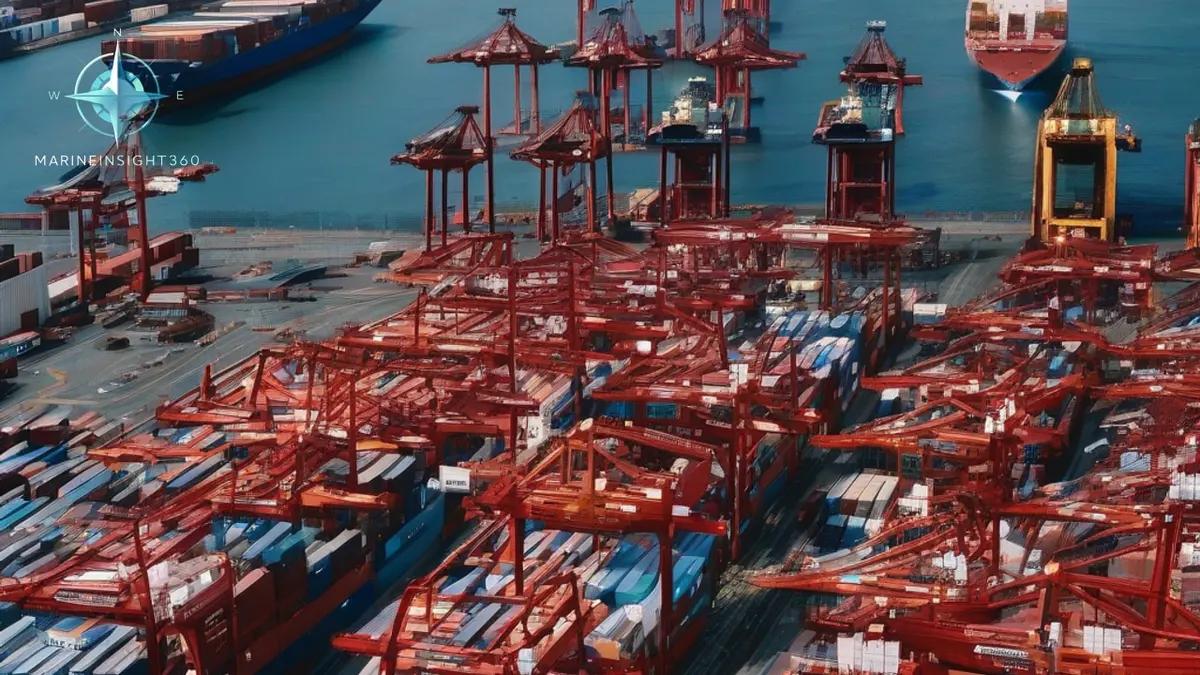
Ask for a major port city of Japan and the working answer is one of five: Tokyo, Yokohama, Nagoya, Osaka or Kobe. Tokyo and Yokohama lead on container volume, Nagoya handles the largest total cargo tonnage, and Osaka and Kobe anchor the western cluster. All five sit in two bays, Tokyo Bay and Osaka Bay, and that concentration explains most of Japanese port policy.
Which port city of Japan handles the most cargo
The answer depends on the unit of measurement, which is why the rankings look inconsistent across sources.
- Tokyo leads on containers, around 4.5 million TEU annually, and reported 2.42 million TEU in the first half of 2025, up 6.5 percent year on year.
- Yokohama follows, with a heavier industrial and vehicle component.
- Nagoya moves around 3.0 million TEU but tops the tables on total cargo tonnage, lifted by vehicle, machinery and steel exports from the surrounding manufacturing belt.
- Osaka handles roughly 2.7 million TEU, largely serving the Kansai consumer market.
- Kobe is close behind at around 2.4 million TEU, with a strong break-bulk and project cargo tradition.
Set those numbers against Shanghai, Singapore or Busan and the gap is stark. Japan's ports are large gateway ports for a large domestic economy, not the transhipment hubs they once were.
Why Japan lost its transhipment position
Kobe was among the busiest container ports in the world in the 1970s and 1980s. The Great Hanshin earthquake in January 1995 destroyed quay structures, cranes and the surrounding transport network. Cargo rerouted to Busan and other regional hubs during the rebuild, and much of it never came back.
The structural causes ran deeper than one disaster. Chinese and Korean ports built newer, deeper terminals at lower cost with longer operating hours, while Japanese ports were split among competing municipal authorities. Feeder cargo for the Japanese archipelago became easier to route through Busan than through a Japanese hub.
The 2010 strategic port policy
Japan's response was consolidation. In 2010 the government designated strategic international container ports and merged terminal operations across neighbouring municipalities. Yokohama and Kawasaki formed a joint international port corporation, as did Kobe and Osaka, with Tokyo drawn into the eastern grouping.
The aim was to present shipping lines with one commercial counterparty per bay instead of several, to fund deeper berths and larger cranes, and to claw back feeder cargo from Korea. Progress has been steady rather than dramatic, and Japanese terminals still compete against a Busan transhipment offer that is hard to beat on price.
How the five ports differ in practice
Tokyo works the Oi and Aomi container terminals and serves the largest consumer market in the country. Landside congestion and truck turn times are the recurring complaint.
Yokohama opened to foreign trade in 1859 and became Japan's original gateway. Daikoku Pier handles containers and vehicles, and the port keeps a substantial shipbuilding and repair presence.
Nagoya is the automotive port. Vehicle export terminals, roll-on roll-off berths and project cargo dominate the mix, and the port's total tonnage reflects steel and machinery as much as boxes.
Osaka is a domestic distribution port with a large ferry and coastal trade alongside deep-sea container services.
Kobe opened to foreign trade in 1868 during the Meiji Restoration and grew on the strength of its natural deep water. It remains the most convenient of the five for shore leave, with the container terminals on artificial islands connected to a city centre that is genuinely walkable.
What crews should expect calling in Japan
Japanese port state control is thorough and well organized under the Tokyo Memorandum of Understanding regime. Documentation is checked closely, and the boarding party expects the ship's paperwork to be in order before questions start.
Turnarounds are fast. Terminal productivity is high and berth windows are held to, so a container call can be finished inside a working day. That efficiency compresses shore leave, and the practical constraint is usually the distance from an artificial-island terminal to the nearest gate and transport link.
Immigration processing for shore leave is routine but formal, with landing permits issued on board. Seafarer welfare centres operate in the major ports, and port chaplaincy transport is often the only realistic way off a remote terminal. Plan shore leave with the agent before arrival rather than after the gangway is down.
Enforcement across the five ports runs through the Tokyo MoU, and its inspectors publish what they find. Fire safety and life saving appliances dominate the deficiency tables year after year, and a ship that cannot demonstrate its own drill and maintenance records is where a routine inspection turns into a detention. Japanese boarding teams work from those same regional priorities.
Weather is the other recurring problem. Typhoon season closes berths in both bays and pushes ships out to ride it at sea. In September 2018 a tanker at anchor in Osaka Bay dragged during Typhoon Jebi and struck the bridge to Kansai airport, cutting the only road link. Anchor watches and early departure decisions matter more here than the productivity figures suggest.
Sources and further reading
- 5 Biggest Ports in Japan - Beacon
- Tokyo Port container throughput rises 6.5% in first half of 2025 - PortNews
- Port of Kobe - Wikipedia
- Port of Yokohama: Bridging Japan and the World
What to read next
Recommended Reading
Tokyo and Manila Launch Intelligence Sharing and Maritime Border Talks: What Changes at Sea
Japan and the Philippines opened intelligence sharing and maritime boundary talks. Here is what the deals change for ships on Asian routes.
Why ICCP Is Switched Off in Port: Overload, Stray Current and Spark Risk Explained
ICCP systems are switched off in port to prevent overload, stray-current damage and spark risk at the berth. Learn the reasons and the correct procedure.
Two Crew Members Seriously Injured in Explosion on Tanker at Ireland's Second Largest Port
An explosion aboard the chemical tanker Bow Hercules at Shannon Foynes seriously injured two crew members. What the case shows about gas cylinder safety.