
Red Sea Shipping and the Houthi Attacks: Timeline, Risks and Routes
Houthi attacks since November 2023 halved oil flows through Bab el-Mandeb. The full timeline to 2026, the Saudi blockade, insurance and what it means for ships and crews.
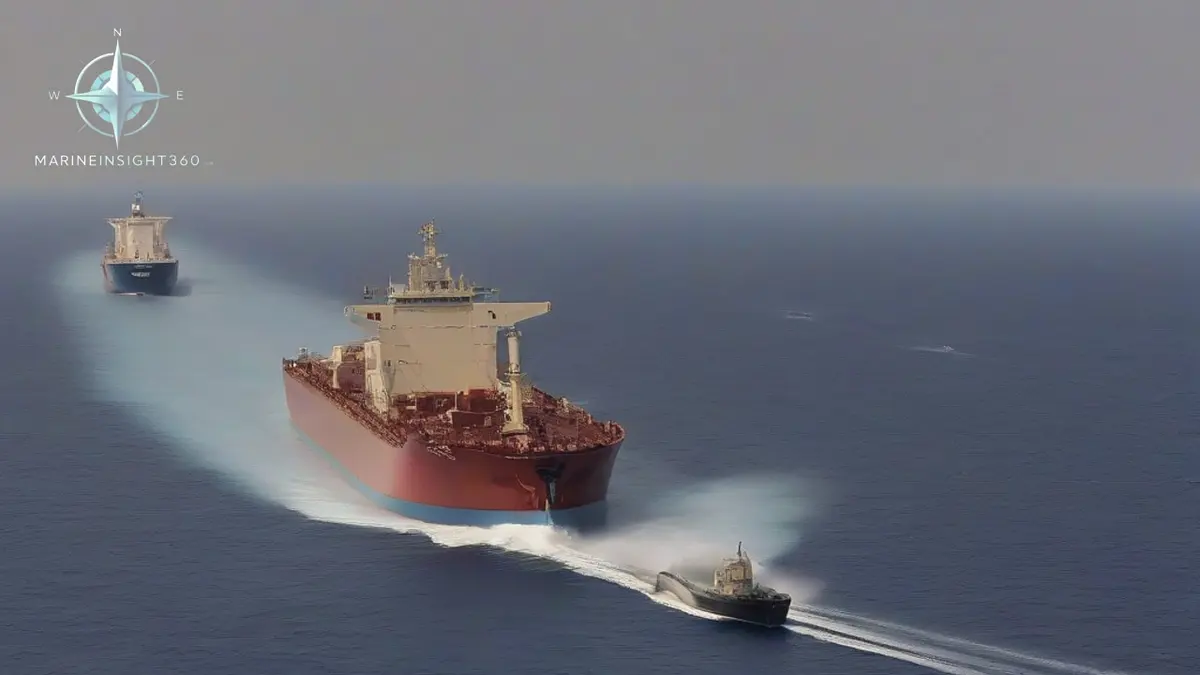
Since November 2023, attacks by Yemen's Houthi movement have made the southern Red Sea and the Bab el-Mandeb strait one of the most dangerous stretches of water for merchant ships. Oil flows through the strait fell by more than half in 2024 as owners sent ships around the Cape of Good Hope instead. In 2026 the threat widened again: the Houthis declared a naval blockade of Saudi Arabia, ships were sunk off Yemen, and war-risk insurers withdrew cover.
This page keeps the facts, the timeline and the practical consequences for ships and crews in one place, and is updated as the situation changes.
Situation as of the latest reports in our archive, early October 2026. Dates and figures are credited to the outlet that reported them. For the geography of the sea itself, see our Red Sea facts and maritime geography guide .
Key facts
Item
Figure
Source
Where the risk concentrates
The Bab el-Mandeb strait between Yemen and Djibouti, the southern gateway to the Red Sea and the Suez Canal
Oil through Bab el-Mandeb, 2023
8.7 million barrels a day
US EIA
Oil through Bab el-Mandeb, 2024 (to August)
4.0 million barrels a day, down more than 50%
US EIA
Oil around the Cape of Good Hope
6.0 million b/d in 2023, rising to 9.2 million b/d in the first eight months of 2024
US EIA
When the attacks began
November 2023
US EIA
Ships sunk by Houthi attacks before 2026
Rubymar (March 2024), Tutor (June 2024), Magic Seas and Eternity C (July 2025)
gCaptain; Wilson Center
Why the Red Sea matters to shipping
The Red Sea and the Suez Canal are the shortest sea route between Asia and Europe. Ships that avoid them sail around southern Africa instead, which adds thousands of miles and roughly one to two weeks to an Asia to North Europe voyage, plus the fuel, crew time and charter hire that go with it. For Saudi Arabia the route matters twice over: the East-West pipeline that lets its oil avoid the Strait of Hormuz ends at Yanbu, on the Red Sea, so a closed Hormuz pushes Saudi exports straight into Houthi range. See our Strait of Hormuz shipping guide for that side of the picture.
How the crisis developed, 2023 to 2025
- 19 November 2023: The Houthis seize the car carrier Galaxy Leader and hold its 25 crew, starting the campaign against shipping. (Wilson Center)
- 18 December 2023: The United States launches Operation Prosperity Guardian, a multinational naval mission to protect Red Sea shipping. The EU follows with Operation Aspides in February 2024. (gCaptain)
- Early 2024: Most large container lines divert around the Cape of Good Hope. Oil through Bab el-Mandeb falls by more than half during 2024. (gCaptain; US EIA)
- 2 March 2024: The bulk carrier Rubymar sinks after a missile strike, the first ship lost in the campaign. (gCaptain)
- June 2024: The coal carrier Tutor sinks after being hit by missiles and an explosive-laden drone boat. (gCaptain)
- July 2025: The bulk carriers Magic Seas and Eternity C are sunk; four of Eternity C's crew are killed and others taken captive. (Wilson Center)
2026 timeline
- 8 to 9 June: After Israeli strikes on Iran, the Houthis declare a ban on Israeli ships in the Red Sea. (gCaptain; Reuters)
- 10 June: The Suez Canal Authority announces higher surcharges while trying to win traffic back. (The Maritime Executive)
- Mid-July: The informal truce between Saudi Arabia and the Houthis comes close to collapse after missile and drone attacks on Abha airport. (The National)
- 20 to 21 July: The Houthis declare a naval blockade of Saudi Arabia and warn that any ship calling at a Saudi port is a target. (AP; Hellenic Shipping News)
- 22 to 23 July: Tankers loaded with Saudi crude, including the VLCC Xin Long Yang and the aframax Rodos, turn back rather than pass Yemen; UKMTO reports claimed strikes on two Saudi tankers. (Splash247; gCaptain; BBC)
- 30 July: Red Sea crossings are reported down 22% since the blockade declaration, and the Houthis are said to be weighing a toll on ships using Bab el-Mandeb. (Splash247, citing Reuters)
- Early August: Six Saudi-flagged supertankers divert from the Gulf of Aden toward southern Africa. An Indian-flagged cargo ship sinks in the southern Red Sea after a suspected explosive-boat attack. (Hellenic Shipping News; gCaptain)
- 13 to 14 August: An attack in Bab el-Mandeb leaves six dead. NorthStandard, UK P&I, The Swedish Club, London P&I and other International Group clubs give 72 hours' notice cancelling certain war-risk covers from the Red Sea into the Indian Ocean. (Splash247)
- 20 August: MSC restarts limited east-west services through Suez, though Houthi threats still keep Saudi tankers on longer routes. (Hellenic Shipping News)
- Early October: A Chinese-flagged container ship is hit by gunfire in the Red Sea; it keeps sailing and no crew are injured. (The Maritime Executive)
What it means for ships and crews
Deciding whether to route through the Red Sea
- Read the current advisories. The Joint Maritime Information Center (JMIC) and UK Maritime Trade Operations (UKMTO) publish threat assessments for the Red Sea, Bab el-Mandeb and Gulf of Aden. Conditions have changed within days in 2026.
- Know who is targeted. In 2026 the Houthis have named Israeli-linked ships and ships calling at Saudi ports, but ships with no obvious link have also been hit. Ownership, flag, recent port calls and sister vessels all feature in targeting.
- Confirm insurance before fixing. War-risk cover for the area has been cancelled at 72 hours' notice. Check that hull, P&I and crew war cover are in place for the whole passage, and what the additional premium is.
- Check the charter party. War-risk clauses such as BIMCO's CONWARTIME and VOYWARTIME generally let owners refuse orders into an area that has become dangerous. Agree in writing who pays extra premium, crew bonuses and the cost of going round the Cape.
During the passage
- Register with UKMTO before entering the area and report as instructed. Report any suspicious approach at once.
- Apply Best Management Practices for Maritime Security: extra lookouts, a ready citadel, controlled access, and a drill for drone and fast-boat attacks, which have been the main threat.
- Follow routing advice from the naval missions and keep well clear of the Yemeni coast where guidance allows.
For crews
- Many crew agreements give seafarers the right to decline a voyage into a designated warlike area, and to extra pay and insurance if they agree to go. Ask for both in writing before the ship enters the area.
- If a ship is attacked, the company security officer, UKMTO and the flag state are the first points of contact.
Effect on trade and markets
- Distance and time: Diverting around the Cape of Good Hope adds roughly one to two weeks to Asia to Europe voyages, absorbing ship capacity and pushing up container and tanker rates.
- Oil: Flows shifted from Bab el-Mandeb to the Cape; the EIA recorded Cape flows rising from 6.0 to 9.2 million barrels a day between 2023 and 2024.
- Suez Canal: Fewer transits have cut the canal's toll income; in 2026 the Suez Canal Authority raised surcharges while trying to attract traffic back.
- Insurance: War-risk premiums for the area rose sharply, and in August 2026 some clubs cancelled cover outright.
Frequently asked questions
Is it safe to sail through the Red Sea now?
Not without careful checks. As of autumn 2026 some carriers, including MSC, had resumed limited Suez services, but attacks continued and insurers had withdrawn some cover. Read the latest JMIC and UKMTO advisories and confirm insurance before every voyage.
Why are the Houthis attacking ships?
The Houthis say they target shipping linked to Israel and, since July 2026, ships calling at Saudi ports, as part of wider regional conflicts. In practice ships with no clear link have also been struck.
How much longer is the route around Africa?
Going around the Cape of Good Hope instead of through Suez adds thousands of miles and roughly one to two weeks to an Asia to North Europe voyage, depending on ship speed.
How many ships have the Houthis sunk?
Before 2026: Rubymar and Tutor in 2024, and Magic Seas and Eternity C in July 2025. In August 2026 an Indian-flagged cargo ship also sank after a suspected attack.
Related guides
- Strait of Hormuz shipping: timeline, routes and risks
- Red Sea facts and maritime geography guide
- The Suez Canal: how it reshaped world trade
- The major ports of Yemen
Sources
- US Energy Information Administration, "Fewer tankers transit the Red Sea in 2024", 11 October 2024
- gCaptain, "Red Sea crisis: a timeline of maritime chaos over the past year"
- Wilson Center, "Timeline: Houthi attacks"
- Splash247, "Tankers turn back after Houthi threat to Saudi shipping", July 2026
- Splash247, "Houthis weigh toll scheme for Red Sea shipping", July 2026
- Splash247, "Insurers pull war-risk cover from swathe of Red Sea", August 2026
- Hellenic Shipping News, "Yemen's Houthis announce a maritime embargo against Saudi Arabia", July 2026
- The National, "Hanging by a thread: informal truce between Saudi Arabia and Houthis on brink of collapse", 15 July 2026
- Also reported by Reuters, AP, the BBC, The Maritime Executive and The New York Times.
Recommended Reading
Strait of Hormuz Shipping: Timeline, Routes, Risks and What Changed in 2026
The Strait of Hormuz carries about a fifth of the world's oil and LNG. Key facts, the 2026 closure timeline, bypass routes and what it means for ships and crews.

The World's Major Sea Routes: Where Global Trade Actually Sails
The sea routes that carry world trade: Asia-Europe, transpacific, transatlantic and the chokepoints they squeeze through, from Suez to Malacca to Panama.
Gangways and Types of Gangways Used in The Shipping World
Gangways are the movable bridges or ramps that let people board and leave a ship at the quay, and the types used in shipping include folding, fiberglass,…