
Strait of Hormuz Shipping: Timeline, Routes, Risks and What Changed in 2026
The Strait of Hormuz carries about a fifth of the world's oil and LNG. Key facts, the 2026 closure timeline, bypass routes and what it means for ships and crews.
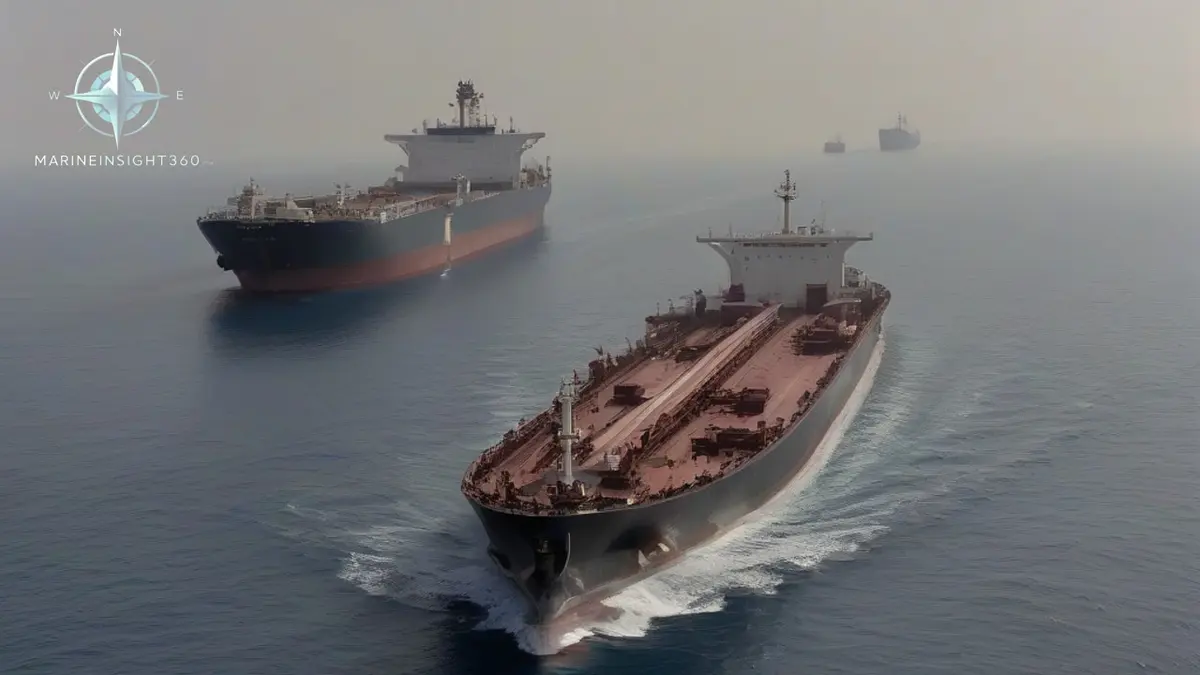
The Strait of Hormuz is the 21-mile-wide passage between Iran and Oman that links the Persian Gulf to the Gulf of Oman and the open ocean. In 2024 about 20 million barrels of oil a day moved through it, roughly a fifth of world consumption, along with about a fifth of global LNG trade. Through 2026 the strait has been closed, partly reopened and closed again by the conflict between Iran and the United States.
This page keeps the facts, the timeline and the practical consequences for ships and crews in one place, and is updated as the situation changes.
Situation as of the latest reports in our archive, 28 August 2026. Dates and figures in the timeline are credited to the outlet that reported them.
Key facts
Item
Figure
Source
Width at the narrowest point
21 miles
Windward
Shipping lanes
One inbound and one outbound lane, each 2 miles wide, separated by a 2-mile buffer
Windward
Oil through the strait, 2024
20 million barrels a day, about 20% of global petroleum liquids consumption
US EIA
LNG through the strait, 2024
About one-fifth of global LNG trade, mostly from Qatar
US EIA
Where it goes
84% of the crude and condensate and 83% of the LNG went to Asia; China, India, Japan and South Korea took 69% of the crude bound for Asia
US EIA
Bypass pipelines
Saudi East-West pipeline to Yanbu (5 million b/d), UAE pipeline to Fujairah (1.8 million b/d), Iran's Goreh-Jask (about 300,000 b/d)
US EIA
Spare bypass capacity in a disruption
About 2.6 million b/d, a fraction of normal flows
US EIA
Normal daily traffic before 2026
130 to 140 commercial vessels a day
Windward, via Anadolu Agency
Why one strait matters so much
Almost every barrel exported from Kuwait, Iraq's southern fields, Qatar, Bahrain and most of Saudi Arabia and the UAE has to leave the Gulf through Hormuz. The pipelines that avoid it can carry only a small share of normal flows, and much of that capacity is already in daily use.
When the strait shuts, the oil and gas behind it have nowhere else to go, which is why a closure moves tanker rates, oil prices and LNG supply worldwide within days.
For ships the geography is unforgiving. The traffic separation scheme packs inbound and outbound traffic into two 2-mile lanes, so vessels pass close to both coastlines and to islands that can be used to stage drones, fast boats and mines.
2026 timeline
- Early March: Traffic largely stops after the United States warns it could block all movement through the strait. Shell later said the disruption removed close to 20% of global LNG supply from March onward. (OilPrice.com; Shell, via Bernama)
- 10 April: US Central Command imposes a blockade of Iranian ports and deploys more than 15 warships to the Gulf. (Evening Standard)
- 3 June: Iran claims responsibility for targeting a second MSC-operated ship; Posidonia opens in Greece with the strait still closed. (Seatrade Maritime News; Hellenic Shipping News)
- 10 June: The IMO Secretary-General says safe passage of the strait "does not exist". (Seatrade Maritime News)
- 24 June: Almost 1,200 cargo ships carrying about $125bn of goods are reported stranded by the closure. The IMO announces an evacuation plan for crews of trapped ships. (Financial Times; IMO)
- Late June: The IMO pauses the evacuation of more than 11,000 seafarers after an Evergreen container ship is attacked in the Gulf of Oman. (IMO statement)
- 30 June: Transits rise more than 50% in a week but remain at about 18 vessels a day, against 130 to 140 before the closure. (Windward, via Anadolu Agency)
- Early July: Iran and Oman discuss charging service fees on transits; Iran seeks mandatory payments, Oman a voluntary scheme. The United States objects. (The Week)
- 8 to 12 July: The United States strikes Iranian targets after attacks on ships; Iran declares the strait closed again and crude prices jump. (International Business Times; multiple outlets)
- 15 July: A US-Iran truce is signed, including sanctions waivers for Iranian crude, but the two sides dispute what its terms mean for control of the strait. US forces intercept vessels trying to run the reimposed blockade. (Washington Post; Evening Standard)
- 20 July: Shipowners offer crews extra pay, in some cases double the daily wage, plus enhanced life cover, to transit. Some crude carriers leave the Gulf with AIS switched off. (Bloomberg; OilPrice.com)
- Early August: Traffic falls again as Houthi threats against Saudi tankers add risk on the other side of the Arabian Peninsula. (USNI News)
- 20 to 28 August: US forces report clearing Iranian mines; Iran and Oman are said to be close to an agreement to regularise traffic, which remains "limited" at a fraction of pre-conflict volumes. (Hellenic Shipping News; gCaptain)
What it means for ships and crews
Before deciding to transit
- Check current guidance, not old reports. Conditions have changed week to week. Read the latest advisories from the Joint Maritime Information Center (JMIC) and UK Maritime Trade Operations (UKMTO), and your flag state's security level, before every passage.
- Confirm war-risk cover. The Gulf is a listed area for war risks, so additional premiums apply to each call or transit and can change at short notice. Confirm cover and the notice period with the underwriter before committing the ship.
- Check the charter party. Standard war-risk clauses such as BIMCO's CONWARTIME and VOYWARTIME generally let owners refuse orders into an area that has become dangerous, and many crew agreements give seafarers the right to decline a warlike area. Settle who pays extra premium, crew bonuses and deviation costs in writing.
- Ask about mines. Mines were reported in the approaches in 2026. Follow routing advice from naval authorities and do not take shortcuts outside the recommended tracks.
During the passage
- Register with UKMTO and report position as instructed. Report any suspicious approach immediately.
- Harden the ship along Best Management Practices for Maritime Security: lookouts, citadel ready, restricted access, a rehearsed plan for drone or fast-boat approaches.
- Switching AIS off has been reported in 2026. It is a master's decision under SOLAS and carries its own collision risk in two narrow lanes; agree it with the company security officer and naval guidance, never by default.
For crews
- You can ask for written confirmation of the risk bonus, insurance cover and repatriation terms before the ship enters the area.
- If your ship is trapped inside the Gulf, the IMO has coordinated evacuation of stranded crews with coastal states. Your company and flag state are the first points of contact.
Effect on markets
- Oil: Prices rose sharply each time traffic stopped and fell back on reports of reopening or talks, moving several percent in a day in July.
- LNG: Shell expected global LNG trade to be flat in 2026 and said Gulf liquefaction plants could take six to eight weeks to return to full output after a reopening.
- Containers: The closure, on top of peak season, pushed container freight rates up in June, and a recovery was still delayed after the US-Iran deal was announced. (gCaptain; Hellenic Shipping News)
- Tankers: Saudi and UAE exports leaned on the bypass terminals at Yanbu and Fujairah, while Iraq moved 14 million barrels of stranded crude out once traffic briefly resumed. (South China Morning Post)
The routes around Hormuz
There is no sea route around the strait for cargo that starts inside the Gulf. The only alternatives are pipelines to ports outside it: Saudi Arabia's East-West line to Yanbu on the Red Sea, and the UAE's line from Habshan to Fujairah on the Gulf of Oman. In a full closure the EIA estimates they could add about 2.6 million barrels a day of exports, against 20 million that normally pass through the strait.
Loading at Yanbu also exposes tankers to Red Sea risk, as the Houthi threats against Saudi tankers in August showed.
Frequently asked questions
Is the Strait of Hormuz open now?
As of late August 2026, traffic was moving but described as limited, pending an Iran-Oman agreement on how transits are managed. Check the latest JMIC and UKMTO advisories before planning a voyage; conditions have reversed several times this year.
How much oil goes through the Strait of Hormuz?
About 20 million barrels a day in 2024, around 20% of global petroleum liquids consumption, according to the US Energy Information Administration.
How wide is the Strait of Hormuz?
21 miles at its narrowest. Ships use two 2-mile lanes, one in each direction, separated by a 2-mile buffer.
Can oil get out of the Gulf without using Hormuz?
Only a little. Saudi and UAE pipelines to the Red Sea and the Gulf of Oman could carry about 2.6 million barrels a day of extra exports in a disruption.
Sources
- US Energy Information Administration, "Amid regional conflict, the Strait of Hormuz remains critical oil chokepoint", 16 June 2025
- International Maritime Organization, statement on the attack in the Strait of Hormuz and pause of the evacuation plan, 2026
- Windward, "The Strait of Hormuz: why it matters for global shipping"
- Anadolu Agency, commercial traffic through the Strait of Hormuz rises more than 50% in a week, June 2026
- Bloomberg, "Shipowners offer huge bonuses to get crews to sail Hormuz", 20 July 2026
- Washington Post, "Trump and Iran signed a truce but still can't agree on what its terms mean", 15 July 2026
- OilPrice.com, "Tankers fear Hormuz transits as Iran stops vessels", July 2026
- Hellenic Shipping News, "Hormuz transits still limited even as Iran-Oman near deal", August 2026
- South China Morning Post, "Iraq's 14 million barrels of trapped oil travels through Strait of Hormuz", June 2026
- Also reported by the Financial Times, gCaptain, Seatrade Maritime News, USNI News, The Week, International Business Times, the Evening Standard and Bernama (Shell LNG outlook).
Recommended Reading
Red Sea Shipping and the Houthi Attacks: Timeline, Risks and Routes
Houthi attacks since November 2023 halved oil flows through Bab el-Mandeb. The full timeline to 2026, the Saudi blockade, insurance and what it means for ships and crews.
Oman Announces Temporary Shipping Route Through the Strait of Hormuz
Oman opens a toll‑free, temporary maritime corridor through the Strait of Hormuz to ensure safe vessel passage amid heightened security risks.
The World's Major Sea Routes: Where Global Trade Actually Sails
The sea routes that carry world trade: Asia-Europe, transpacific, transatlantic and the chokepoints they squeeze through, from Suez to Malacca to Panama.