
Scapa Flow: Inside Northern Europe's Great Natural Anchorage
Scapa Flow is northern Europe's great sheltered anchorage. How its entrances, tides, the Flotta oil terminal and protected wrecks shape shipping there.
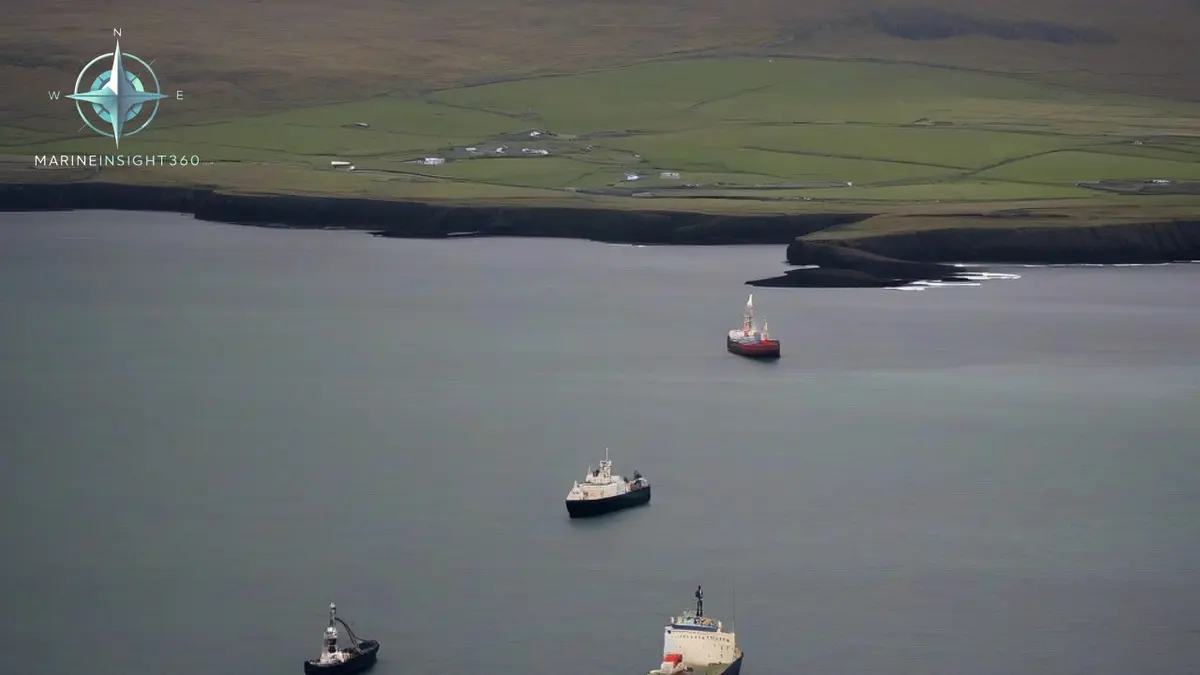
Scapa Flow is a large natural harbor in the Orkney Islands, off the north coast of Scotland, and it remains one of the best sheltered deep-water anchorages in northern Europe. The basin covers just under 125 square miles (about 324 square kilometers). Mainland, Hoy, Burray, South Ronaldsay and Graemsay ring it and break down the Atlantic swell before it reaches the anchorage.
That shelter explains everything the Flow has been used for. It held the British fleet through two world wars, it has served North Sea crude oil since 1977, and it still gives masters somewhere to lie safely when conditions outside the islands are unworkable.
What makes the anchorage work
Three features matter to a bridge team. The basin is enclosed on all sides by land, so fetch is short and ocean swell cannot get in. Depths across much of the Flow suit deep-draft ships without dredging. And the tidal stream inside the basin is weak, even though the surrounding sounds and the neighboring Pentland Firth carry some of the strongest tidal streams found anywhere.
Holding ground across the anchorage is generally good, mostly sand and mud. Gales are frequent rather than exceptional. Ships lie to plenty of cable through the winter and keep engines at short notice.
Commercial shipping in Scapa Flow today
The Flotta oil terminal, on the island of Flotta near the south side of the Flow, has received North Sea crude by pipeline since 1977 and loads it into tankers alongside. Orkney Islands Council Harbour Authority provides pilotage and towage around the clock for that traffic.
Ship to ship transfer of crude oil has been carried out in the Flow for more than forty years, and the first ship to ship transfer of liquefied natural gas anywhere in the world took place here in 2007. Cruise calls, cargo work at Hatston and Kirkwall, and inter-island and mainland ferry traffic fill out the picture.
For an operator the appeal is simple. Sheltered water, deep water and full pilot services sit in the same place, with no lock gates and no tidal window to hit.
Entrances, tides and the Churchill Barriers
Hoxa Sound is the main deep-water entrance from the Pentland Firth. Hoy Sound gives access from the west, and Switha Sound offers a further southern approach. All of them run hard on the ebb and flood, so a passage plan should be built around slack water rather than around a fixed arrival time.
The eastern approaches no longer exist. After the loss of HMS Royal Oak in 1939, four causeways known as the Churchill Barriers were built to seal the sounds between Mainland and South Ronaldsay. They carry a road today, and blockships sunk earlier in both wars still lie in the shallow water beside them.
The scuttled German fleet and the wrecks below
On 21 June 1919 the interned German High Seas Fleet was scuttled at anchor in the Flow on the order of its own commander. Fifty-two of the seventy-four interned ships sank. Most were later raised in one of the largest salvage operations ever attempted, but several battleships and light cruisers were left where they lay. Those hulls are now protected wrecks that recreational divers visit under permit, and they support a substantial local diving industry.
Steel recovered from the salvaged ships has an unusual afterlife. Because it was smelted before atmospheric nuclear testing began, it carries almost no radioactive contamination, and it has been used for sensitive scientific and medical instruments.
HMS Royal Oak, torpedoed at anchor on 14 October 1939 with the loss of more than 800 lives, is a designated war grave. Diving on her is prohibited, and oil has been recovered from the wreck to limit pollution from her remaining bunkers.
What Scapa Flow is becoming
Orkney has spent two decades as a proving ground for marine renewable energy, with wave and tidal test sites in the surrounding waters. Deep sheltered water close to those resources also makes the Flow a candidate for floating offshore wind assembly, marshalling and maintenance, which needs exactly the combination the anchorage already offers.
Planning a call: practical points
- Check the harbor authority pilotage and reporting requirements early. They apply across a wide area, not only alongside a berth.
- Plan sound transits on tidal stream data, and treat the Pentland Firth as a separate passage-planning problem in its own right.
- Expect frequent gales between October and March, and brief the anchor watch accordingly.
- Keep clear of designated war graves and protected wreck sites when choosing an anchor berth.
- Confirm bunkering, waste reception and crew change logistics in advance. Orkney is well served but small.
Scapa Flow is worth knowing about before you need it. A sheltered, deep, pilot-served basin at the top of Scotland is a real option for waiting out weather, transferring cargo or laying up, and it sits directly on the northern approaches to the North Sea. Our Ports section covers other natural harbors and how to plan a call at each.
Authority in the Flow is layered. Orkney Islands Council is the statutory harbour authority and runs pilotage, towage and the terminal berths. Port state control on foreign flag ships calling at Flotta is carried out by Maritime and Coastguard Agency surveyors under the Paris MoU, which targets tankers on age, flag performance and inspection history, so an overdue ship can expect one alongside.
Pollution response and wreck oversight sit elsewhere again. The Maritime and Coastguard Agency handles counter pollution and salvage intervention in UK waters, the Ministry of Defence controls diving on designated war graves including HMS Royal Oak, and the Marine Accident Investigation Branch would investigate a casualty in the anchorage. Ship to ship transfer plans are agreed with the harbour authority well before the tankers arrive.
Sources and further reading
What to read next
Recommended Reading
10 of the World's Greatest Natural Harbors, and Why They Matter
What makes a natural harbor, and ten of the world's greatest: Sydney, San Francisco, New York, Rio, Halifax and more, with the geography that shelters them.
Great Lakes Shipping Companies: Who Moves Cargo on the Lakes
Who the Great Lakes shipping companies are, what lakers carry, how the Soo Locks and the nine-month season shape operations, and what the jobs are like.
What Is a Duct Keel? The Pipe Tunnel Inside a Ship's Double Bottom
A duct keel is a watertight pipe tunnel in a ship's double bottom. How it is built, what runs through it, and the enclosed space risks crews must manage.