
Marine Scrubbers: Types, How They Work and Where the Rules Are Tightening
How marine scrubbers strip sulfur from ship exhaust, the difference between open-loop, closed-loop and hybrid systems, and where washwater discharge is banned.
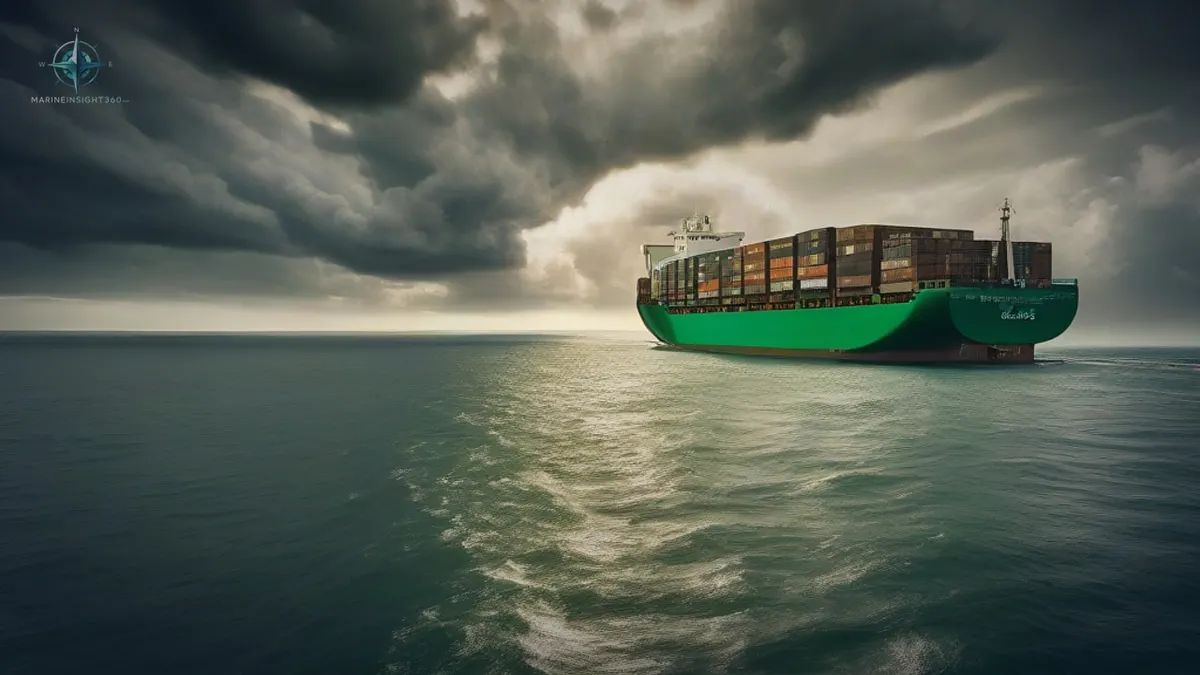
Marine scrubbers are exhaust gas cleaning systems that wash sulfur oxides out of a ship's exhaust, and MARPOL Annex VI accepts them as an equivalent to burning low-sulfur fuel; the main types are open-loop, closed-loop, hybrid and dry.
Marine scrubbers, formally exhaust gas cleaning systems (EGCS), wash sulfur oxides out of a ship's engine and boiler exhaust before it reaches the atmosphere. They let a vessel keep burning cheaper high-sulfur fuel oil while meeting the International Maritime Organization's sulfur limits, which is why thousands of ships have fitted them.
The economics are blunt. Since the IMO capped fuel sulfur at 0.50% worldwide in January 2020, ships face a choice: buy compliant low-sulfur fuel at a premium, or install a scrubber and keep bunkering 3.5% heavy fuel oil. When the price spread between the two fuels is wide, a scrubber on a large ship can pay for itself quickly; when the spread narrows, the case weakens. That single trade drives the whole market.
The Rules a Scrubber Has to Satisfy
MARPOL Annex VI sets two sulfur ceilings: 0.50% globally, and 0.10% inside Emission Control Areas (ECAs) such as the Baltic Sea, the North Sea, North American waters and, since May 2025, the Mediterranean. A scrubber is accepted as an equivalent arrangement if it cleans the exhaust to the same level the compliant fuel would achieve, including the stricter ECA limit.
The rules also reach the bunker tanks. Since March 2020 a ship without a scrubber may not even carry fuel above 0.50% sulfur for use on board, closing the loophole of loading cheap fuel for later. In the Arctic, a separate IMO ban on using and carrying heavy fuel oil took effect in July 2024.
Open Loop, Closed Loop, Hybrid and Dry
- Open-loop scrubbers spray seawater through the exhaust and rely on the water's natural alkalinity to neutralize the sulfur, discharging treated washwater back to sea. Simple and cheap to run, but they need large pumps, work poorly in brackish or low-salinity water such as the Baltic, and face discharge bans in a growing list of ports.
- Closed-loop scrubbers recirculate fresh water dosed with caustic soda (sodium hydroxide), holding the residue on board for disposal ashore. They work in any water and any port, at the cost of chemical consumables and tank space.
- Hybrid scrubbers switch between the two modes: open loop at sea where it is allowed, closed loop in ports, ECAs and restricted waters. Most new installations choose this flexibility.
- Dry scrubbers pass the exhaust through hydrated lime pellets instead of liquid. Rare at sea, but the spent lime can be handled ashore as ordinary industrial waste.
How the Chemistry Works
Sulfur dioxide dissolves readily in water. Inside the scrubber tower, exhaust gas meets a dense spray of washwater, the SO2 is absorbed and oxidizes to sulfate, and hydrogen ions form as a by-product. Alkalinity in the water, natural bicarbonate in seawater or dosed caustic soda in fresh water, neutralizes that acidity. Sulfate itself is a natural component of seawater, which is the argument open-loop advocates lean on.
The gas inlet is often shaped as a venturi so the exhaust accelerates into the spray, mixing the two phases hard. A demister at the top strips water droplets before the cleaned gas exits the funnel. Scrubbers also knock a share of particulate matter out of the exhaust, though their job under the regulation is sulfur.
Where Open-Loop Discharge Is Banned
Ports and coastal states increasingly separate what happens in the air from what goes into the water. Singapore banned open-loop washwater discharge in port from January 2020; China prohibits it in its coastal ECAs, river ECAs and port waters; Fujairah, one of the world's largest bunkering hubs, bans it in port limits, and the list runs on through the Suez Canal, Gibraltar, Algeciras and a series of European ports.
The practical consequence: an open-loop-only ship must switch to compliant fuel before entering those waters, which erodes the savings the scrubber was bought for. Operators check the current discharge map port by port on every voyage plan, because the list grows every year and enforcement sits with the local authority, not the IMO.
What This Means for a Scrubber Decision
Three questions decide most installations. Where does the ship trade, and how much of its time sits inside discharge-restricted waters? How long will the ship stay in the fleet, since payback needs years of a healthy fuel spread? And can the engine room absorb the added maintenance: washwater monitoring, pH control, corrosion checks and sensor calibration all land on the crew's planned maintenance schedule.
For ships trading long international routes with years of service ahead, hybrid systems remain the defensible pick. For ships trading mostly inside ECAs and restricted ports, compliant fuel without a scrubber is often the simpler answer.
What no operator can price is where the discharge map stops. Open-loop bans have spread from a handful of ports to a list taking in Singapore, Chinese coastal and river ECAs, Fujairah, the Suez Canal, Gibraltar and much of northern Europe, and nothing in MARPOL obliges that list to stop growing. If you are weighing a retrofit on a ship with ten years left in it, that is the number you cannot model — not the current fuel spread, which at least you can watch. The same fuel comes aboard through the bunkering procedure, and the engine burning it also drives the freshwater plant on its waste heat.
Recommended Reading
Ro-Ro Ships: How Roll-On Roll-Off Vessels Work and Why They Dominate Vehicle Trade
How ro-ro ships work: ramps, decks and lane meters, the difference between PCTC, ConRo and RoPax types, and the stability risks unique to roll-on roll-off.
10 of the World's Greatest Natural Harbors, and Why They Matter
What makes a natural harbor, and ten of the world's greatest: Sydney, San Francisco, New York, Rio, Halifax and more, with the geography that shelters them.
ETA and ETD in Shipping: What the Dates Mean and Why They Slip
What ETA and ETD mean in shipping, who sets the dates, why they slip, and how importers should actually read an estimated arrival against free time and fees.