
The Clipper Ship: How Sail Design Chased Speed and Why the Era Ended
A clipper ship traded cargo capacity for speed. Here is how the hull and rig were designed, what the tea and wool runs demanded, and why steam ended the era.
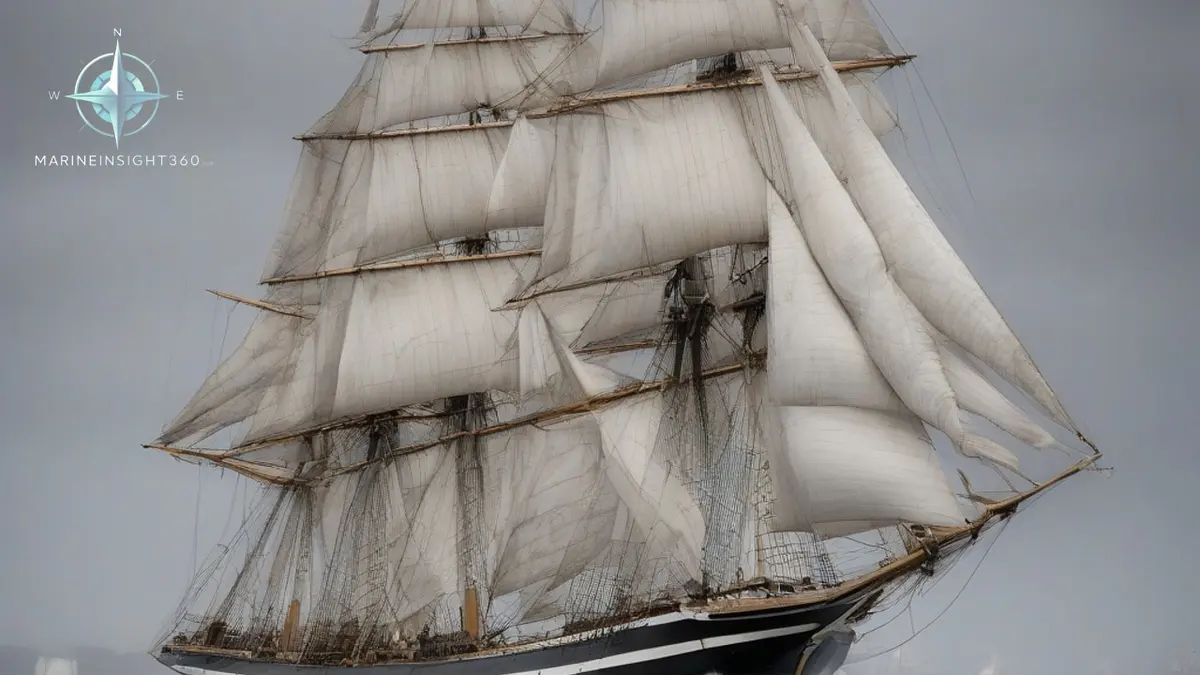
What made a ship a clipper
A clipper ship was a mid nineteenth century merchant sailing vessel designed for speed above all else. It carried a narrow hull for its length, a sharp bow, and a sail area far larger than its size would normally justify. Cargo capacity was sacrificed to get it, which meant a clipper only made commercial sense carrying goods whose value depended on arriving first.
That distinction matters. A bluff bowed merchant ship of the same period could load far more cargo per tonne of hull, and did so profitably for decades after the clippers disappeared. The clipper was a specialized answer to a specific commercial problem, not a general improvement in ship design.
The hull: fine ends and a long run
The clipper hull traded volume for reduced resistance. Length to beam ratios climbed to around six to one, against roughly four to one on a conventional trader. The bow was drawn out into a sharp concave entrance with pronounced rake, so the hull parted the water gradually instead of pushing it aside.
The consequences ran through the whole design. A fine hull could not carry deadweight low down, so stability depended on careful loading and on ballast. Wetted surface was high relative to displacement, so the type performed poorly in light airs and brilliantly once the wind reached working strength. A clipper master earned his passage money in heavy weather, driving the ship when a cautious captain would have shortened down.
The rig: sail area that had to be handled
Clippers carried tall masts, wide yards and every extra sail the rig would take, including studding sails set on booms outside the normal square sails. Cutty Sark, built at Dumbarton in 1869, could set 32 sails and was logged at over 17 knots in favorable conditions.
The manpower cost was severe. Handling that rig demanded a large crew working aloft in conditions where reducing sail late could cost a mast, and driving hard through heavy weather made the type notorious for injuries and losses. The economics only balanced because the freight rates were exceptional.
The trades that paid for speed
Gold and the California run
The California gold rush from 1849 created a route where speed was worth almost any premium. The passage from New York around Cape Horn to San Francisco runs roughly 15,000 nautical miles, and shippers paid extraordinary rates for the first cargoes into a boom town with no local supply. American yards, Donald McKay's among the best known, built extreme clippers specifically for that run, and Flying Cloud completed it in a little under 90 days.
Tea, and the race to London
The China tea trade rewarded the same quality. Fresh tea from the new season commanded a premium in London, so the first ship home earned a bonus that ordinary freight could not approach. The rivalry became public sport, and in the 1866 race three ships arrived in the Thames on the same tide after some 99 days at sea.
Wool from Australia
When the tea trade closed to sail, the surviving British clippers turned to Australian wool, where the long southern ocean run with the westerlies behind suited them perfectly. Cutty Sark made her reputation on that route rather than on tea.
What ended the clipper era
Two things happened at once, and neither was a failure of the ships themselves.
The Suez Canal opened in 1869, cutting thousands of miles off the Europe to Asia route. Sailing vessels could not use it usefully: the canal has no working wind and requires towage, so the shortcut belonged to steamers. At the same time, compound steam engines cut coal consumption enough that a steamship could keep a schedule across long distances without carrying an impossible bunker load.
Schedule beat speed. A steamer that arrived on a predictable date was worth more to a shipper than a sailing ship that might be faster on a good passage and three weeks late on a bad one. Sail held on in bulk trades such as grain, nitrate and coal into the twentieth century, where time mattered less, but the fast cargo business was gone.
What clipper design still teaches
The clipper is a clean case study in a trade-off that naval architects still manage. A fine hull form reduces wave making resistance, which is the dominant drag component at high speed to length ratios, but it costs cargo volume and complicates stability. Modern fast ferries and container ships face the same equation, resolved with different tools.
The type also shows how quickly a technical advantage can lose its commercial basis. The clippers were not overtaken by faster sailing ships. They were overtaken by a canal and a schedule. Anyone assessing a new propulsion technology, including wind assist systems now returning to commercial ships, is asking a version of the same question the clipper owners answered in the 1870s.
The trade also left an audit trail. Lloyd's Register surveyed and classed merchant sailing ships, and the character assigned in the register, the familiar A1 notation, told underwriters how long a hull was considered fit for a valuable cargo. Cutty Sark was a composite ship, iron frames with wooden planking, a form Lloyd's Register wrote scantling rules for once the type became common.
Speed carried a documented cost. Driving a clipper hard sprang masts, split canvas and washed men off the yards, and loading a ship as deep as an owner dared was only curbed in Britain after Samuel Plimsoll's campaign produced the compulsory load line in the 1870s. That mark, still painted on merchant ship sides today, is the direct regulatory descendant of the era described here.
Sources and further reading
- Royal Museums Greenwich: Cutty Sark history
- World History Encyclopedia: Cutty Sark
- The Rise and Fall of the Clipper Ships
What to read next
Recommended Reading

When Were Boats Invented? A Timeline From the First Dugout to the First Sail
The oldest boat ever found is about 10,000 years old, and humans were crossing open water long before that. The real timeline of when boats were invented.
What Are Masts on a Ship? Purpose, Types and Modern Design
What masts are on ships: their purpose on sailing and motor vessels, common types and materials, and how modern mast design has changed.
How Many Knots in a Mile? Knots, Nautical Miles and Speed at Sea
A knot is a speed, not a distance: one nautical mile per hour. Here are the exact conversions, the reason the sea uses them, and how to apply them on watch.