
USS Nimitz: Fifty Years of the Carrier That Named a Class
USS Nimitz facts: the US Navy's oldest active carrier, lead ship of her class, her half-century career, final deployment, and the plan to retire her in 2027.
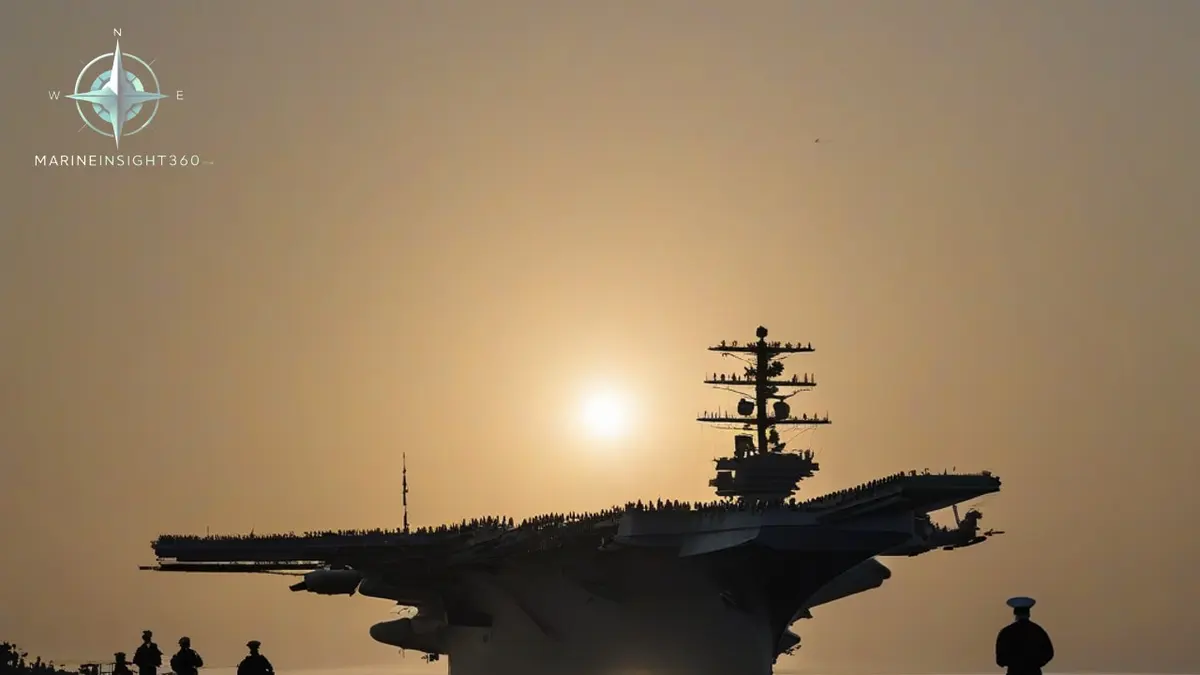
USS Nimitz, hull CVN-68, is the US Navy's oldest aircraft carrier in active service, commissioned in May 1975, and her retirement is planned around March 2027 after defueling at Newport News.
USS Nimitz, hull number CVN-68, is the United States Navy's oldest aircraft carrier in active service and the lead ship of the ten-carrier class that bears her name. Commissioned in May 1975, she has crossed the half-century mark, and the Navy is now working through the long process of retiring her, with decommissioning planned around 2027.
Few machines of any kind work for fifty years at this intensity. Her longevity is the argument for nuclear-powered carriers in one hull: refuel once at mid-life, and the ship outlasts the careers of everyone who ever served aboard her.
The Ship by the Numbers
- Displacement: around 100,000 tons at full load, among the largest warships ever built.
- Power: two A4W nuclear reactors driving four shafts past 30 knots, with decades of fuel per loading.
- People: roughly 5,000 aboard with the air wing embarked, a floating town with its own hospital, post office and bakery.
- Aircraft: some 60 to 70 in a typical modern air wing, launched by steam catapults and recovered on arresting wires.
- Namesake: Fleet Admiral Chester W. Nimitz, commander of the Pacific Fleet in the Second World War.
A Career That Tracked Five Decades of History
The carrier's service reads like a syllabus of modern events. In 1980 she launched Operation Evening Light, the attempted rescue of the American hostages in Iran. Through the 1980s and 1990s came Mediterranean confrontations, Pacific patrols and a mid-life refueling overhaul that rebuilt her for a second act. After 2001 she cycled through the Middle East repeatedly, flying strikes over Iraq, Afghanistan and Syria.
Her final deployment wrapped up in December 2025, when she returned to her home port of Bremerton, Washington after months split between the Middle East and Western Pacific, closing the flying chapter of her career.
How You Retire a Nuclear Carrier
A nuclear ship cannot simply be sold or scuttled, and the plan for this one runs on rails. The ship shifts from Washington State to Norfolk, Virginia, and enters the deactivation process, with the reactors defueled at the Newport News shipyard that built her. The Navy pushed the formal decommissioning date back by nearly a year, to around March 2027, largely because United States law requires an eleven-carrier fleet and her replacement's schedule slipped.
After defueling comes years of inactivation work, and eventually recycling; the compartments where reactors sat travel to dedicated disposal. The whole sequence takes most of a decade and is one reason museum status, granted to older oil-fired carriers, is considered impractical for nuclear ones.
What Follows Her
The class she leads keeps serving into the 2050s, and the Gerald R. Ford class takes over the front of the line, with electromagnetic catapults replacing steam and a new Enterprise under construction to carry on another storied name. The ship herself leaves behind the less visible legacy: five decades of design lessons, refueling practice and operating doctrine that every later American carrier inherited from hull 68.
Quick Answers
- Is she still in service? Yes, though the seagoing career is effectively over: she returned from her final deployment in December 2025 and is preparing for deactivation.
- When is decommissioning? The Navy plans it around 2027, after moving the ship to Norfolk for defueling at Newport News.
- Why not make her a museum? Nuclear carriers must be defueled and partly dismantled, a process that guts the spaces visitors would tour, and no nuclear carrier has yet been preserved.
- How old is she? Commissioned in May 1975, she passed fifty years of service in 2025, the longest run of any American carrier.
- What replaces her? The Gerald R. Ford class takes the lead, and the eleven-carrier legal requirement means her retirement waits on new hulls joining the fleet.
The name will not retire with the hull. Namesake traditions run deep in the United States Navy, and few names carry more weight than the admiral who accepted Japan's surrender aboard Missouri; a future ship is widely expected to carry it forward, the way Enterprise already returns on CVN-80. Until then, hull 68 spends her remaining months as what she has been for five decades: the standard everything after her was measured against.
What to do next
Carriers reward more reading, and these guides continue it:
Recommended Reading
Typhoon Class Submarine: The Biggest Boats Ever Sent Under the Sea
The Soviet Typhoon class submarine remains the largest ever built: twin pressure hulls, 20 missile silos, and why nothing since has matched its size.

What is a Bulk Carrier Ship?
What is a Bulk Carrier Ship?: ports, trade and shipping-market context for US, UK, Canada, Australia, Singapore and European maritime readers.
Across the USA: A Guide to the 5 Major U.S. Aircraft Carrier Museum Ships
American ships and aircraft carrier museum ships are a testament to the military power and capabilities of the United States. Navy. These giants once…