
What is a Bulk Carrier Ship?
What is a Bulk Carrier Ship?: ports, trade and shipping-market context for US, UK, Canada, Australia, Singapore and European maritime readers.
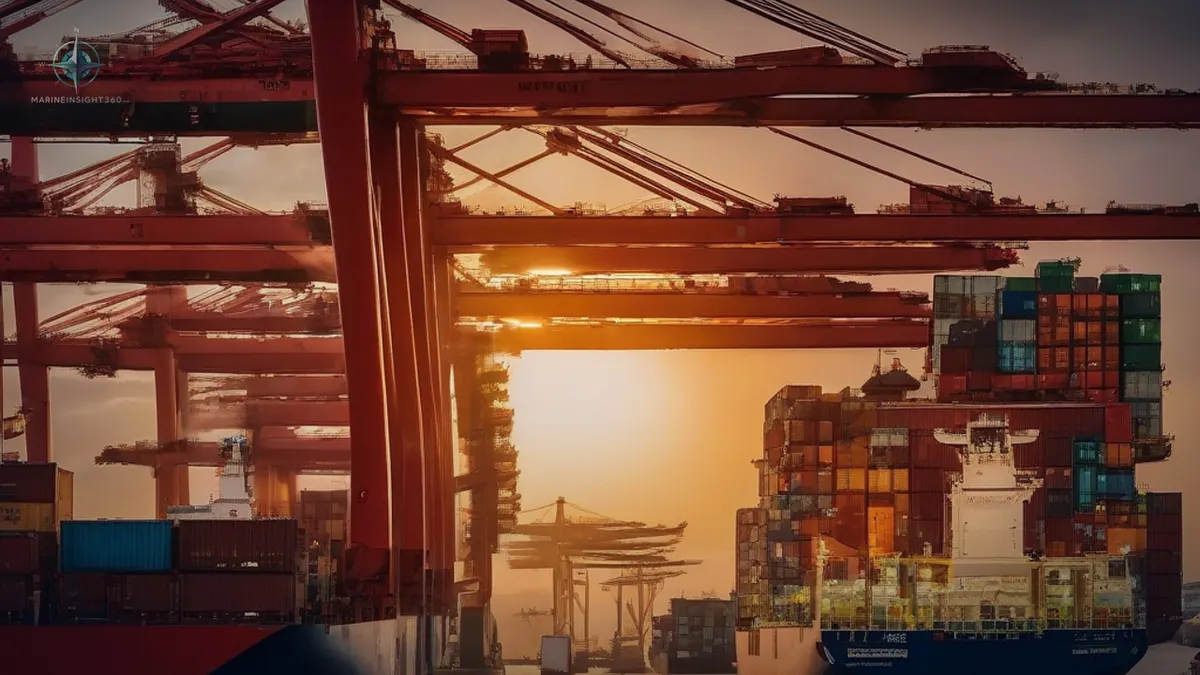
A bulk carrier ship is a single-deck vessel that carries unpackaged dry cargo loose in its holds rather than in containers, drums or bags. The cargoes are grain, ore, coal, cement and similar commodities, and they are the raw materials behind most manufactured goods.
Major bulk cargoes include iron ore for steelmaking, coal to meet energy needs in most parts of the world, and grain. Other bulk cargoes include fertilizers, sugar, timber, rice, etc. In addition to dry goods, general cargo ships transport liquid cargo such as oil, fuel, gasoline, and chemicals.
Bulk Carriers Ships
Bulk carriersaccount for 21% of the world's merchant fleet, most owned by Greece, China, and Japan. South Korea is the largest builder of bulk carriers, with 82% of its ships built in Asia.
Since their inception in the mid-19th century, bulk carriers have facilitated the transportation of raw materials worldwide, helping to develop industrial and manufacturing centers.
It is also economically and environmentally viable compared to road or rail. Bulk carriers emit 6.5 g CO2/t NTU, while rail transport emits 61 g CO2/t NTU.
Dry bulk carriers usually sail on a backward trade, completing one contract or charter and then looking for another. So, over a year, you might be loading and unloading various cargoes between different locations.
Bulk Carrier Structure
Bulk carriers can be identified by the long flat roof in front of the accommodation block. At this location, hatches lead to the cargo held below the deck. The hatches have covers to prevent water from entering the holds which could damage the cargo and destabilize the ship.
Small bulk carriers equipped with cargo cranes are called geared bulk carriers. Those without cargo cranes are called gearless bulk carriers. The type used depends on the cargo being transported and the ports that need to be visited to load and unload the cargo.
IMO Approval and Ship Requirements
While general cargo ships have been in use since the 1850s, their correct definition and interpretation can be found in the 1999 International Convention for the Safety of Life at Sea. Over the years, various other interpretations have been added to the official definition and are now more effectively used.
\Bulk carriers have a maximum deadweight of about 400,000 tonnes. Ships are classified into six categories based on their cargo-carrying capacity and the waterways they can navigate. The different categories of bulk carriers can be listed in descending order of cargo carrying capacity as follows:
- Very Large Carriers
- Capesize and Handysize
- Panamax
- Handysized
- Small sized
Besides these major classifications, other classifications apply to specific navigation channels. However, these ship classifications are not part of the international shipping landscape but are limited to shipyards in specific geographies.
It is recommended that bulk carriers be built in accordance with the Common Structural Rules (CSR) to improve their safety and stability. Ships built in accordance with CSR specifications are marked with the CSR symbol, which helps to increase their credibility in the global domain.
Similarly, ships are also required to carry out an Enhanced Survey Program (ESP) as part of the SOLAS convention rules. The ESP mainly involves monitoring and inspecting structures.
Why SOLAS chapter XII exists
Bulk carriers have a chapter of their own in SOLAS because of the way they were being lost. Ships flooded a forward hold, lost the bulkhead behind it, and went down before anyone could report. The Derbyshire, lost in 1980 with all 44 on board, remains the largest British merchant ship ever lost at sea.
SOLAS chapter XII applies additional requirements to bulk carriers of 150 metres and over. It sets damage stability standards for the flooding of a hold and requires water ingress detection alarms in the cargo spaces, so a flooded hold is known on the bridge instead of being discovered as a change of trim.
The cargo that sinks bulk carriers
Liquefaction is the failure mode behind several total losses with heavy loss of life. Cargoes such as nickel ore, iron ore fines and some bauxite load as solids and turn into a flowing slurry once vibration and moisture work through the stow. The ship loses stability with very little warning.
The IMSBC Code puts the burden on the shipper. Group A cargoes are those that may liquefy, and the shipper must declare the moisture content and the transportable moisture limit before loading starts. Where the master doubts the declaration, the can test on deck is the rough check that has stopped loadings, and refusing the cargo is the only safe answer when the sample slumps.
How the loading rate damages the hull
A modern ore terminal can pour faster than the ship can de-ballast, and an uneven sequence puts shear force and bending moment into the hull that nobody asked the loading computer about. Alternate hold loading concentrates the weight further still.
The BLU Code is the answer to that. Ship and terminal agree a loading plan before cargo starts, setting the sequence, the tonnage per pour and the de-ballasting steps, and any change of rate is agreed in writing. The plan is what protects the master's right to stop the belt.
Conclusion
Bulk carriers are an integral part of the shipping industry, carrying raw materials required for manufacturing. With the advancement of marine engineering and technology, these ships have become safer and more environmentally friendly.
Recommended Reading

What is a Bulk Liquid Terminal?
What is a Bulk Liquid Terminal?: ports, trade and shipping-market context for US, UK, Canada, Australia, Singapore and European maritime readers.

USS Nimitz: Fifty Years of the Carrier That Named a Class
USS Nimitz facts: the US Navy's oldest active carrier, lead ship of her class, her half-century career, final deployment, and the plan to retire her in 2027.
More on SIPs, STPs, and Bulk Buying
More on SIPs, STPs, and Bulk Buying: technology, equipment and fleet context for US, UK, Canada, Australia, Singapore and European maritime readers.