
What are Freeing Ports On Ships?
What are Freeing Ports On Ships?: ports, trade and shipping-market context for US, UK, Canada, Australia, Singapore and European maritime readers.
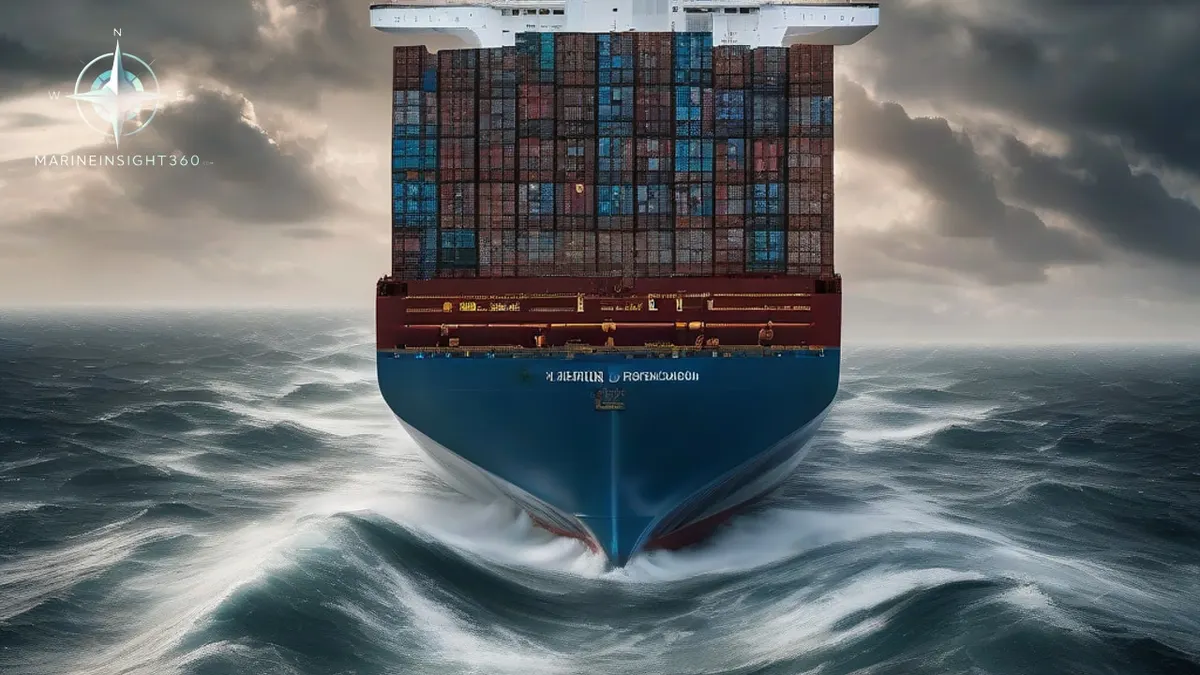
Freeing ports are openings cut through a ship's bulwark at deck level that drain seawater off the weather deck, and their required area is set by the Load Line Convention.
What are Freeing Ports On Ships?
For the weather decks of ships, drainage is crucial. Any form of water accumulation can cause a variety of problems, from sinking to interfering with other structures, equipment or machinery.
Scuppers or gutters are provided on the main deck or fenders. However, this requirement is higher when the ship has large bulkheads that hinder the movement of fenders or main decks.
What are bulwark?
Bulkheads are wall-like projections around the weather decks that are aligned with the hull side and extend above the level of the main deck. The purpose of bulkheads is to protect the crew, personnel, passengers and deck cargo (if any) from falling over the side of the ship. In addition, bulkheadsprotect the weather decks from wave impact and green water intrusion in rough seas.
Floors
The height of these bulkheads is governed by specific regulations and guidelines, depending on the type of ship, service conditions and other factors. For bulkheads above a certain height, a wall-like well is formed relative to the deck. This increases the risk of water accumulation as there is no opportunity to drain water from both sides of the deck.
Furthermore, due to strength and design requirements, the number of scuppers, drain pipes etc. is limited. These openings are also usually small (this is due to certain size restrictions relative to the strength of the deck).
In the event of severe flooding of the deck, these openings are not completely effective in draining the water. Furthermore, horizontal openings in the deck are more susceptible to clogging, less efficient, and more prone to blocking in conditions such as icing.
Therefore, other means of drainage are required in addition to other drainage devices.
Under the 1966 Load Line Regulations, scuppers were introduced to alleviate this problem. They are precisely marked openings in the deck with a specific number and spacing. These outlets, as openings close to the horizontal plane of the deck, allow the continuous drainage of water on board.
Escape exits must be designed and arranged for the sole purpose of draining water from the deck quickly under any external conditions. As there is no strict requirement, escape exits can be of any shape, but for practical purposes, circular is usually adopted.
However, according to the standards, their corners must be rounded to improve efficiency and reduce stress concentrations caused by sharp edges.
The number, arrangement and distribution of escape exits depend on the type of vessel, size, design, nature of the deck and other means of drainage, and of course the type of railings.
As expected, larger vessels should have more escape exits than smaller ones. The design of the bulkheads also plays an important role. When the entire weather deck is enclosed by bulkheads, the number of these exits is greater than when it is only partially covered.
In addition, the height of the bulkheads also plays an important role. Higher bulkheads have a greater number of drains due to their greater tendency to accumulate water. The number of drains is not a decisive factor; the size of each drain depends on its location.
The number, size and distribution of drains are optimized according to the needs. The total area of all drains on the deck is an important factor that the designer needs to consider. Let's discuss some important aspects of drains in more detail.
Some important aspects of freeing ports
The technical factors of the design, construction and distribution of drains are governed by specific rules and regulations.
As mentioned earlier, the number of drains depends on the design of the vessel and the layout of the bulkheads.
The number of drains should be maximized to ensure complete drainage of the water on the deck.
The selection of floating portholes should also be based on criteria such as curvature, bend, etc. In other words, the drainage portholes should be concentrated in areas most prone to water accumulation.
The lower end or edge of the drainage porthole opening should be as close to the deck edge or deck line as possible. For practical purposes, at least two-thirds of the porthole openings in the lower half of the bulwark height must be vertical.
The porthole spacing (uniform or random) must be appropriate to ensure 100% drainage in all conditions.
After determining the design and arrangement of the necessary elements, the area of the port opening is determined based on the total area. According to the Guidelines for the Load Line Convention, for ships less than 20 meters in length, the net area of the port opening should be 0.7 + 0.035 × 1, where 1 is the total linear span of all bulkheads in the deck path.
For ships over 20 meters in length, the span is calculated as 0.07 × 1.
The vertical height of the bulkhead is also important. For bulkheads that are more than 1.2 meters above deck level, the hatch area calculated based on the above information will increase by 0.004 square meters for every 0.1 meter increase in height.
For example, if the bulkhead is 1.5 meters above the main deck, the area (A) calculated based on the above ratio will be expressed as A + 0.004 x 3A, because the height is 0.3 meters more compared to 1.2 meters.
Similarly, when the bulkhead length is less than 0.9 meters, the area reduction is also 0.004 square meters per unit, which means that the height is reduced by 0.1 meters compared to the reference height of 0.9 meters.
In the absence of curvature, the area calculated based on the above information increases by 5% over the area calculated based on the previous information. Similarly, the design requirements for certain stems and superstructures are different.
Generally speaking, bulkheads with a diameter greater than 230 meters must be equipped with intermediate railings or safety railings.
Some bulkheads are also equipped with baffles that can be adjusted as required.
Although bulkheads are not primary or secondary structural members that contribute to the strength of the ship, in many designs they are still simple extensions of the side decks. Therefore, for large bulkheads or bulkheads, additional reinforcement is sometimes added around the openings, as this may reduce its structural integrity, even in areas along the deck path.
Although bulkheads are not usually required, they are also related to stability and buoyancy requirements. We are all familiar with reserve buoyancy. In practical application, if the maximum amount of water that the bulkhead and superstructure/roof can accommodate on the weather deck (taking into account the total water resistance) is higher than the required design reserve buoyancy, the number of scuppers should be increased accordingly.
Certain ships, such as fishing vessels, have specific provisions for scuppering.
Recommended Reading
HK company sells stake in Panama Canal Ports
HK company sells stake in Panama Canal Ports: ports, trade and shipping-market context for US, UK, Canada, Australia, Singapore and European maritime...
10 Largest Ports In The East Coast
Ports are vital in international trade and serve as gateways for goods and commodities worldwide. It’s fascinating to imagine which ports will lead the…

Which Are The Major UAE Ports?
Bordered by Oman and Saudi Arabia, the UAE has become a beacon of development and trade on the Arabian Peninsula. It shares seas with Qatar to the west…