
HK company sells stake in Panama Canal Ports
HK company sells stake in Panama Canal Ports: ports, trade and shipping-market context for US, UK, Canada, Australia, Singapore and European maritime...
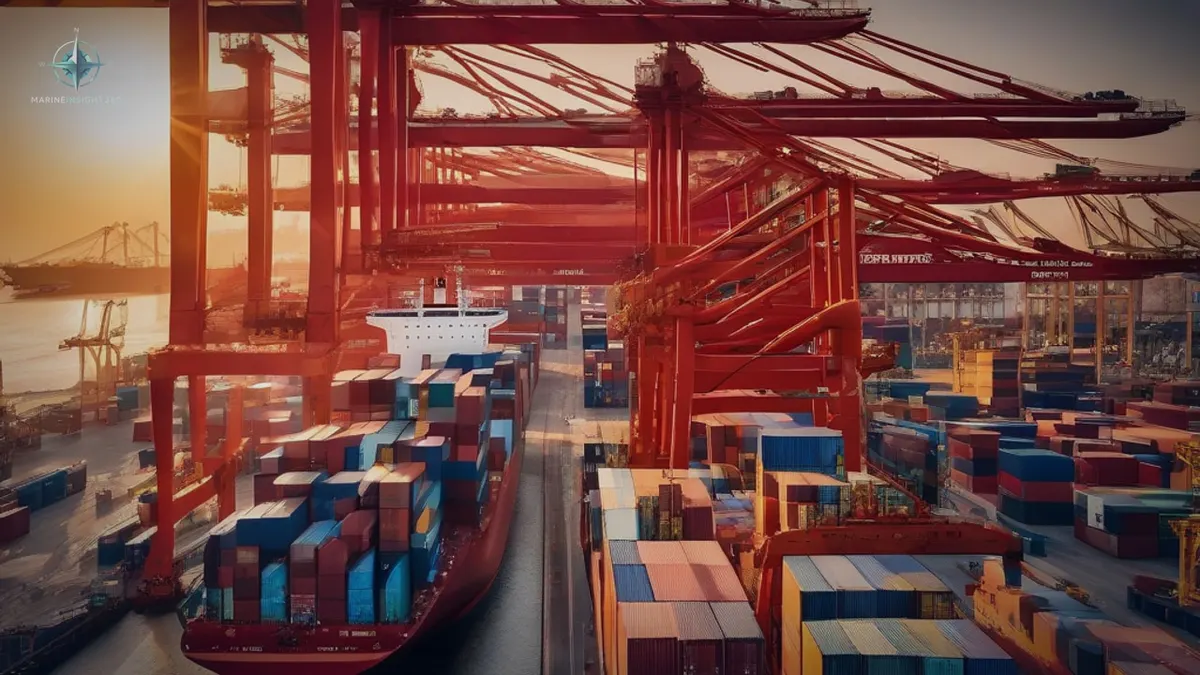

Hong Kong company sells Panama Canal ports stake as Trump pressures it
CK Hutchison Holdings is selling its 80% stake in the Panama Canal ports of Balboa and Cristobal. The buyer is a consortium that includes BlackRock, and the Hong Kong group puts the deal at $14.21 billion in capital value. It says the sale is purely commercial and has nothing to do with President Trump's push to end Chinese influence over the canal.
CK Hutchison Holdings says sale of 80% stake to consortium has nothing to do with Trump's claims of Chinese control of canal.
Hong Kong-based logistics giant CK Hutchison has announced plans to investors including BlackRock Inc. to acquire an 80% stake in Panama Ports Control for $14.21 billion in capital value.
Panama Portssold its 90% stake, which owns and operates the Balboa and Cristobal ports, as U.S. President Donald Trump steps up pressure to end what he sees as Chinese influence and control over the Panama Canal.
CK Hutchison insists the deal has nothing to do with Trump's promise to "take back" the canal. "I want to emphasize that this transaction is purely commercial and has nothing to do with the recent political news about Panama Ports," said Frank Sixt, joint managing director.
The company has operated the ports of Balboa and Cristobal at the canal's entrances to the Pacific and Atlantic oceans for more than two decades. Other ports on the canal are operated by companies in the United States, Taiwan and Singapore.
The company said the sale does not include any shares in Hutchison Port Holdings Trust, which operates ports in Hong Kong, Shenzhen and southern China, or any other ports in mainland China.
The consortium, which includes BlackRock, Global Infrastructure Partners, Terminal Investments and CK Hutchison, has agreed to a 145-day exclusive negotiation period, the company said.
Who runs the canal, and who runs the terminals
The waterway is operated by the Panama Canal Authority, the autonomous Panamanian body that took it over at the 1999 handover. It schedules transits, runs the locks, sets tolls and manages the water in Gatun Lake. None of that is for sale.
Balboa and Cristobal are container terminals at the two entrances. A concession holder there owns cranes, berths and yard space, and handles boxes moving on and off ships. It does not allocate transit slots, and paying a terminal buys no priority through the locks.
What goes wrong at these terminals usually starts upstream. When the Authority cuts daily transits in a dry year, ships wait, berth windows slip and yard space fills. Extra cranes do not fix a water problem.
What the neutrality treaty already settles
Access is governed by the 1977 Treaty Concerning the Permanent Neutrality and Operation of the Panama Canal, which commits Panama to keeping the waterway open to the vessels of all nations on equal terms. The right of United States and Panamanian warships to transit expeditiously is written into it as well.
That is the answer to the question the political argument keeps asking. Whoever holds the terminal leases, a transit rule that discriminated by flag would be a treaty matter for Panama, not a commercial decision for a port operator.
What actually moves through Balboa and Cristobal
Most boxes crossing these terminals never enter Panama. They are transshipped, landed from one ship and reloaded onto another bound for a different Latin American port, which is what makes Panama the largest transshipment hub in the region.
The two ports also sit at opposite ends of the Panama Canal Railway, so a container can cross the isthmus by rail while its ship transits, or instead of it. Holding both ends of the same corridor is the commercial logic of the concession.
Ship size sets the ceiling. The Neopanamax locks that opened in 2016 take vessels of roughly 366 meters length and 49 meters beam, and the terminal layout follows what those ships discharge.
Recommended Reading
What is the 10 Most Famous Canal in the World?
A famous canals is a waterway specially constructed along a major seawater route to allow the passage of ships. In most cases, these canals are…
How Does The Panama Canal Work
How Does The Panama Canal Work: ports, trade and shipping-market context for US, UK, Canada, Australia, Singapore and European maritime readers.
Panama Canal Locks and Ship Transit Guide
"Have you ever crossed the Panama Canal?". One of the many questions we seafarers face when dealing with land-based thieves is. "Where do they sleep on…