
What does IMO mean?
What does IMO mean?: regulatory and compliance context for US, UK, Canada, Australia, Singapore and European maritime readers.
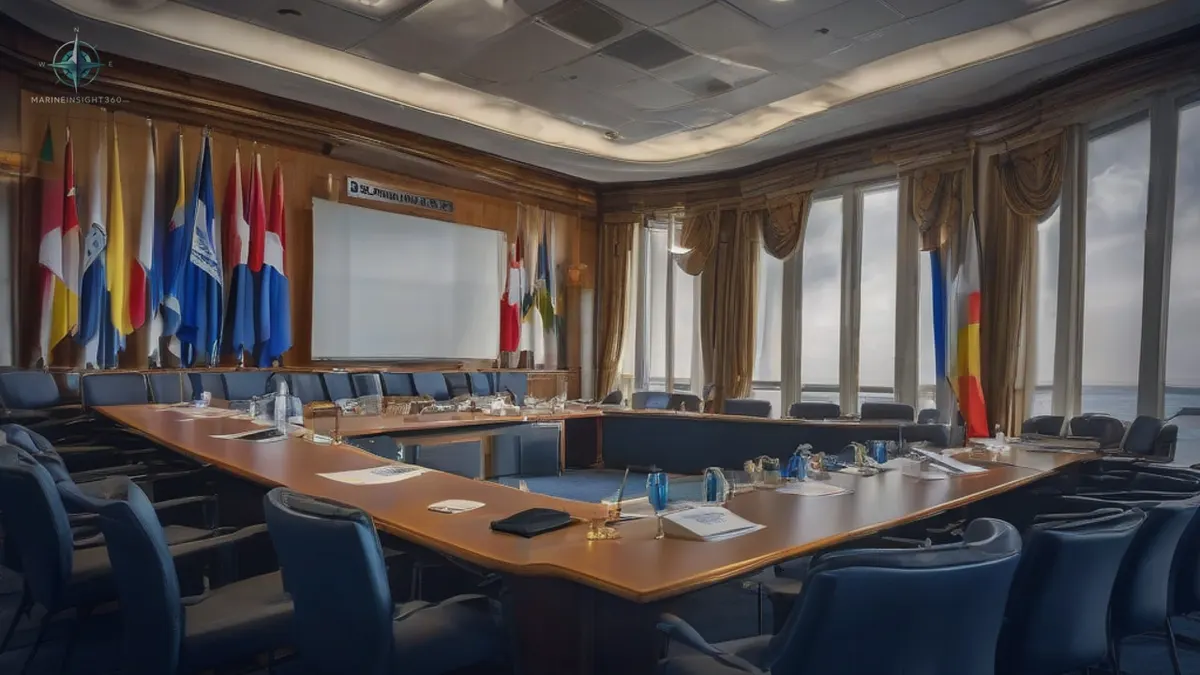
IMO means the International Maritime Organization, the specialized agency formed in 1948 and headquartered in London that sets maritime standards for ship safety, security, efficiency and pollution prevention.
With the world's oceans being so vast in size, there have to be certain measures in place to ensure that global trade stays afloat. This is where the IMO comes in. It is the United Nations' intergovernmental organisation for shipping, and its member states agree the common rules that keep ports, vessels and maritime activity working to one standard. This ensures a smooth workflow and that everything goes according to plan.
This article is going to take a deep explain how the international maritime organization does all of this. As we already mentioned, it can’t be easy to keep an eye on everything going on with global trade. And yet, the IMO can keep everything in check by following a pre-decided set of security measures. So, without further ado, let’s get right into it!
Understanding the International Maritime Organization
The IMO is a specialized agency of the United Nations, created by a convention adopted at a UN conference in Geneva. It was formed to ensure global trade can go on without any interruptions. It was formed back in 1948. Its headquarters are situated in London. It’s from there that the international maritime organization can carry out all of its operations in a smooth manner. It’s responsible for shaping maritime policies and standards.
Mission and objectives
The IMO’s main goal is to ensure that the maritime industry has a safe and secure environment. It’s also worth mentioning that they’re also responsible for making sure everything is environmentally sustainable. Thanks to a few key rules, they can accomplish these things with ease.
Safety:
It ensures the safety of all those involved in the industry by setting certain standards for operations carried out. This includes vessels, navigation, and other maritime operations.
Security:
They make sure to decrease the risk of disasters such as piracy and terrorism. They do this by putting security protocols in place which allow them to monitor all activity in the industry.
Environmental protection:
To ensure that all procedures are environmentally sustainable, they have certain protocols to follow. These help to reduce pollution by reducing the emission of greenhouse gasses. They also help to conserve different marine ecosystems.
Efficiency:
They have a bunch of policies in place that ensure a smooth workflow. Hence there were no errors or interruptions while global trade was carried out. This is done with the help of numerous policies, documents, and communication between different stakeholders.
Impact and Significance
With how long the international maritime organization has been around, they’ve had a huge impact on the global trade system. Global trade carries it with greater ease thanks to all of the policies that they ended up implementing. Their impact on the world as a whole has been huge, which is what we’ll now see and learn about.
Enhanced safety:
The International Maritime Organization has focused on increasing its policies on safety in the maritime industry. This has ensured a decrease in the number of casualties and accidents occurring from life at sea. These policies have prevented their fair share of environmental disasters over the years as well.
Environmental conservation:
Over the years, the International Maritime Organization has done its part in helping conserve the environment. They’ve implemented protocols like the IMO 2020 sulfur cap to help curb pollution. They also hindered the emission of greenhouse gasses, in addition to helping with sustaining the environment.
Global trade facilitation:
By creating numerous policies and enforcing certain standards in the maritime industry, the International Maritime Organization has ensured a smooth workflow for global trade as a whole. Goods were then able to move across continents and borders with ease. It helps to bring the entire thing together.
Technological advancements
Over the years, the international maritime organization has implemented a bunch of new technologies to ensure higher efficiency. They promoted the adaptation of digital technology and alternate fuel. This allowed a faster workflow and helped with environmental conservation as well. All in all, they managed to make great strides in terms of technology and efficiency over the years.
Outro:
Well, there you have it folks. That was a deep explain how the international maritime organization has been able to completely change the face of global trade as we know it. They were able to raise the standards higher than ever before and make global trade better as a whole.
Recommended Reading
What Does SS Mean on a Ship? Steamship, and Every Other Prefix Explained
SS on a ship means steamship, a vessel driven by steam engines. What the prefix tells you, why modern ships use MV instead, and what RMS, HMS and USS mean.
ETA and ETD in Shipping: What the Dates Mean and Why They Slip
What ETA and ETD mean in shipping, who sets the dates, why they slip, and how importers should actually read an estimated arrival against free time and fees.
What Does Seakeeping Of Vessels Mean?
What Does Seakeeping Of Vessels Mean?: ports, trade and shipping-market context for US, UK, Canada, Australia, Singapore and European maritime readers.