
What Is a Freeboard on a Ship? Load Lines and Marks Explained
Freeboard is the distance from the waterline to the freeboard deck. How load line marks, zones and seasons set the legal limit for loading.
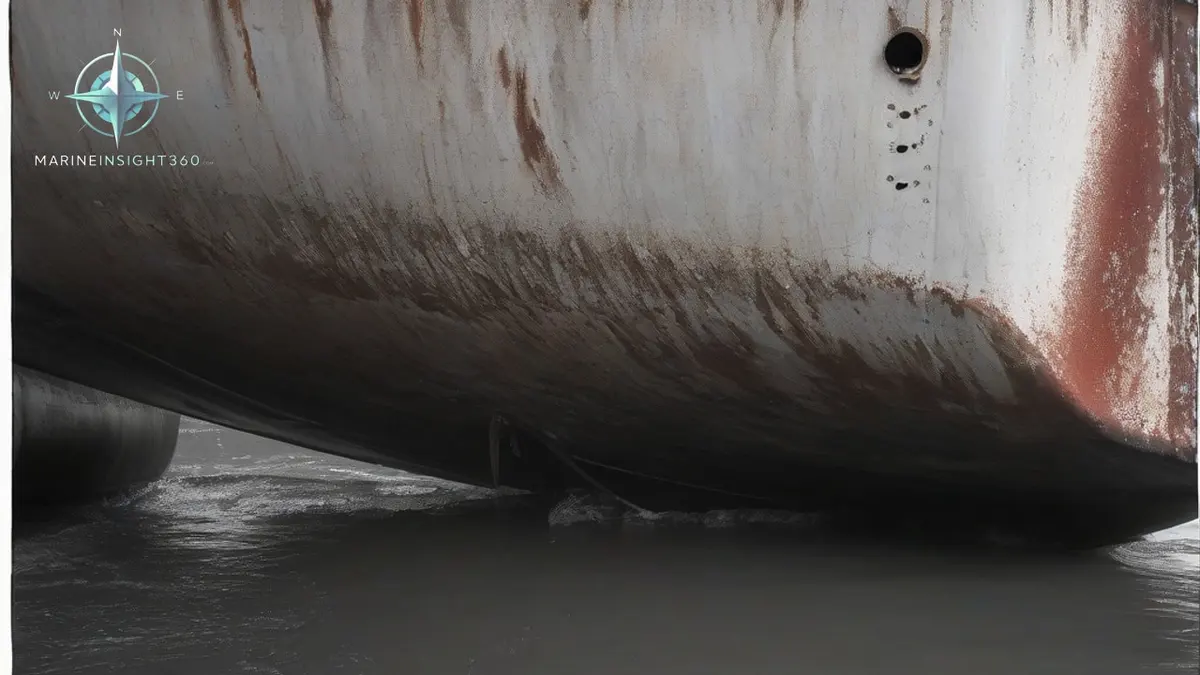
What is a freeboard? It is the vertical distance, measured amidships, from the waterline to the upper edge of the deck plating at the side of the freeboard deck. In plain terms it is the height of watertight hull left above the sea once the ship is loaded, and it is the physical measure of reserve buoyancy.
Load deeper and the freeboard shrinks, along with the margin that keeps the ship afloat when a compartment floods or a sea boards the deck. Port state control officers from the USCG, the MCA and AMSA read the marks on arrival, and an overloaded ship is detained.
Freeboard is not left to the operator. The International Convention on Load Lines, 1966, with its 1988 Protocol, sets the minimum allowable freeboard for a ship and defines the conditions under which load lines are assigned.
Why freeboard is a safety limit, not a loading preference
Reserve buoyancy is the enclosed watertight volume above the waterline. It does three things at once. It provides the buoyancy that lets a damaged ship settle to a new equilibrium instead of sinking, it gives the righting energy that returns the ship upright after a heavy roll, and it keeps green water off working decks and away from hatch covers and ventilators.
Every centimeter of extra draft is cargo revenue and lost margin at the same time. The load line is where the regulator draws that trade-off and fixes it in paint on the side shell.
Reading the load line mark
All assigned load lines are marked amidships on both sides of the hull, together with a deck line that shows where the freeboard deck sits. The circular disc with a horizontal line through it is the Plimsoll mark. The comb of horizontal lines beside it gives the seasonal and density allowances.
- TF, Tropical Fresh: the deepest permitted line, for fresh water in tropical zones.
- F, Fresh: fresh water in summer zones. Fresh water is less dense than salt, so the ship floats deeper for the same weight.
- T, Tropical: salt water, tropical zone.
- S, Summer: the reference line, from which the summer freeboard and the summer deadweight are derived.
- W, Winter: salt water, winter seasonal zone.
- WNA, Winter North Atlantic: the shallowest line, applying to ships of 100 meters (328 ft) or less in length on North Atlantic winter passages.
The mark also carries the initials of the assigning authority, usually the classification society acting for the flag state, on either side of the disc.
How the minimum freeboard is calculated
The calculation starts from a tabular value. A standard ship of the same length has a tabulated freeboard, and that figure is then corrected for the ways the actual ship differs from the standard one.
- Block coefficient: a fuller hull form carries a larger correction than a fine one.
- Depth: corrections apply where moulded depth differs from the standard proportion to length.
- Superstructure and trunks: enclosed superstructure adds buoyant volume above the freeboard deck and earns a deduction.
- Sheer: the fore-and-aft curvature of the deck line raises freeboard at the ends where boarding seas are worst, and is credited accordingly.
The result is the assigned summer freeboard, which fixes the position of the mark permanently on the hull. Type A ships, which carry liquid cargo in tanks with high integrity and small deck openings, qualify for smaller freeboards than Type B ships such as bulk carriers and general cargo vessels.
Zones, seasons and the trap in voyage planning
Load line regulations account for the different hazards present in different zones and different seasons. The chart of zones and seasonal periods divides the oceans into tropical, summer, winter and winter North Atlantic areas with dated boundaries.
The rule that catches ships is that compliance is judged on entering the zone, not on sailing. A ship may leave a tropical loading port down to its tropical mark, provided it will have burned enough fuel and fresh water to be at or above its summer or winter mark by the time it reaches the boundary. That calculation belongs in the passage plan before loading is completed, not after departure.
What port state control actually checks
Inspectors look for the mark itself being clearly cut in and painted, an International Load Line Certificate that matches the ship, and correct condition of assignment: hatch covers weathertight, freeing ports clear and unobstructed, ventilator and air pipe closing appliances in working order, and guard rails intact.
Overloading is one of the more serious detainable deficiencies because it is deliberate, measurable from a draft survey and directly connected to loss of the ship. A load line that is submerged on arrival, or condition-of-assignment items that were welded shut or removed during cargo work, both point to the same underlying failure of loading control.
For the loading calculations behind these limits, including draft survey and deadweight checks, see the shipboard operations material in the Marine Insight 360 Knowledge Base.
Sources and further reading
- International Convention on Load Lines
- International Convention on Load Lines, 1966
- Freeboard
- Load line (watercraft)
What to read next
Recommended Reading
What Are Plimsoll Lines? Reading a Ship's Load Line Marks
Plimsoll lines mark how deep a ship may legally load. How to read the circle, the TF to WNA scale, and why freeboard keeps ships alive at sea.
Drafting Safety: Exploring the Basics of Ship Load Lines
Drafting Safety: Exploring the Basics of Ship Load Lines: safety, training and compliance context for US, UK, Canada, Australia, Singapore and European...
How to Read Draft Marks on a Ship Accurately
Draft marks are read where the waterline meets the bottom of a figure. Metric and imperial marks, the six reading positions and draught survey corrections.