
What is the Purpose of a Hydrofoil on a Boat?
What is the Purpose of a Hydrofoil on a Boat?: ports, trade and shipping-market context for US, UK, Canada, Australia, Singapore and European maritime...
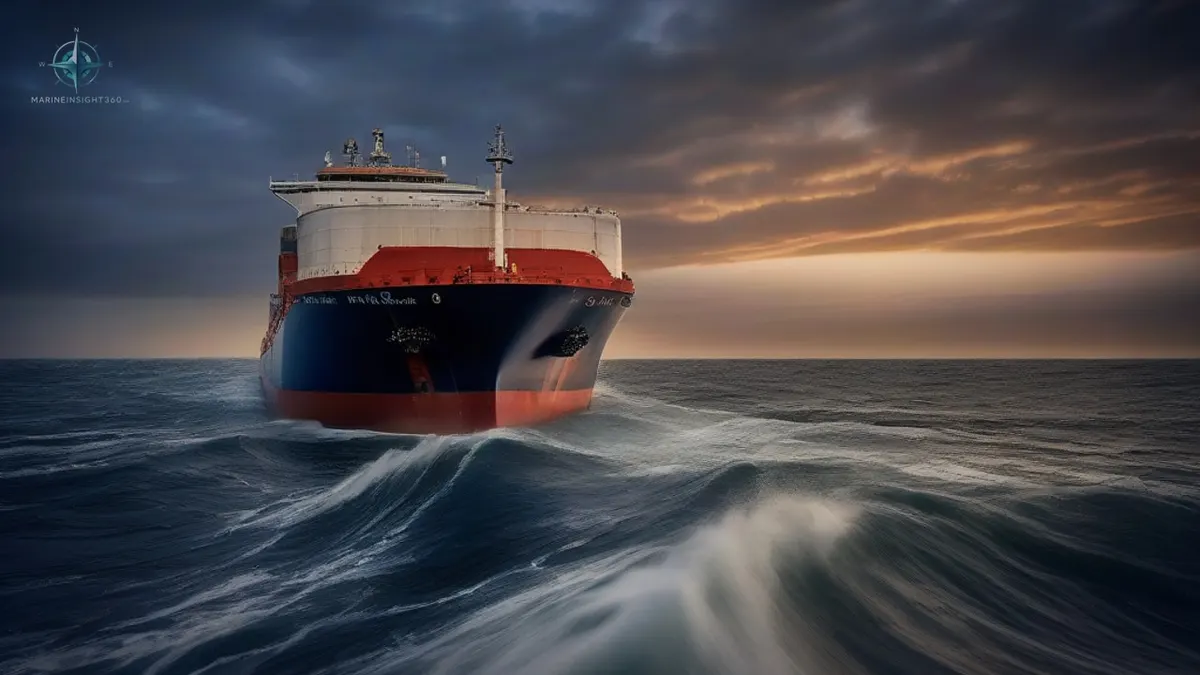
Hydrofoil boat are equipped with hydrofoil boats that allow them to travel faster over water. Have long been fascinated by the shipping industry. However, these boats are by no means the latest development.
The hydrofoil boat was developed in 1908 by Alexander Graham Bell and Casey Baldwin. They were widely used by the American military in the United States. Germany, and Russia in the early 1900s to avoid landmines, especially during World War I. In addition to boats, the hydrofoil is also used for water skiing, kiteboarding, and other extreme water sports equipment.
How do Hydrofoils Work?
Air flows over and under the wings of an airplane to create lift. Similarly, hydrofoil boats create buoyancy that pushes a boat's hull out of the water, allowing it to "fly" faster. Most of these boats easily reach top speeds of 40 to 50 knots.
But in modern times, these boats are becoming increasingly important because they allow faster movement on the water, and how a hydrofoil works is very simple. The hydrofoils at the bottom of the boat facilitate the movement and keep the boat's hull (called the hull in nautical terms) from coming into contact with the water.
The hydrofoils only work when the boat is stationary on the water's surface, thus preventing the boat from rising out of the water and capsizing. When the boat leaves the water, the design of the boat's hull is thrown back into the water, and the foils sink underwater until enough thrust is generated to lift the boat and propel it further.
Where is it Used?
Although it is mainly used for fishing, its high speed could allow for a variety of uses in the future. As a cargo carrier, it can transport heavy loads across the ocean over days or weeks, preventing delays in the cargo reaching its destination.
In addition, hydrofoils are the main propulsion engine of hydrofoils, so even marine life can escape accidental attacks when encountering a cargo ship.
Thus, the reduction in porpoises increases passenger comfort, a smoother ride, and stability. They are less affected by rough seas than traditional boats. Additionally, most of these boats offer improved performance with minimal installation effort.
The World's First Commercially Viable Hydrofoil
A Belfast-based shipping company launched a unique hydrofoil in June 2022. The boat floats using electric hydrofoils attached to the hull. This is similar technology used on America's Cup racing yachts.
The eco-friendly ship is propelled upwards by hydrofoils, increasing its speed. Electric hydrofoils glide silently across the water because their hulls are not exposed to waves, reducing friction and drag (including operating costs) compared to traditional sailing vessels powered by fossil fuels. Masu.
The first boat in the series is the famous Candela C-8 with an innovative electric propulsion system. It can carry 12 passengers and reaches a maximum speed of 34 knots. It can be used as a work boat or a ferry for large ships.
Important Points
However, it should be noted that the hydrofoils used in hydrofoils are made up of wings that are much smaller than the wings of a seaplane. Because the density of water is much higher than that of air, hydrofoils do not require much pressure to steer a boat on the water, which explains why boats have small hydrofoils.
Does a Hydrofoil Improve the Performance of a Boat?
Does installing a hydrofoil improve the performance of a boat? This question comes from someone who owns a relatively low-powered outboard motor. Well received. And I always start my answer by saying that every boat is different and there are no guarantees. Not yet.
Attaching a hydrofoil to an outboard engine often improves performance. The smaller the boat, the greater the impact, especially on boats without trim tabs. For example, on a 16-foot boat with a medium-sized outboard engine and no trim tabs, hydrofoils typically push the stern up and the bow down to balance the ride and eliminate rocking. Significantly reduced. A side effect is increased performance, typically 2 to 3 miles per hour at cruising speed.
In other cases, especially in power cats, foils reduce the side-to-side sway motion associated with beamseeing. The photos here are of my own boat, 22 Glacier Bay. When the film was applied side-to-side, motion was reduced in the range of 10-15 percent. How can I improve my performance? There are no dice. In this case, the speed remained the same as in the operation without film.
Should I Add a Slide Just to Speed It Up?
Probably not. There are a lot of claims about speed improvements, mainly from foil manufacturers, but reported speed gains are inconsistent, and hulls that do gain usually had a separate problem the foil happens to correct, such as a trimming issue. Of course, many people would like to try foil but are hesitant because of the need to cut holes in the ventilation plate. However, check out his SE Clip from Sport Marine.
This allows you to install his Sport hydrofoil without drilling holes. Clamping alone looks unequal to the torque involved, but owners fitting them to hulls in the Glacier Bay class report the clip and the foil both holding.
Warning
The installation instructions look like they were written by a chimpanzee, and you'll feel like Bobo himself is trying to install this. It took him three hours to figure out how to do a 15-minute job. However, if you are sure that hydrofoils are a must, then a traditional drill and bolt like a Dagger or Stingray will work very well. Back to your question. Should I put this on my boat?
Only if you have a problem you want to solve like the one above. However, if your boat is already in good working order, don't expect these things to work wonders.
Conclusion
Just like yachts, which have revolutionized the shipping and boating industry, hydrofoils can do just as amazing things. At the moment, they are not used much. However, given the benefits and efficiency, hydrofoil-based boats may be available to more people as a successful alternative to existing boats. Hydrofoils are compact and have no obstacles, unlike many other items that have many limitations due to their compactness, which is advantageous from the following points of view
Recommended Reading

Container Ship: How the Box Boat Runs World Trade
What a container ship is and how it works: TEU sizes from feeder to 24,000-box giants, who crews them, how fast they sail, and why they carry your shopping.
What Is A Fast Rescue Boat?
What Is A Fast Rescue Boat?: safety, training and compliance context for US, UK, Canada, Australia, Singapore and European maritime readers.
What Is A Hydrofoil Ship? Things You Should Know
Hydrofoils are characterized by wing-like hulls or hydrofoils installed below the hull, which rise above the water as speed increases, reducing water…