
Shipping Agent Role: Port Call Duties Explained
Learn how a shipping agent coordinates vessel clearance, port services, documents and communications before, during and after a port call.
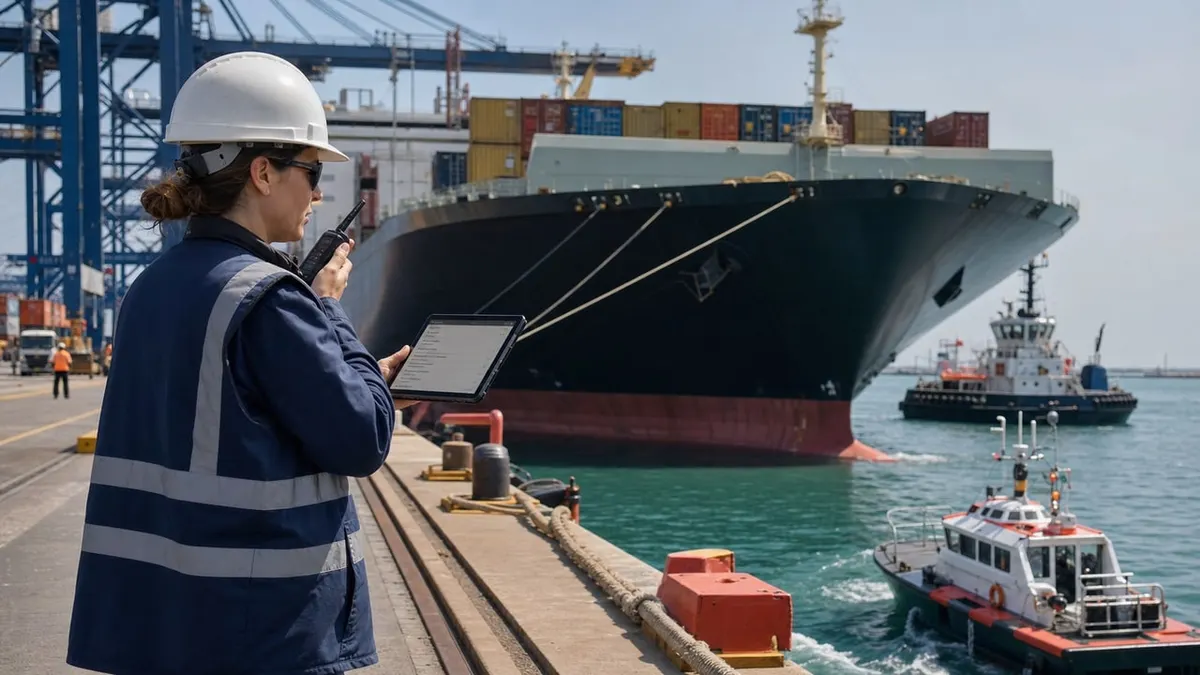
The shipping agent role is to coordinate a vessel's local business during a port call. Acting for a shipowner, operator or charterer, the agent connects the master with port authorities, terminals, customs, immigration and service providers. The exact assignment depends on the agency agreement and local law, but the practical goal is consistent: help the vessel arrive, complete its work and depart with the required formalities in order.
What does a shipping agent do?
A shipping agent manages the shore-side coordination needed for a ship's call at a particular port. That normally includes exchanging arrival information, arranging services requested by the vessel, following terminal schedules and keeping the principal informed. The agent does not replace the master, terminal, customs authority or harbour master. Instead, the agent helps those parties exchange accurate information at the right time.
The International Maritime Organization's Facilitation Convention standardizes many declarations connected with a ship's arrival and departure. Depending on the port and appointment, an authorized ship agent may submit or help prepare information such as the general declaration, cargo declaration, crew list, passenger list, dangerous goods manifest and waste notification. Local requirements still control what must be filed, when it is due and who may sign it.
What happens before the vessel arrives?
Before arrival, the agent collects the vessel's estimated arrival time, particulars, cargo information and service requirements. The agent then coordinates with the port, berth or terminal and advises the master about local procedures. This stage matters because a missing declaration, late notice or misunderstood berth restriction can delay an otherwise ready vessel.
- Arrival planning: share the latest ETA and relevant vessel details with the organizations involved in the call.
- Formalities: prepare or transmit documents required by port, customs, immigration, health and security authorities.
- Service coordination: arrange requested pilotage, towage, linesmen, bunkers, stores, freshwater, waste reception, repairs or surveys.
- Cost control: obtain quotations, request funding where applicable and keep a record of expected port disbursements.
Not every agent performs every item. A full port agency appointment is broader than a husbandry-only appointment, while a terminal or cargo interest may appoint a separate representative. The scope should therefore be confirmed in writing rather than assumed.
What does the agent handle while the ship is in port?
During the call, the shipping agent becomes the main local communication point for routine operational matters. The agent tracks berth movements and cargo progress, relays instructions, delivers documents and responds when the schedule changes. If the master requests medical attendance, a spare part, a surveyor or a crew movement, the agent identifies the appropriate local provider and coordinates access under port rules.
The agent also keeps the principal updated. Useful reports can include the vessel's all-fast time, commencement and completion of cargo work, stoppages, shifting movements and expected departure. Accurate timestamps support operational decisions and the later review of statements of facts, invoices or contractual time calculations. The agent should report what happened without taking over decisions that belong to the master, principal, terminal or authority.
What happens after departure?
Once the ship sails, the agency work is not necessarily finished. The agent confirms departure, sends final operational documents and assembles the disbursement account. Invoices from pilots, tugs, terminals and other suppliers must be matched to the services ordered and supported by the available records. Any unused advance funds, additional costs or disputed items should be explained to the principal under the agreed accounting process.
A careful close-out gives the operator a reliable record of the call and helps the next port team learn from delays or service issues. It also reduces the risk of duplicate charges and unanswered invoices. Record-retention requirements vary, so agents and principals should follow their contract and the applicable rules in the port country.
Is a shipping agent the same as a broker?
No. A port or shipping agent looks after a vessel's local port-call business, while a shipbroker commonly works on commercial transactions such as chartering or the sale and purchase of ships. A husbandry agent concentrates on non-cargo needs such as crew matters, provisions, repairs and surveys. One company may offer several services, but the responsibilities arise from the specific appointment.
The distinction matters when instructions are issued. A master should know who represents the owner, charterer, cargo interest or service provider and what each appointment authorizes. Clear roles reduce conflicting orders and make it easier to identify who approves costs.
Does the shipping agent role change between countries?
The core coordination function is recognizable across major shipping markets, but procedures are local. A call in the United States, United Kingdom, Canada, Australia, Singapore or the Gulf may involve different reporting systems, deadlines, authority contacts and licensed service providers. Masters and operators should use the current instructions issued for the actual port rather than reuse a checklist from another country.
For example, UK guidance allows a ship's master or agent to report arriving commercial cargo, while IMO standards set the international framework for common arrival and departure declarations. The national rule and the port's operating process determine the final requirement. A competent local appointment translates that framework into a practical call plan without presenting local custom as a universal rule.
How are shipping agents paid?
Agency compensation is set by the appointment and can vary by port, vessel, scope and service. The principal may pay an agreed agency fee plus approved expenses, while separate commissions can apply to particular commercial arrangements. There is no useful universal fee formula. Operators should compare the quoted scope, exclusions, local taxes and third-party costs rather than judging an appointment by one headline number.
The agent will often request an advance to cover expected port costs. That advance is not the same as the agent's fee: it may fund payments to authorities and suppliers on the principal's behalf. The final disbursement account should reconcile the advance against supported actual charges.
How is digital reporting changing port agency work?
Port calls increasingly rely on electronic reporting. The IMO says Maritime Single Windows became mandatory for its Member States from 1 January 2024, creating a single digital entry point for information required when ships arrive, stay and depart. The change reduces duplicate submissions, but it also raises the importance of timely, consistent data.
Digital systems do not remove the need for local knowledge. Agents still interpret port procedures, coordinate people and respond when operational plans change. The strongest agencies combine reliable local relationships with disciplined data handling, cybersecurity awareness and clear updates to the vessel and principal.
What should a master confirm with the appointed agent?
- The written scope of appointment and the principal the agent represents.
- Required pre-arrival documents, deadlines and the approved submission channel.
- Berth restrictions, pilot boarding arrangements and local contact procedures.
- Which services are confirmed, which are awaiting approval and who can authorize extra cost.
- The reporting schedule for cargo progress, incidents, departure and final accounts.
Masters and operators can also review our global ports directory for destination context, explore practical maritime guides, and find current shore-side and seagoing opportunities in maritime jobs.
Sources and further reading
Recommended Reading
Gangways and Types of Gangways Used in The Shipping World
Gangways and Types of Gangways Used in The Shipping World: ports, trade and shipping-market context for US, UK, Canada, Australia, Singapore and...

ETA and ETD in Shipping: What the Dates Mean and Why They Slip
What ETA and ETD mean in shipping, who sets the dates, why they slip, and how importers should actually read an estimated arrival against free time and fees.
DDP & DDU Shipping Terms Explained
DDP & DDU Shipping Terms Explained: ports, trade and shipping-market context for US, UK, Canada, Australia, Singapore and European maritime readers.