
What Is Nautical Engineering? Fields, Roles and Career Routes
Nautical engineering covers the design and operation of ships and their machinery. How marine engineering, naval architecture and ocean engineering differ.

What is nautical engineering? It is a broad term for the engineering of ships and their systems, not a single discipline with one syllabus. It splits into three related fields: marine engineering , which covers the machinery and systems that make a ship work; naval architecture , which covers hull form, structure, stability and hydrodynamics; and ocean or offshore engineering , which covers fixed and floating structures in the sea.
Anyone searching for a nautical engineering course is almost always looking at one of those three.
The distinction matters because it decides where you work. A marine engineer sails as an engineer officer or supports machinery ashore. A naval architect works in a design office, a shipyard or a classification society. An ocean engineer works on platforms, subsea systems, moorings and renewables. The academic overlap is large; the daily work is not.
Marine engineering: the machinery side
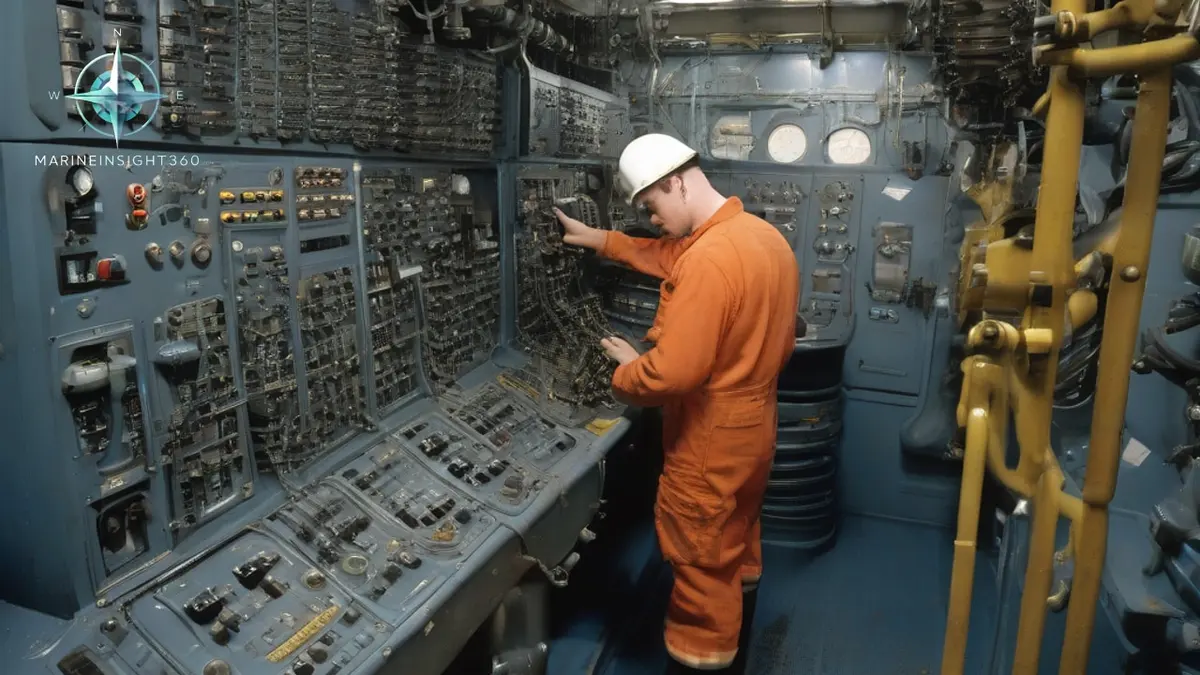
Marine engineering deals with everything that generates, converts, distributes or consumes energy on board. On a merchant ship that means:
- Main propulsion: low-speed two-stroke or medium-speed four-stroke diesel engines, increasingly dual-fuel, plus gas turbines and steam plant on specific ship types.
- Electrical generation and distribution, including switchboards, protection, shaft generators and battery hybrid arrangements.
- Auxiliary systems: boilers, purifiers, compressors, pumps, coolers, refrigeration and air conditioning.
- Steering gear, hydraulics, deck machinery and cargo handling plant, which on tankers and gas carriers is a specialism in itself.
- Environmental plant: oily water separators, sewage treatment, ballast water treatment systems and exhaust gas cleaning.
- Automation, alarm and monitoring systems, and the maintenance planning that sits behind them.
The work at sea is diagnostic. Machinery fails a long way from a workshop, spares are what is in the store, and a chief engineer's value lies in deciding what can wait, what must be repaired now, and when to tell the master the ship cannot proceed.
Naval architecture: the ship itself
Naval architecture applies hydrostatics, hydrodynamics and structural mechanics to the ship as a whole. It covers hull form and resistance, powering estimates, intact and damage stability, longitudinal strength, vibration, seakeeping and the structural scantlings that classification society rules govern. A naval architect decides what shape the ship is and whether it will survive the loads it meets; a marine engineer decides what fills it and whether it will keep running.
Ocean engineering extends the same methods to structures that are not ships: jackets and semi-submersibles, mooring and riser systems, subsea equipment, and fixed and floating offshore wind foundations.
How you qualify: the two distinct routes
The seagoing license route
To work as an engineer officer you need a certificate of competency issued under the STCW Convention, the international convention that sets minimum training, certification and watchkeeping standards for seafarers. The ladder runs from Engineer Officer of the Watch, through Second Engineer, to Chief Engineer, with sea time, approved training and written and oral examinations at each step.
- United States. Cadets typically train at the US Merchant Marine Academy or a state maritime academy such as SUNY Maritime, Massachusetts Maritime, Texas A and M Maritime or Cal Maritime, graduating with a degree and a US Coast Guard license recorded on a Merchant Mariner Credential.
- United Kingdom and Ireland. Entry is normally through a sponsored cadetship with a shipping company, alternating college phases with sea phases, leading to an MCA Certificate of Competency.
- Canada, Australia and New Zealand. Transport Canada, AMSA and Maritime NZ run equivalent certification structures, with cadet programs attached to nautical colleges and, in Australia, a strong offshore and coastal trade demand.
The university route
A BEng or MEng in naval architecture and marine engineering, or in ocean engineering, leads to shore-based work rather than a license: shipyard design offices, class societies, consultancies, marine equipment manufacturers, offshore operators and government agencies. Chartered or professional engineer status through a national institution is the usual progression marker.
Many careers combine the two. A licensed engineer who comes ashore after several contracts as chief engineer is a strong candidate for superintendent, surveyor, technical manager or fleet performance roles, because the license supplies operational judgement the design route does not.
What is changing in the discipline right now
Three shifts are reshaping what employers ask for. Decarbonization has moved dual-fuel LNG, methanol and ammonia engines from pilot projects into ordered tonnage, which means engineers need gas handling and cryogenic competence and additional STCW training for ships using low-flashpoint fuels. Regulatory performance monitoring under the IMO energy efficiency framework has made fuel and emissions data a technical management task rather than a paperwork one.
And electrification, from battery hybrid ferries to shore power connection, has pushed high-voltage and power electronics knowledge into the standard skill set.
Choosing between the paths
Ask two questions before committing. Do you want to sail, and for how long? A license is earned at sea and loses currency ashore, so the decision to sail is easier taken early. And do you prefer to fix systems or to design them? Engineers who enjoy diagnosis under time pressure thrive at sea; those who prefer analysis, iteration and drawings are better served by the naval architecture route.
The Marine Insight 360 Merchant Navy Careers section sets out the certification steps, sea time requirements and typical progression timelines for each route in detail.
Sources and further reading
- Naval Architecture vs Naval Engineering vs Marine Engineering vs Ocean Engineering
- Marine Engineering vs Naval Architecture: What's the Difference?
- Naval architecture: scope of the discipline
What to read next
Recommended Reading
What Is Maritime Engineering? The Disciplines, Routes and Real Work
Maritime engineering covers naval architecture, marine engineering and ocean engineering. What each discipline does, and how the sea and shore routes differ.

How to Start a Career in the Maritime Industry: Sea, Shore and the Routes In
Sea-going and shore-side entry routes compared: cadetships, trainee broker schemes, port apprenticeships, the qualifications that count and a 90-day plan.

Maritime Career Guide: Routes to Sea, Certificates and Where the Ladder Leads
A practical maritime career guide covering deck, engine and ETO routes, cadetships, STCW certificates, sea time, progression to master and shore-based moves.