Container Shipping Market Trends and Developments
What to watch after a report like this Container market developments make sense against three running questions.
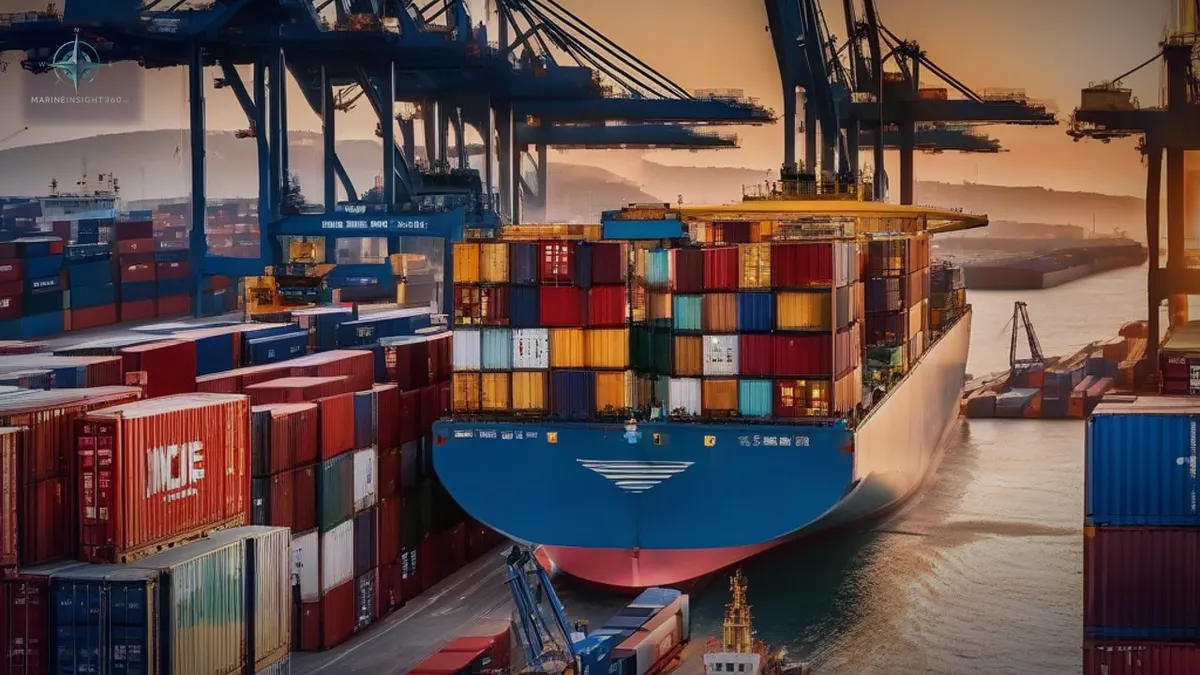
The Current Picture The container shipping market is experiencing a surge in freight rates, with bunker surcharges of around USD 500 per FEU entering July pricing, according to Hellenic Shipping News. This increase in rates is attributed to the unresolved uncertainty surrounding the Strait of Hormuz, which is expected to cause a prolonged period of disruption. A little-known Hong Kong company, Synelysia Limited, has emerged as the latest entrant to the feeder containership newbuilding market, ordering four firm 1,900 teu bangkokmax vessels at China's Xinle Shipyard, as reported by Splash247.
Key facts about Container Shipping Market Trends and Developments
Newbuilding Orders Synelysia Limited's order includes two separate sets of options that could lift the series to as many as eight ships, as stated by Alphaliner in the Splash247 article. This development indicates a growing interest in feeder containerships, which are essential for short-sea shipping and regional trade. The order also highlights the importance of China's shipbuilding industry, with Xinle Shipyard being the chosen yard for this project.
Technological Advancements ABS, HD Korea Shipbuilding & Offshore Engineering (HD KSOE), and HD Hyundai Heavy Industries (HD HHI) have completed a joint development project for a high efficiency, 16,000-TEU ultra-large container ship with a battery hybrid system, as reported by Hellenic Shipping News. ABS issued approval in principle (AIP) to KSOE and HD HHI at Posidonia 2026 for the electrical analysis and electrical design. This project demonstrates the industry's focus on reducing emissions and increasing efficiency through technological innovations.
What the Data Shows The data suggests that freight rates are rising, but actual demand may not be, as stated by Hellenic Shipping News. The increase in rates is largely driven by external factors, such as the uncertainty surrounding the Strait of Hormuz, rather than a surge in actual demand. This disparity between headline rates and actual demand may have implications for the market in the coming weeks.
What This Means for Operators For operators, the rising freight rates may provide a short-term boost to revenue, but the potential for frontloading and subsequent demand slump may impact their business in the long run. The development of new technologies, such as battery hybrid systems, may offer opportunities for operators to reduce emissions and increase efficiency. However, the cost of adopting these technologies may be a barrier for some operators.
What to Watch In the coming weeks, the market will be watching the impact of frontloading on demand, as well as the development of new technologies and their adoption by operators. The situation in the Strait of Hormuz will also be closely monitored, as any changes to the situation may have a significant impact on the market. Additionally, the progress of Synelysia Limited's newbuilding project and the potential for further orders will be of interest to industry observers.
What to watch after a report like this
Container market developments make sense against three running questions. Is capacity being absorbed by genuine demand or by longer routings and slow steaming? Are carriers defending rates through blanked sailings, and how quickly do those return? And is new tonnage arriving into strength or into softness?
Shippers reading trend reports should translate them into procurement posture: firming markets reward earlier tendering and longer commitments, while softening ones favour patience and index-linked terms. The costly mistakes usually come from acting on last quarter's market at this quarter's negotiating table.
For carriers and tonnage providers, the same signals steer deployment and chartering windows. Container shipping remains a scheduled industry running through unscheduled disruptions, and the operators that fare best treat every market update as a prompt to retest assumptions rather than a scorecard to file.