Newbuild Surge and Port Congestion Shape Boxship Capacity 2028
Fresh orders for 2,000‑teu to 14,000‑teu boxships totalling ~30,000 teu will hit the market by 2028, while current port congestion hides 2.3 m teu of space.
Newbuild Activity Accelerates Across Germany, China, and Africa
Operators should expect a sudden release of roughly 30,000 teu of new capacity by 2028, but current port congestion is masking about 2.3 m teu of existing space. To stay profitable, they must adjust vessel sizing, secure berth slots early, and align financing with the phased delivery schedule.
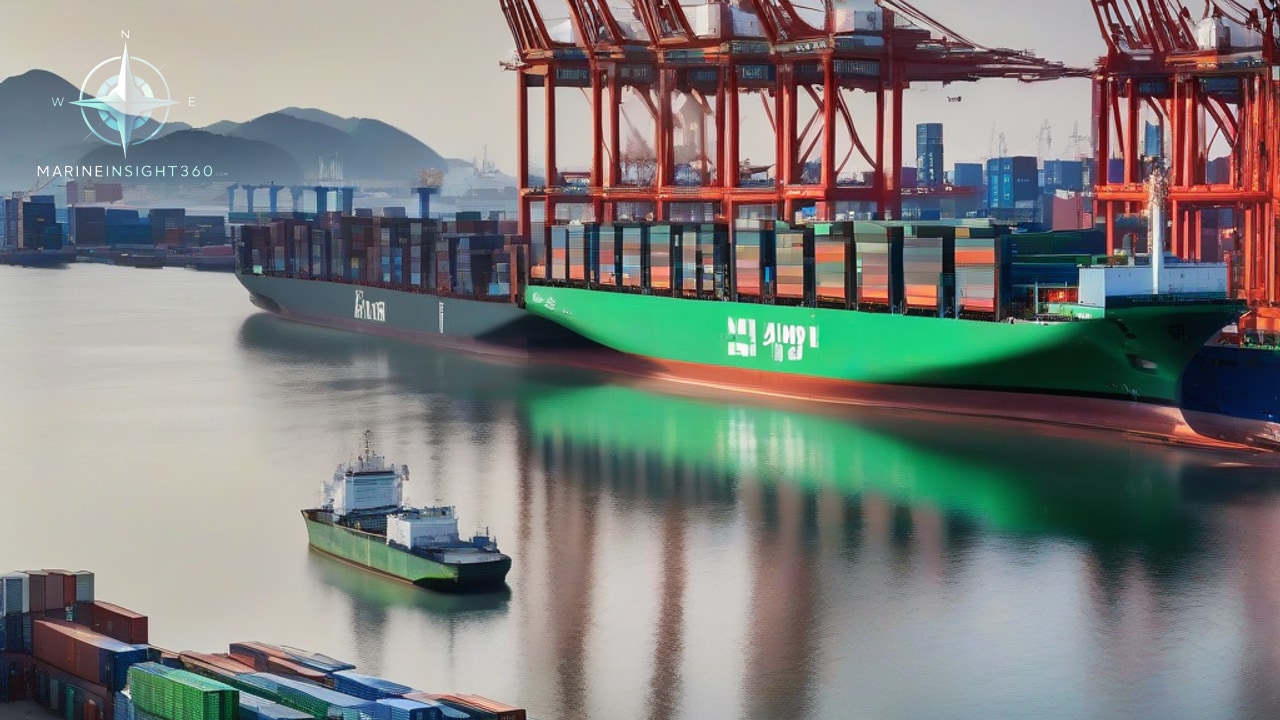
Peter Döhle Schiffahrts has placed a 14,000‑teu two‑ship order with Hudong‑Zhonghua, extending its series at the CSSC yard (Splash247). A Chinese start‑up, Xiamen Xinliansheng Shipping, ordered a 2,000‑teu boxship from Zhejiang Shenzhou Sunshine Heavy Industry for RMB 158 million (≈ $24 million) for delivery in July 2027 (Splash247). Samsung Heavy Industries announced a two‑ship order from an African charterer worth 444.5 billion won (≈ $336 million) with delivery by December 2028 (Hellenic Shipping News). Together these contracts add about 30,000 teu of capacity.
Port Congestion Masks the Capacity Shock
Sea‑Intelligence data show that 6.6 % of the global containership fleet, equivalent to 2.3 m teu, is effectively out of service because vessels are stuck in queues (Splash247). The bottleneck is most acute at major trans‑Pacific and European gateways, where dwell times have risen by weeks.
Operational Implications for Shipowners and Terminal Operators
Vessel sizing decisions: Ultra‑large 14,000‑teu ships offer economies of scale, but many ports, especially in emerging markets, cannot handle vessels above 6,000 teu. A mixed fleet of larger ships for Europe‑Asia mainlines and 2,000‑4,000 teu vessels for regional calls is advisable.
Slot management and scheduling: With 2.3 m teu hidden in queues, early berth reservations and participation in terminal alliance programs become decisive for service reliability.
Fuel and emissions planning: Larger ships achieve lower fuel consumption per TEU only when fully loaded. Congested ports force partial loads, so real‑time port‑status feeds should be integrated into voyage‑optimization software.
Financing and cash‑flow management: The $24 million cost of the 2,000‑teu Xinliansheng build and the $336 million Samsung contract illustrate a wide financing spectrum. Smaller, cheaper builds preserve liquidity for owners with limited capital.
Crew and certification planning: New builds often feature advanced automation, requiring crew with updated STCW (the international convention setting minimum training standards for seafarers) certifications. Training cycles should start well before delivery dates.
Timing, Risks, and Market Outlook
Deliveries cluster between 2027 and 2028. Risks include infrastructure delays, EU carbon‑border adjustments, and demand volatility. A staggered deployment, introducing the 2,000‑teu unit first, then the 14,000‑teu ships, helps mitigate these risks.
What to Watch in 2028‑2029
Monitor berth availability at Tier‑1 hubs, charter‑rate trends for 10,000‑14,000 teu ships, bunker price movements, and IMO amendments to the Energy Efficiency Existing Ship Index (EEXI) and Carbon Intensity Indicator (CII). Aligning fleet composition with evolving port infrastructure will turn the capacity release into a competitive advantage.