China Commissions Its Largest Semi-Submersible Crane Vessel ‘Sihang Yongsheng’
China has commissioned the Sihang Yongsheng, its largest semi-submersible crane vessel, built for the heaviest offshore lifts in oil, gas and wind.
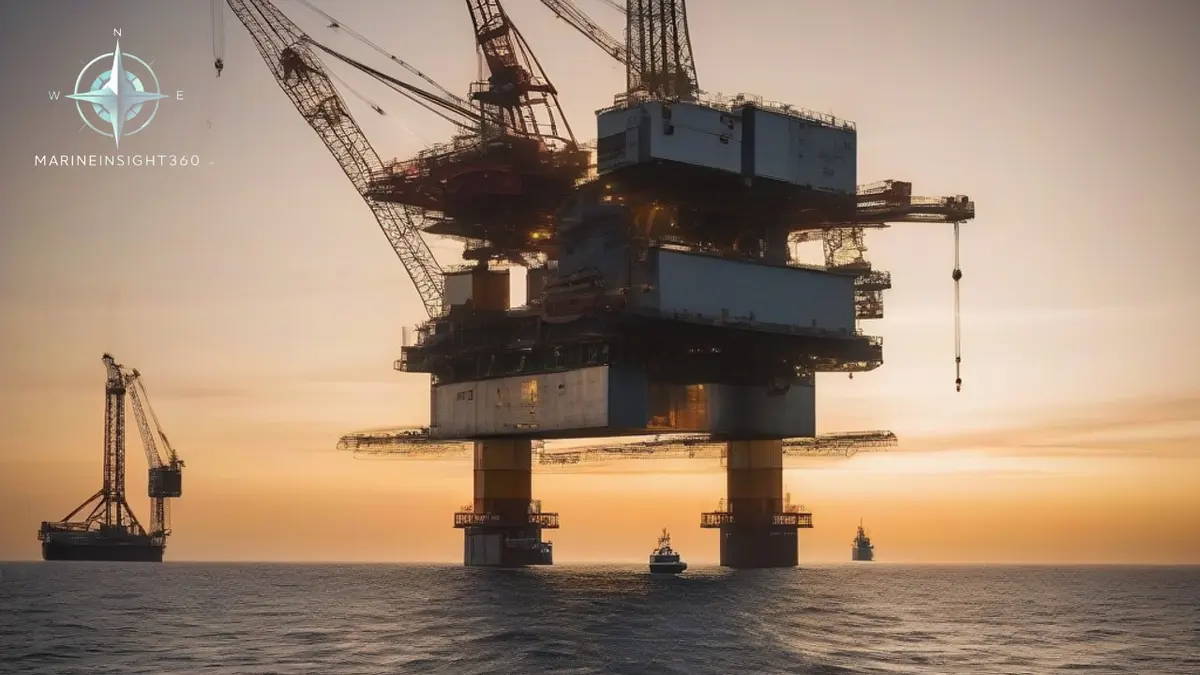
China has commissioned the Sihang Yongsheng, reported to be the country's largest semi-submersible crane vessel, which is built for the heaviest offshore lifts in oil, gas and wind.
China Commissions Its Largest Crane Vessel
China has commissioned the Sihang Yongsheng, described as the country's largest semi-submersible crane vessel. The ship is built to take on the heaviest offshore lifts, installing and removing platform modules, subsea structures and offshore wind foundations, in a market where lifting capacity increasingly decides which contractors can bid for the biggest projects.
What a Semi-Submersible Crane Vessel Actually Does
Unlike a conventional crane barge, a semi-submersible crane vessel (SSCV) can flood ballast tanks to lower its hull deep into the water. That submerged displacement dramatically reduces the effect of waves, giving the crane a stable base for precision heavy lifts even in open-sea conditions. It is the difference between a crane that can only work in sheltered water and one that can operate offshore, on schedule, across a far wider weather window.
Why It Matters for Offshore Energy
The commissioning lands as China accelerates investment in offshore oil, gas and, increasingly, offshore wind. Larger, heavier turbine foundations and platform topsides need vessels that can lift them in a single piece rather than in multiple risky sections. A home-built SSCV of this scale lets Chinese contractors install these structures themselves, reducing reliance on the small global fleet of high-capacity crane vessels and strengthening their position on international offshore tenders.
Key Considerations for Crews and Owners
Vessels of this complexity do not run themselves. Bringing a new SSCV into service raises real operational demands:
- Specialised crew training for ballast control, crane operations and heavy-lift rigging, where small errors carry very large consequences.
- Investment in equipment and planning , since every lift is engineered in advance with detailed load and stability calculations.
- Ongoing maintenance of cranes, ballast systems and station-keeping, on which both safety and uptime depend.
The Bigger Picture
The Sihang Yongsheng is another signal of how quickly China's shipbuilding and offshore construction capacity is maturing. As more high-capacity crane vessels enter service worldwide, competition for major offshore contracts is likely to intensify, potentially lowering installation costs, but also reshaping which nations control the specialised assets that build the world's offshore energy infrastructure.
Frequently Asked Questions
What is the Sihang Yongsheng? It is reported to be China's largest semi-submersible crane vessel, designed for heavy-lift offshore construction and decommissioning work.
What is it used for? Installing and removing offshore platforms, subsea structures and offshore wind turbine foundations.
Why is a semi-submersible design important? Submerging the hull reduces wave motion, allowing stable, precise heavy lifts in open-sea conditions where a standard crane barge could not safely operate.
Reporting based on Marine Insight's coverage of the Sihang Yongsheng commissioning. Vessel specifications should be confirmed against official builder and owner announcements.
The wider stakes
Why give this shipping story attention? Because in shipping a single event ripples outward, to owners, cargo interests, insurers, ports and crews, faster than the first report suggests.
What matters is separating the confirmed facts from the knock-on effects on cost, routing, compliance and hiring.
How it plays out in practice
The practical footprint of a shipping story reaches schedules, insurance clauses, crew briefings and procurement. Knowing which desk owns the response is half the work.
And because reporting evolves, weigh it against authoritative sources, regulators, class societies and port authorities, before it drives a decision.
What comes next
- Follow-up notices from port, flag or class bodies.
- Effects on chartering decisions, crewing demand or compliance workload.
- Whether the story escalates beyond its first market.
- New detail that firms up or scales back the initial account.