COSCO Shipping sets new global heavy-lift record with world's first 2,000 MW offshore converter platform Skid-On Operation
COSCO Shipping sets new global heavy-lift record with world's first 2,000 MW offshore converter platform Skid-On Operation: ports, trade and...
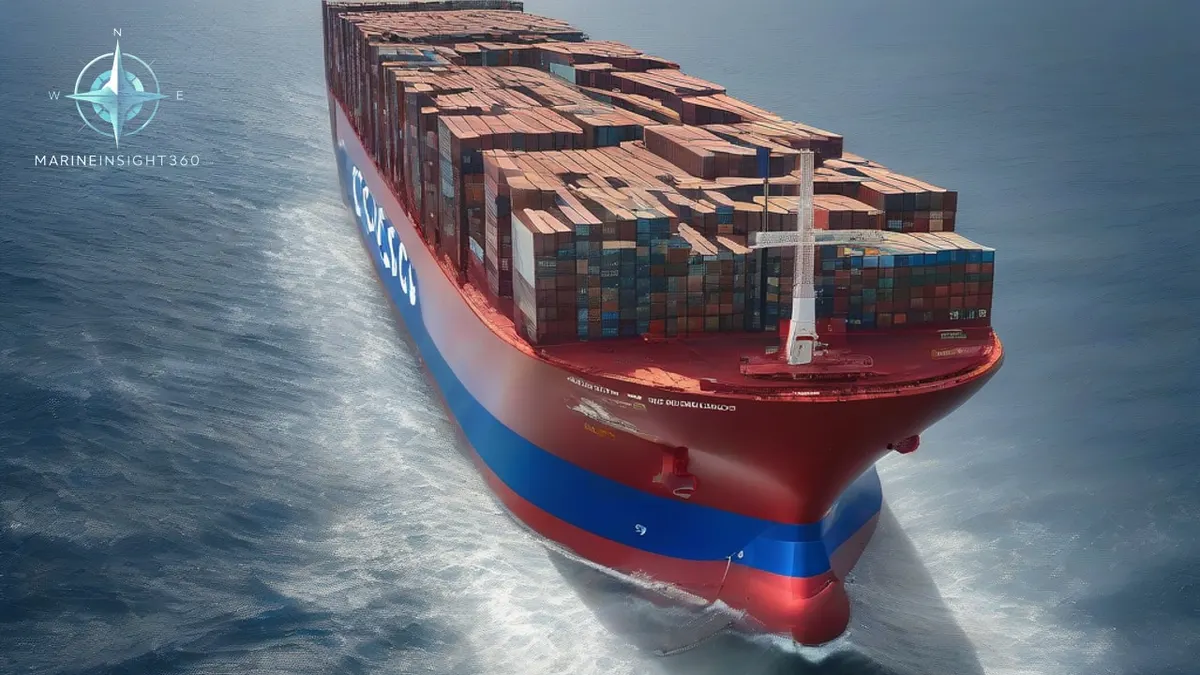
COSCO Shipping has marked a significant milestone in the global maritime industry, setting a new heavy-lift record with the world's first 2,000 MW offshore converter platform's successful skid-on operation. This monumental achievement underscores the escalating capabilities within specialized shipping, demonstrating the precision engineering and logistical prowess required to manage increasingly large and complex infrastructure projects for the burgeoning offshore energy sector. Such operations are not merely about lifting capacity but represent a pinnacle of collaborative planning, advanced vessel technology, and rigorous execution.
Key facts about COSCO Shipping sets new global heavy-lift record with world's...
The successful installation of a 2,000 MW offshore converter platform signifies a critical advancement in the development of renewable energy infrastructure. As nations increasingly turn to offshore wind farms to meet ambitious climate goals and energy demands, the scale of associated equipment continues to grow. These converter platforms are vital links, transforming the alternating current generated by massive offshore wind turbines into direct current for efficient long-distance transmission to onshore grids, effectively minimizing transmission losses and maximizing energy delivery.
Performing a "skid-on operation" for an asset of this magnitude demands exceptional technical expertise and highly specialized heavy-lift vessels (HLCVs) or semi-submersible ships. This method involves carefully sliding the colossal structure onto its transport or installation vessel, requiring meticulous ballasting, precise alignment, and controlled hydraulic systems. Such complex maneuvers are governed by stringent safety protocols and engineering standards, often drawing upon best practices outlined by international maritime organizations and classification societies to ensure integrity and safety in an inherently challenging offshore environment.
This record-breaking feat by COSCO Shipping not only highlights the continued innovation within the heavy-lift and project cargo sector but also signals the maritime industry's pivotal role in facilitating the global energy transition. It showcases the industry's capacity to adapt to new demands, providing the essential logistical backbone for constructing the next generation of sustainable energy infrastructure. The engineering challenges overcome in such projects contribute invaluable knowledge and experience, pushing the boundaries of what is technically feasible in marine operations.
As the drive for larger-scale offshore wind developments continues, with turbines reaching unprecedented sizes and projects venturing into deeper waters, the capabilities demonstrated by this operation will become increasingly vital. It reflects a future where integrated maritime solutions, from specialized vessel design to advanced operational methodologies, are critical enablers for global decarbonization efforts and the expansion of green energy infrastructure worldwide.
This achievement solidifies the maritime industry's indispensable role in pioneering and executing the complex infrastructure required for a sustainable energy future.
Next steps
Follow the latest maritime news for related updates and practical context.
What this means for high-value maritime markets
For readers in the United States, United Kingdom, Canada, Australia, Singapore and Europe, COSCO Shipping sets new global heavy-lift record with world's first 2,000 MW offshore converter platform Skid-On Operation is useful when it is connected to local maritime regulation, port exposure, insurance, crewing, procurement or trade-route decisions. The exact impact can differ by regulator, flag state, port authority, employer and vessel type.
Use the market links below to connect the article with regional trade exposure, port activity, shipping jobs and commercial maritime demand.
Why this story matters
COSCO Shipping sets new global heavy-lift record with world's first 2,000 MW offshore converter platform Skid-On Operation matters because shipping news rarely stays inside one lane. A single development can affect vessel operators, charterers, insurers, port teams, seafarers, equipment suppliers and regulators at the same time.
For readers in the United States, United Kingdom, Europe, Canada, Australia and Singapore, the value is in the practical signal behind the headline: what the development changes, what still needs confirmation and how it may affect decisions across safety, compliance, trade or fleet planning.
Operational context
Technology stories matter when they move from pilot projects into vessel operations, maintenance routines or regulatory acceptance. The operational question is not only what happened, but which teams need to respond. Ship managers may need to review risk assessments, commercial teams may revisit costs or schedules, and crews may need clearer instructions before the next voyage or port call.
This is also why source attribution matters. When a story involves prices, incidents, regulations, vessel orders, security risk or public policy, readers should compare the report with official notices, company updates and port or flag-state guidance before acting.